4.08 Rain Garden, Native Strip or Buffer Zone? Comparing Solutions
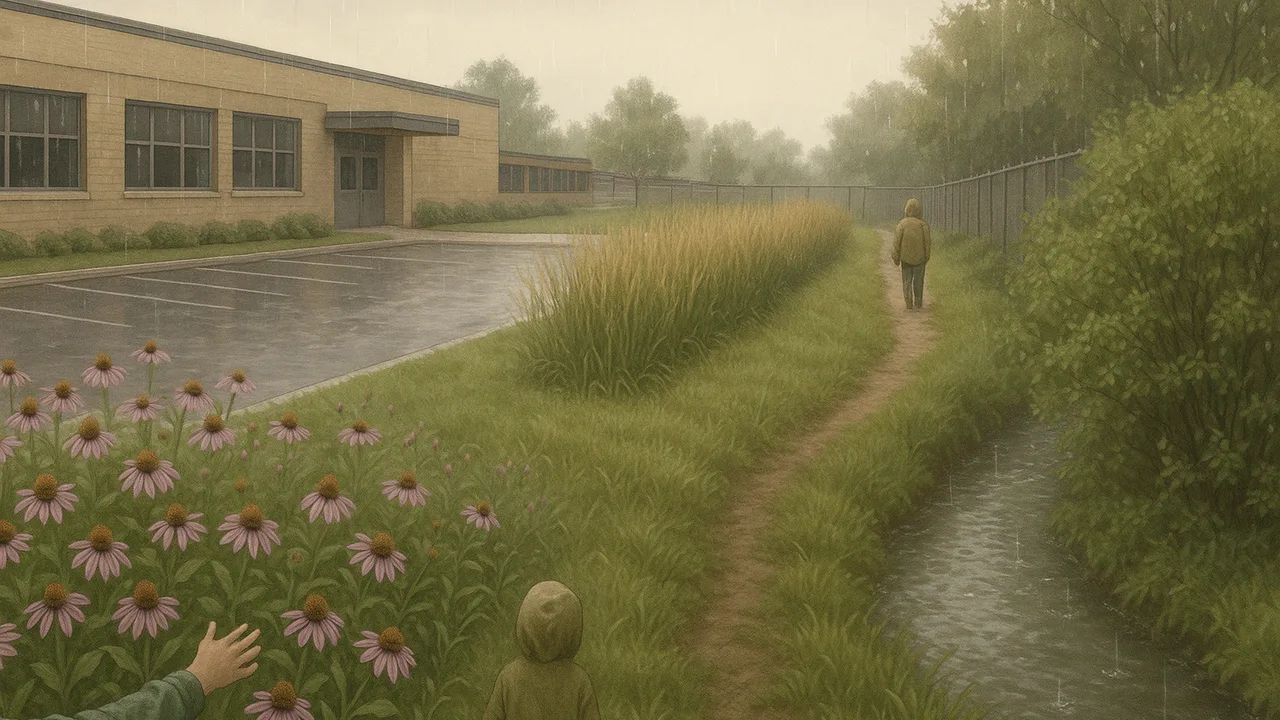
compare design solutions that protect biodiversity and ecosystem services, using evidence about how well each works and its side effects.
- I can identify and describe different design solutions that aim to protect biodiversity and ecosystem services.
- I can explain the problem these design solutions are trying to solve and why biodiversity and ecosystem services are important for a healthy ecosystem.
- I can describe the evidence that shows how well each design solution works.
- I can use scientific evidence to compare how well each design solution maintains ecosystem stability and biodiversity.
- I can explain the strengths and weaknesses of each design solution based on different criteria and constraints, such as scientific, social, and economic factors.
- I can assess possible side effects that each design solution might have on other parts of the ecosystem, including how a small change in one part could lead to big changes elsewhere.
Phase 2: Investigate
Warm-Up ~5 min
Do Now. The watershed group can afford only one project this year on our school grounds. List what you would want to know before choosing.
Which solution do you think catches the most runoff from our parking lot?
Instruction ~10 min
Explore first. Teams read three solution cards with sample data from the watershed group. Each card gives the size, the sample cost, the upkeep time and what it does for water, soil and species. Fill in the comparison table before discussing.
| Solution | Runoff caught or slowed | Water filtering | Erosion control | Habitat and species supported | Sample cost and upkeep | Possible side effects |
|---|---|---|---|---|---|---|
| Rain garden | ||||||
| Native plant strip | ||||||
| Creek buffer zone |
Name the ideas. A rain garden is a shallow planted dip that collects runoff and lets it soak in. A native plant strip uses plants that grew in the region before people changed it; local insects, birds and frogs depend on them. A riparian buffer is a band of trees, shrubs and grasses along a stream that holds the bank and filters runoff. All three can support biodiversity and ecosystem services, but in different ways and at different costs.
Worked example 1: comparing on evidence. Sample data: the rain garden card says it can hold the runoff from a small part of the lot during a typical storm. The buffer card says it reduced bank erosion at a similar site. The native strip card says it added pollinator visits but caught little runoff because it sits uphill. Mei concluded that the rain garden best fits the runoff problem, while the strip best fits the habitat problem.
Worked example 2: looking for side effects. Jamal noticed a risk: a rain garden that holds water too long could breed mosquitoes. Well-built rain gardens drain within a day or two. He also noticed that a non-native plant could spread into the wetland and crowd out native plants, a small change that could grow into a big one.
Guided Exercises ~15 min
Use your comparison table. Discuss each card with your team.
Independent Practice ~10 min
Make a first recommendation.
Describe each of the three solutions and the problem it solves. Then name the evidence on its card that shows how well it works.
Pick the solution you would recommend for our school. Give one strength, one weakness and one possible side effect elsewhere in the ecosystem.
Closure ~5 min
To choose fairly, we need agreed criteria and constraints. Next time we define them for our impact monitor.
Exit ticket: identify two design solutions that protect biodiversity or ecosystem services. Explain the problem each one solves and the evidence that it works.
Teacher notes
Materials: three solution cards per team (rain garden, native plant strip, riparian buffer) with sample size, sample cost, upkeep minutes per week and sample before-and-after data from a similar site; highlighters.
Setup: label every number on the cards “sample data.” Set card costs so at least one fits under the $150 sample budget used in 4.09 and one does not. A local watershed or conservation group may share real plant lists; use them only if accurate.
Listen for: “just pick the cheapest” or “just pick the prettiest.” Push for evidence on several criteria. Note that a well-built rain garden drains within about a day or two, which is shorter than a mosquito’s development time.
Support / stretch: provide a T-chart of strengths and weaknesses. Stretch: propose a combined design, such as a rain garden planted with natives, and explain the trade-off in cost.