3.27 Catch-up and Stretch: Fossils, Bones and Embryos
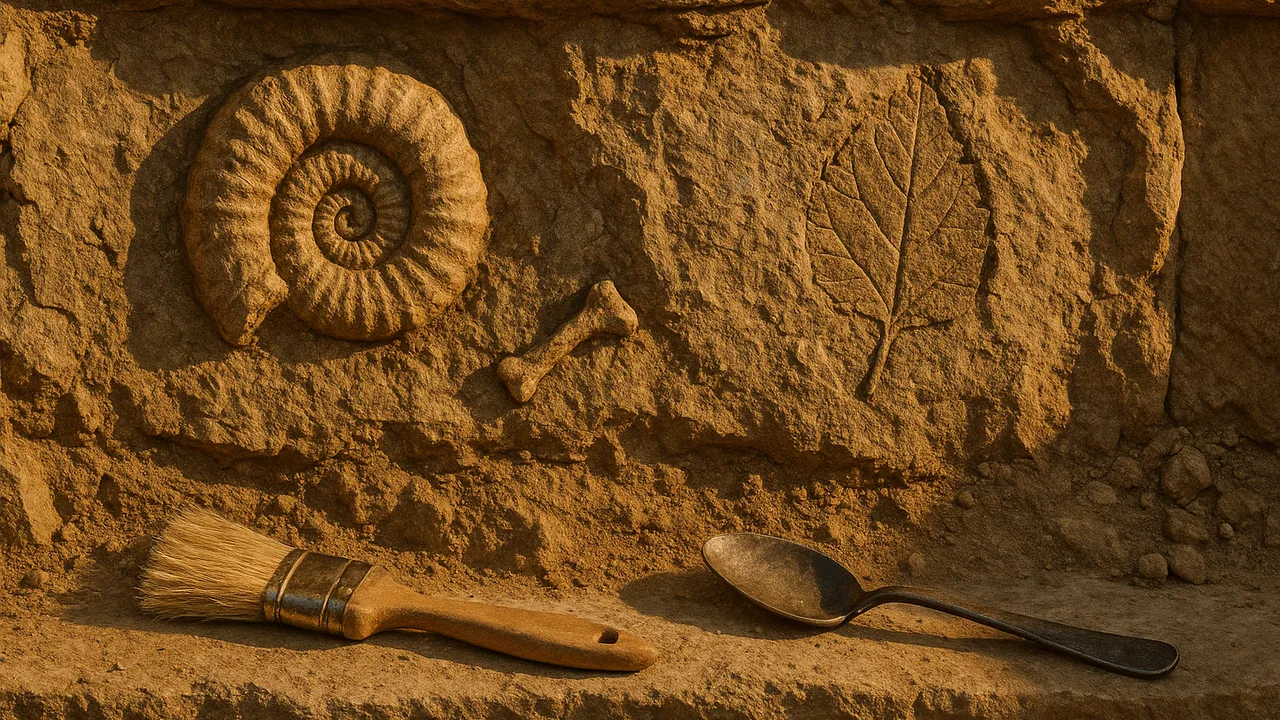
practice the fossil, anatomy and embryo ideas I found hardest, and stretch my thinking with a new challenge.
- I can identify patterns between sedimentary rock layers and their relative ages.
- I can find out when a certain fossil organism appears in the fossil record.
- I can identify times when there are big changes in the number or types of organisms in the fossil record, such as layers with many fossils next to layers with few fossils.
- I can use reasoning to show that organisms with similar anatomical features are likely to be more closely related because of their genetic makeup.
- I can explain how changes in anatomical features seen in fossils can help scientists trace evolutionary relationships between extinct and living organisms.
- I can analyze organized embryo pictures to find patterns of similarities between different species.
- I can identify how the appearance of embryos changes as they develop.
Phase 5: Prove It
Warm-Up ~5 min
Do Now. Look at your checkpoint. Circle one question about fossils, bones or embryos you missed or felt unsure about. That is your focus today.
How confident are you that you can I can use fossils, anatomy and embryos as evidence that life has changed.
Instruction ~10 min
Designers, today is a choice board. Your teacher points you to a Catch-up or a Stretch station, based on your checkpoint.
Re-teach: three kinds of evidence in three questions. 1. Where is it in the layers? Lower is older, so order tells when life forms appeared and disappeared. 2. Are the bones built on the same plan? Then the organisms likely share an ancestor. 3. Do the early embryos look alike? Shared early features also point to shared ancestry.
Worked example 1: sorting fossil cards. Ava gets six cards, each with a fossil and the layer it came from. She sorts them bottom to top in a table, then marks where each type first and last appears. The table makes the pattern easy to see: simple forms first, more varied forms later, and one type that disappears at layer 4.
Worked example 2: a fossil and a modern skeleton. Malik compares a picture of an early fossil horse leg with several toes and a modern horse leg with one large toe. “Same leg bones, but the side toes got smaller over time. That traces how horse legs changed.”
Choice board. Catch-up A: sort fossil cards into a layer table and mark first and last appearances. Catch-up B: color-match limb bones on four diagrams. Catch-up C: arrange embryo picture cards by species and stage. Stretch A: explain how a tilted rock layer could fool someone reading the fossil order. Stretch B: design a fifth museum station on vestigial structures.
| Station | What I did | What I learned | Question I still have |
|---|---|---|---|
Guided Exercises ~15 min
Everyone tries these, then moves to a choice-board station.
Independent Practice ~10 min
Show your growth.
Rewrite your answer to the checkpoint question you circled. Explain what you understand now that you did not before.
Closure ~5 min
Good work. Next class: catch-up and stretch for senses, ecosystems and design.
Exit ticket: in one sentence each, name a fossil-record pattern, an anatomy pattern and an embryo pattern.
How confident are you that you can I can analyze embryo pictures to find patterns of similarity between species.
Teacher notes
Materials: fossil-layer cards, limb diagrams, embryo picture cards (modern photographs), colored pencils, choice-board signs.
Setup: group students by checkpoint results. Catch-up stations run with you for the first 15 minutes; Stretch stations run on their own. Species named are examples only, not required knowledge.
Listen for: confusing first and last appearance; “horses got smaller toes because they wanted to run faster” (populations change over generations; individuals do not choose traits).
Support / stretch: pair readers; give tables with the layer column filled in. Stretch: use the Stretch A tilted-layer card.