3.25 Museum Opening Night: Life’s Changing Story
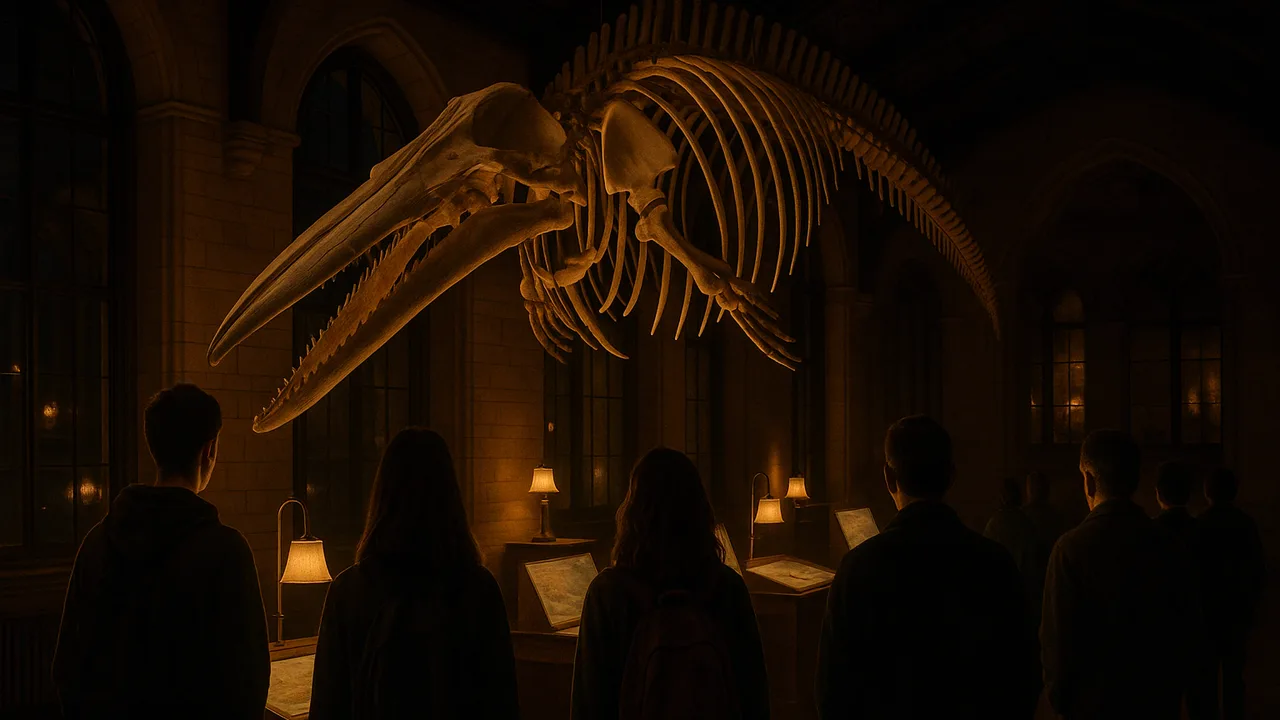
present our interactive exhibit to the museum and its visitors, explaining the evidence for evolution and defending our design with data.
- I can use evidence and reasoning to make a claim about which solution works best, based on their strengths and weaknesses.
- I can use evidence and reasoning to build an explanation for why certain organisms have similar or different anatomical features.
- I can use patterns in embryo development to explain how different species are related, even if they look very different as adults.
Phase 5: Prove It
Warm-Up ~5 min
Do Now. A museum director has two minutes at your exhibit. What three things must they hear?
Which opening fits the museum best?
Instruction ~10 min
Designers, tonight the exhibit opens. Museum staff, families and other classes visit in person or by video. Visitors try every station, and staff listen to each team’s pitch.
Your four-minute pitch. 1. The problem and who it serves. 2. Your three competing designs and the decision matrix. 3. The science at your station, in plain words. 4. Visitor Test Day data against every criterion. 5. What you would improve with more time or money.
Worked example 1: the science, simply. Lena at the limbs station: “Your arm, a bat’s wing and a whale’s flipper have the same bones in different shapes. The best explanation is that they came from a common ancestor and changed over many generations. Fossils of early whales show the change in progress.” Short, accurate and tied to what the visitor just touched.
Worked example 2: honest trade-offs. Diego: “We chose the Touch Table and added audio from the Audio Tour design. It cost more than an audio tour alone, but it was the only design that worked for visitors who cannot see and visitors who cannot hear. One embryos visitor took 3.4 minutes, so we shortened that clip.” Clients trust honest data.
Answering visitor questions. Some visitors will have big questions about evolution. Answer respectfully with evidence: “Here is what the fossils and bones show, and here is how scientists test it.”
Guided Exercises ~15 min
Rehearse with your team before the doors open.
Independent Practice ~10 min
After the opening, reflect.
What did a visitor or staff member ask or suggest? Name one idea from another team you would borrow, and explain why.
Write a one-paragraph recommendation to the museum: should it build a permanent version of our exhibit? Use evidence from the test and name one change you would make first.
Project task: Life’s Changing Story, an interactive museum exhibit
Design, build, test and present an interactive exhibit for a natural history museum. It shows the evidence that life on Earth has changed over time through four stations: fossil layers, comparing limbs, embryos, and how ecosystems change populations. The exhibit must meet the class criteria: every station uses at least 2 senses; a visitor can finish a station in under 3 minutes; at least 8 of 10 test visitors can explain one piece of evidence afterward; it is accessible to a visitor who cannot see or cannot hear; and it stays within the sample materials budget. Defend it with a decision matrix, a sensory test and Visitor Test Day data.
Submission workflow
- Define the problem: the visitors, the system, the five criteria and the constraints (budget, space, time, safety).
- Compare three competing designs (Touch Table, Audio Tour, Flip-Panel Timeline) with a weighted decision matrix, using what museums already do.
- Prototype the four stations: fossil layers, comparing limbs, embryos, and how ecosystems change populations.
- Run the sensory accessibility test, take peer critique, and build version 2.
- Test with ten visitors against every criterion, then present at Museum Opening Night with an honest recommendation.
How it is scored
| Criterion | What proficient looks like |
|---|---|
| Defining and evaluating designs | The problem, visitors, system, criteria and constraints are stated clearly; three designs are scored in a weighted matrix, and the claim names strengths, weaknesses and evidence. |
| Evidence for changing life | Stations accurately show fossil-layer patterns (order, complexity, extinction), shared limb anatomy in modern and fossil organisms, embryo similarities, and data-based ecosystem-population change, and explain what each says about relatedness or change. |
| Senses and accessibility | Each station uses at least 2 senses; the team explains how receptors carry the station’s message to the brain and shows it works for a visitor who cannot see or cannot hear. |
| Testing and communication | Visitor Test Day data is compared with every criterion; one limitation is named; every member speaks; the recommendation is honest and clear. |
Closure ~5 min
You built something a real museum could use, designers. Next: the unit checkpoint, then two catch-up and stretch days.
Exit ticket: which question from our Wonder Board can you now answer? Write the question and your answer.
How confident are you that you can I can defend a design to a client with data and science.
Teacher notes
Materials: final exhibit, scorecards and matrices on posters or slides, rubric copies for guests, timer, wipes for touch surfaces.
Setup: invite museum educators (by video works well), staff, families or another class; guests can score the “Testing and communication” row. Run stations as an open house and pitches in a rotation. Prepare students to answer questions about evolution calmly and with evidence, and to respect every visitor.
Listen for: “humans came from monkeys” or “from bats” (shared ancestors, not descent from living species); pitches that skip the data; one student doing all the talking.
Support / stretch: give a five-box pitch frame and note cards. Stretch: propose a fifth station and explain which evidence it would add.