3.01 The Whale With Hip Bones
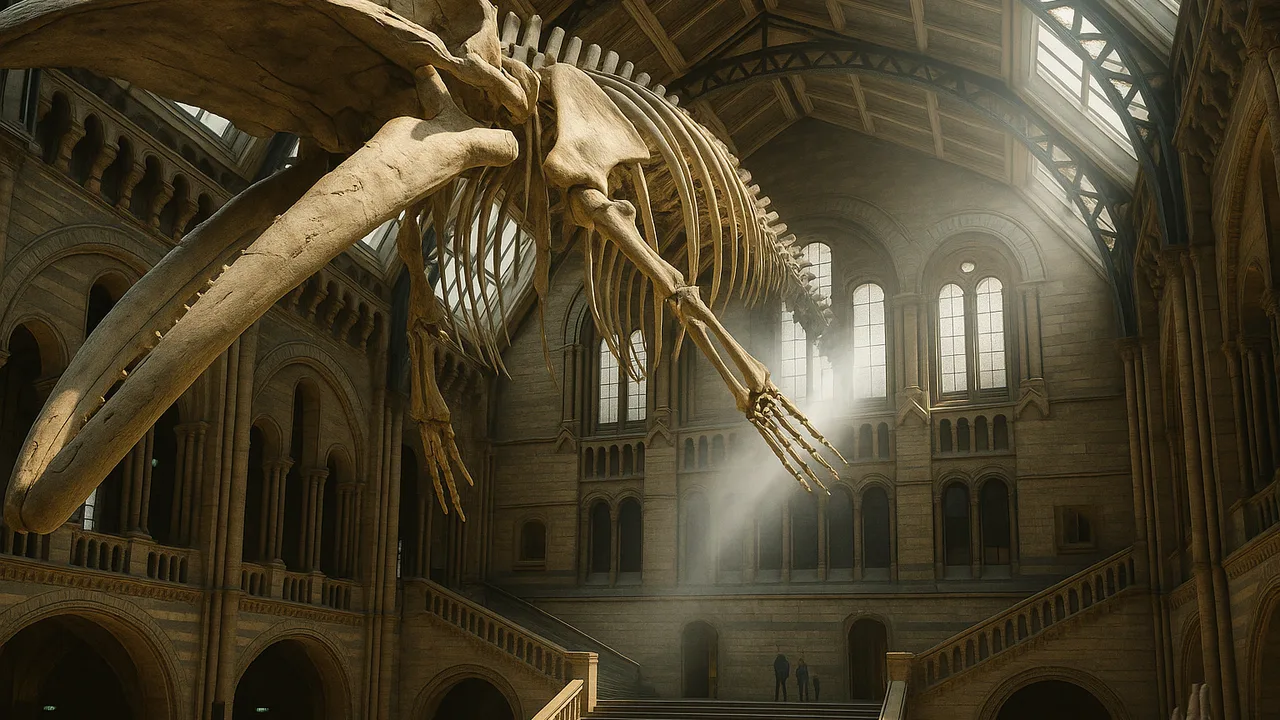
Life’s Changing Story: An Interactive Museum Exhibit
What evidence shows that life on Earth has changed over time, and how can we help visitors see, hear and touch that evidence?
The mystery: A whale skeleton has tiny leftover hip bones. A bat’s wing, a cat’s leg and your arm have the same bones in a different shape. Some rock layers are packed with fossils of animals that no longer live anywhere.
Questions we will figure out together in this unit:
- Why would a whale have hip bones if it has no back legs?
- How do scientists know which rock layers are older?
- Why are some fossils found only in certain layers?
- Why do a bat’s wing and my arm have the same bones?
- Do embryos of different animals look alike?
- How do my senses send information to my brain, and how do I remember things?
- What happens to animals when their habitat suddenly changes?
- How can a visitor who cannot see or cannot hear still learn from our exhibit?
describe the natural history museum’s request as a problem that designers could solve, and name the kinds of evidence our exhibit will need to show.
- I can describe a problem that could be solved by creating an object, tool, process, or system.
- I can identify and describe evidence about anatomical patterns in modern living organisms, like their skeletons or skulls.
- I can identify and describe evidence about anatomical patterns in fossilized organisms, like their skeletons or skulls.
Phase 1: Spark
Warm-Up ~5 min
Do Now. Study the projected drawing of a whale skeleton. Near the tail end, far from any leg, sit two tiny, rod-shaped bones that are not attached to the backbone. Write what you notice and one question you have.
Whales swim with flippers and a tail and have no back legs. Why might a whale have small hip bones at all?
Instruction ~10 min
Our client. A natural history museum is opening a new hall called Life’s Changing Story. The staff asked our class to design an interactive exhibit for it. Visitors should be able to see, hear and touch the evidence that life on Earth has changed over a very long time.
The phenomenon. A whale skeleton has tiny leftover hip bones. A bat’s wing, a cat’s leg and your arm contain the same set of bones in different shapes. Some rock layers are packed with fossils of animals that no longer live anywhere. Our driving question asks what this evidence shows and how to share it.
Exhibit designers, here is your mission. First we become investigators: we dig through rock layers, compare bones and embryos, and test how our own senses work. Then we become designers and build stations that real visitors can use and remember.
Worked example 1: observation or explanation? Mei wrote, “The whale has two small bones near its tail.” That is an observation: anyone can check it. Jamal wrote, “The bones are left over from ancestors with legs.” That is an explanation, so it needs evidence. A museum exhibit must show visitors the observations that support each explanation.
Worked example 2: a clear problem statement. Diego wrote, “Make a cool fossil display.” Priya wrote, “Museum visitors of all ages and abilities need hands-on stations that let them see, hear and touch the evidence that life has changed, so they leave able to explain it.” Priya names who needs help, what they need and a result we can check later.
How we treat questions. Evolution is one of the best-supported ideas in science. In science, a theory is a well-tested explanation backed by many lines of evidence. Every honest question is welcome here, and we answer questions with evidence.
Our teams. Teams of four rotate roles each lesson. The Materials Manager collects and returns supplies. The Recorder keeps the data table. The Tester runs procedures and takes measurements. The Reporter and Safety Lead checks safety and shares the team’s thinking.
Guided Exercises ~15 min
Work through these cards with your team. Talk before you lock in an answer.
Independent Practice ~10 min
Add to the class Wonder Board.
Write two questions on sticky notes: one about what the evidence shows about life's history, and one about how a museum visitor could experience that evidence with more than their eyes.
How confident are you that you can I can describe the museum's request as a problem designers could solve.
Closure ~5 min
Next time, we map the whole exhibit system: the visitors, the evidence, the senses and the space.
Exit ticket: write a problem statement for the museum exhibit. Name who needs it, what they need and a result we could check.
Teacher notes
Materials: a projected whale-skeleton drawing that shows the small pelvic bones, sticky notes, chart paper for the Wonder Board, a roles chart. If possible, read the museum’s request as a letter from an exhibit staff member.
Setup: post the driving question; it stays up all unit. Keep the Wonder Board where both parts of the unit can return to it.
Listen for: “theory means guess” and “animals change because they want to.” Note both; lessons 3.03–3.11 build the evidence. Some students or families may hold beliefs that feel in tension with evolution. Keep the focus on what the evidence shows, and treat every question respectfully.
Support / stretch: offer the frame “___ need ___ so that ___.” Stretch: write a second problem statement for a different audience, such as a school group of young children.