3.14 Ideate: Brainstorming the Exhibit Stations
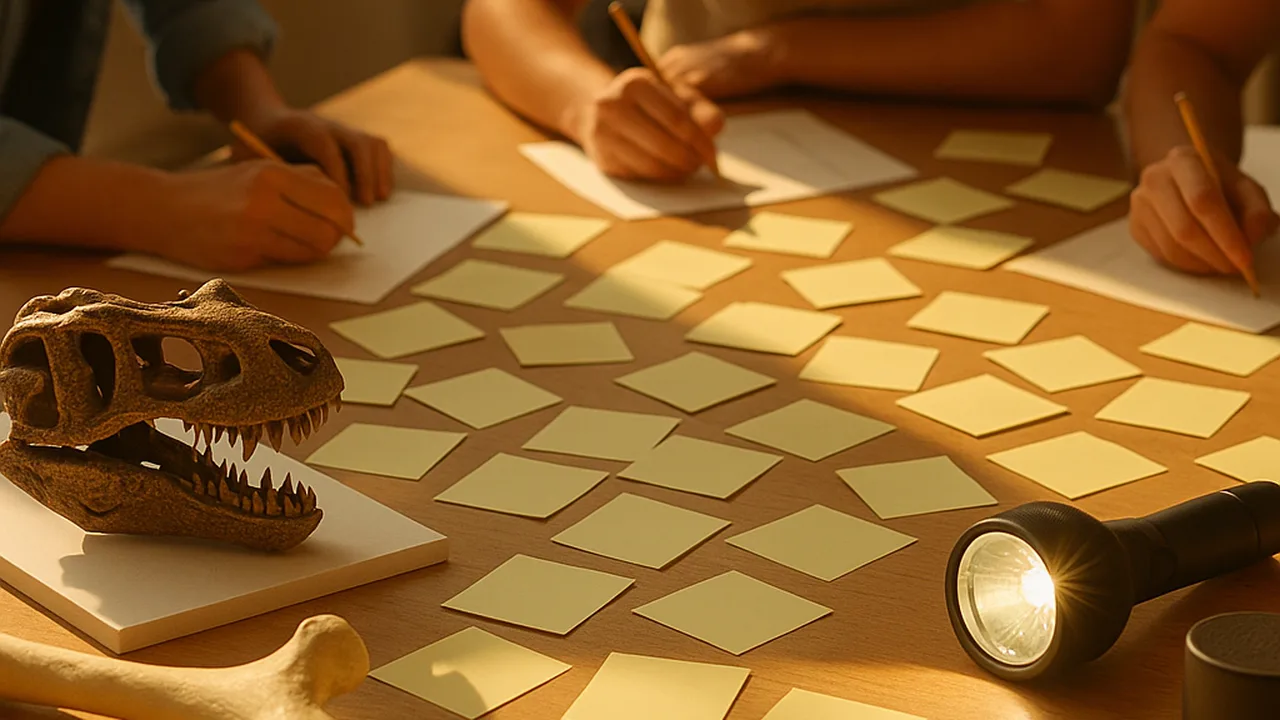
generate several exhibit station ideas grounded in our evidence and compare them against the class criteria and constraints.
- I can define the criteria for a solution that meet the needs of the people or groups affected by the problem.
- I can explain who the solution is meant to help and use criteria to compare different solutions, including using numbers when needed.
- I can define the constraints for a solution, including time, materials, costs, and scientific or other important issues.
- I can explain how the needs and wants of people involved, safety, and effects on others limit possible solutions.
- I can analyze how solutions or not solving the problem could negatively affect the environment.
- I can identify the system where the problem exists, including its main parts, how they relate, and what is inside or outside the system.
- I can explain who needs the problem solved, what needs must be met, and which scientific issues are important.
- I can analyze how possible solutions might affect people and the environment, and decide which issues and parts of the system matter most.
Phase 3: Make Sense
Warm-Up ~5 min
Do Now. Return to the Wonder Board from 3.01. Move every question we can now answer to the “We know” side. Choose one and answer it in two sentences with evidence.
During a brainstorm, what should a team do with an idea that sounds strange?
Instruction ~10 min
Reading: from evidence to stations. We have four big ideas to share. Rock layers show life changing, with appearances and extinctions. Shared bones in modern and fossil animals point to common ancestors. Similar embryos tell the same story. Populations shift when ecosystems change, as the wetland showed. And our senses lab tells us how visitors take all this in. Every station idea today must teach at least one big idea and meet the class criteria.
- every station uses at least 2 senses;
- a visitor can finish a station in under 3 minutes;
- at least 8 of 10 test visitors can explain one piece of evidence afterward;
- it is accessible to a visitor who cannot see or cannot hear;
- it stays within the sample materials budget.
Brainstorm rules. Aim for quantity. Build with “Yes, and…”. Sketch, do not just write. Judge later.
Worked example 1: a science-grounded idea. Priya sketched “Bone Match”: four 3D-printed forelimbs with color-coded, textured bones. A visitor feels each one, presses a button to hear what job the limb does, and matches the bones to their own arm on a large diagram. Senses: touch, hearing and sight. Science: homologous structures.
Worked example 2: scoring ideas in a decision table. Diego scored two ideas from 1 to 3 on each criterion. Bone Match scored 3 on senses and 3 on access, but 2 on budget because of printing. A “Dig the Layers” sandbox scored 3 on senses but 1 on time, since digging took too long. The table makes trade-offs visible.
| Station idea | At least 2 senses | Under 3 minutes | 8 of 10 can explain evidence | Accessible without sight or hearing | Within sample budget | Total |
|---|---|---|---|---|---|---|
| 1: | ||||||
| 2: | ||||||
| 3: |
Who else is affected? For at least one idea, note how the materials will be cleaned, reused or recycled when the exhibit closes.
Guided Exercises ~15 min
Brainstorm first, then work through these cards with your team.
Independent Practice ~10 min
Sketch and score.
Sketch at least three station ideas. Label the evidence each one teaches, the senses it uses and how a visitor who cannot see or cannot hear would use it.
Score your three ideas in the decision table. Explain which you would prototype first and name one constraint that shaped your choice.
Closure ~5 min
We have many evidence-based station ideas. Next phase, teams build prototypes, test them with visitors and revise.
Exit ticket: name your team's top station, the criterion it meets best and the constraint you worry about most.
Teacher notes
Materials: chart paper, markers, the Wonder Board, the class criteria and constraints from 3.09, decision table handouts.
Setup: run a timed silent sketch (5 min), then a team “Yes, and” round (8 min) before scoring. Each team should aim to cover a different big idea so the full exhibit tells the whole story.
Listen for: ideas that rely on one sense, take too long or have no evidence behind them. The decision tables carry into part 2, where MS-ETS1-2 is developed formally and stations are tested against the same five criteria.
Support / stretch: provide a station template with boxes for senses and evidence. Stretch: design a station for visitors who are both blind and Deaf, using touch and vibration.