3.22 The Sensory Test: Can Every Visitor Get the Message?
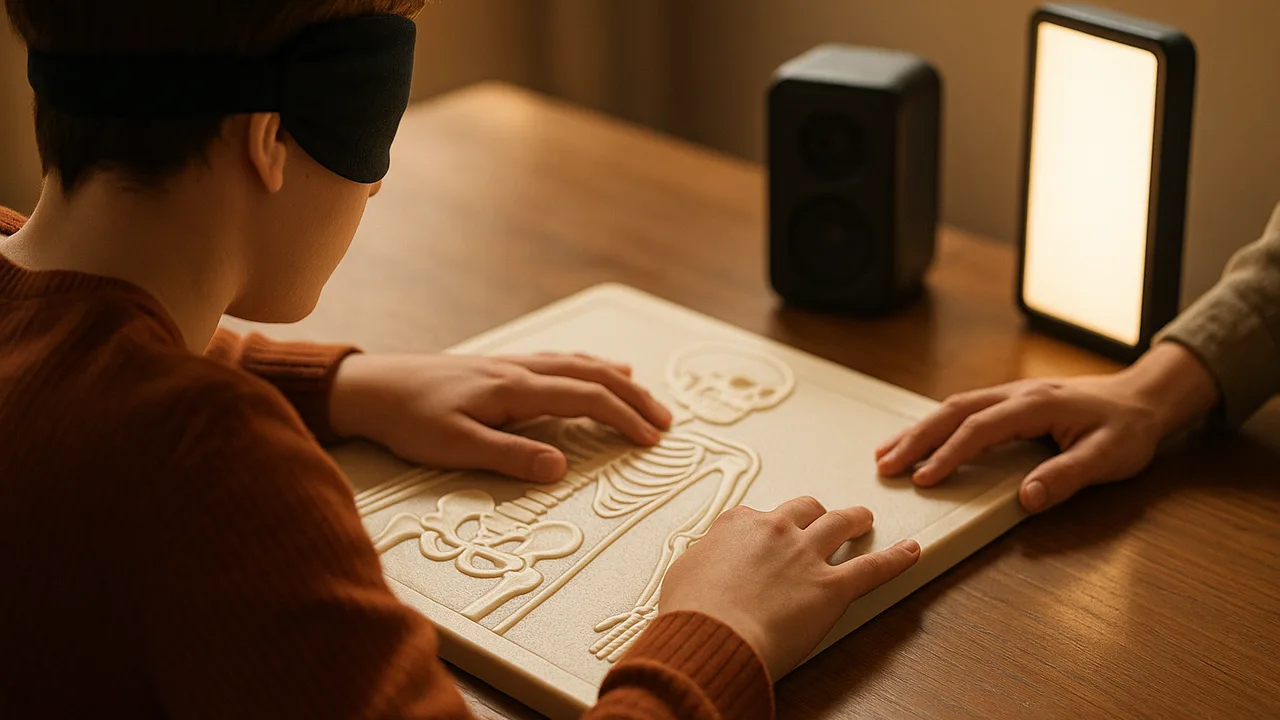
test each station with one sense blocked and explain, using sensory receptors, why a station reaches visitors who cannot see or cannot hear.
- I can gather information from at least two sources about how different types of sensory receptors respond to specific stimuli, like light, sound, or chemicals.
- I can explain how sensory information travels from receptors to the brain and how the brain uses this information for immediate actions or stores it as memories.
- I can use information I have gathered to show how sensory receptors cause immediate behaviors or create memories that affect behavior later.
- I can evaluate the credibility, accuracy, and possible bias of sources and methods used to collect information about sensory receptors and behavior.
- I can analyze whether the information supports the idea that sensory receptors send signals to the brain, leading to immediate actions or stored memories.
- I can decide if the information is enough to predict how an organism will respond to different stimuli based on cause and effect relationships.
Phase 4: Build
Warm-Up ~5 min
Do Now. You smell smoke and leave the room at once. Years later, the smell of a campfire reminds you of that day. Write which receptors were involved and what the brain did each time.
In the smoke example, which response is an immediate behavior and which is a memory?
Instruction ~10 min
Designers, today we test the accessibility criterion. The museum asked for an exhibit that works for a visitor who cannot see or cannot hear. We will check each station with one sense blocked.
The science, one more time. Receptors respond to one kind of stimulus each: light (eyes), sound (ears), touch, pressure and temperature (skin), chemicals (nose and tongue). They send messages to the brain. The brain combines the messages, decides on a behavior, and may store a memory. If one sense is blocked, the brain can still build the idea from the others, as long as the station gives it that information.
How to run the test. 1. A tester wears a sleep mask (no sight) with a guide partner who keeps them safe and says nothing about the science. 2. A second tester wears earmuffs with the audio muted (no hearing). 3. Time each station. 4. Afterward, ask: “What is one piece of evidence this station showed?” 5. Record what each sense contributed.
| Station | Senses used | No-sight tester: time and explanation | No-hearing tester: time and explanation | Fix needed |
|---|---|---|---|---|
| Fossil layers | ||||
| Comparing limbs | ||||
| Embryos | ||||
| Ecosystems and populations |
Worked example 1: a station that failed. Ava’s embryo station used flat photos and a printed label. The no-sight tester got nothing in 3 minutes. Eye receptors were blocked, and the station gave the skin and ears no information. Fix: raised outlines on each picture plus a 15-second audio clip.
Worked example 2: judging a source. While researching, Diego found two claims. A science museum’s accessibility guide says “combine touch with audio description.” An ad for a gadget says “touch boosts memory 500%!” with no study named. He trusts the first more: it comes from experts, it explains its methods, and it is not selling anything. The second gives no evidence and may be biased.
A respectful note. Blocking a sense for a few minutes does not show what it is like to live without it. When we can, the best testers are people who are blind or Deaf, and we listen to their advice.
Guided Exercises ~15 min
Run the test, then answer with your team.
Independent Practice ~10 min
Plan your fixes.
For each station that failed a test, write the fix, the receptor type it adds, and the sample cost of the fix.
Explain in four or five sentences how a visitor at your best station gets the evidence from receptor to brain to memory, so they can explain it afterward.
Closure ~5 min
Strong testing, designers. Next class: peer critique and version 2.
Exit ticket: describe one immediate behavior and one memory a visitor might form at your station, and the receptors involved.
How confident are you that you can I can explain how sensory receptors cause immediate behaviors or create memories.
Teacher notes
Materials: sleep masks, earmuffs or ear defenders, timers, version 1 stations, wipes, test tables printed.
Setup: MS-LS1-8 boundary: receptors respond to stimuli and send messages to the brain for behavior or memory; do not teach how nerve signals travel. Frame sense-blocking respectfully; if a student or family member who is blind, low-vision, Deaf or hard of hearing is willing to advise, their feedback is worth far more than a simulation.
Listen for: “the brain only uses one sense at a time”; jokes about disability (redirect firmly and kindly).
Support / stretch: students who prefer not to wear a mask can be timers or guides. Stretch: compare two published accessibility guides and judge which is more credible.