3.02 Mapping the Exhibit System
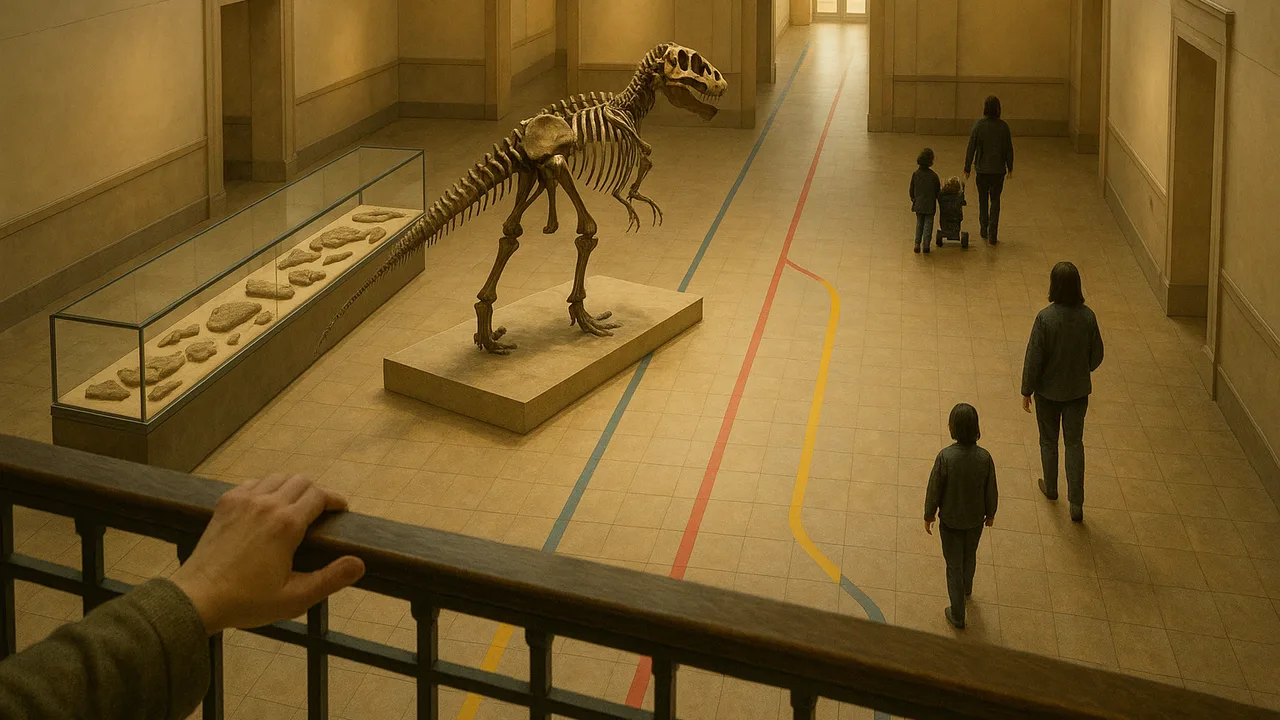
Life’s Changing Story: An Interactive Museum Exhibit
What evidence shows that life on Earth has changed over time, and how can we help visitors see, hear and touch that evidence?
The mystery: A whale skeleton has tiny leftover hip bones. A bat’s wing, a cat’s leg and your arm have the same bones in a different shape. Some rock layers are packed with fossils of animals that no longer live anywhere.
identify the parts of the exhibit system, the people it must serve and the scientific issues that matter most.
- I can identify the system where the problem exists, including its main parts, how they relate, and what is inside or outside the system.
- I can explain who needs the problem solved, what needs must be met, and which scientific issues are important.
- I can analyze how possible solutions might affect people and the environment, and decide which issues and parts of the system matter most.
Phase 1: Spark
Warm-Up ~5 min
Do Now. Think of the last museum, zoo or science center you visited, in person or online. List one display you remember and one you walked right past. What made the difference?
A station has a long sign and one fossil behind glass. What will most visitors do?
Instruction ~10 min
Thinking in systems. An exhibit is a system: a set of parts that interact. Designers draw a boundary around the parts they control and study what crosses it. Visitors, their attention and their time enter the system. What visitors understand and remember leaves with them.
Worked example 1: a system map. Malik drew a box labeled “exhibit.” Inside, he listed the stations, the evidence objects (fossil casts, bone models, embryo pictures), the sounds and the touch surfaces. Outside, he listed visitors, museum staff, the rest of the hall and the budget. He drew arrows for visitors entering, using their senses, and leaving with an idea. His map shows where the exhibit succeeds or fails.
Worked example 2: from needs to features. Ava interviewed a pretend museum educator, who said: “School groups arrive in waves, and some visitors use wheelchairs, hearing aids or a cane.” Ava turned each need into a feature: stations must be quick, reachable from a seated height, and usable without sight or without hearing. Each feature becomes something we can test later.
The scientific issues. The exhibit must be accurate. Real fossils are rare, so touch stations use casts, models and raised-line pictures. Every claim on a station must match evidence we have gathered.
Beyond the visitor. Materials become trash when the exhibit closes, and touch surfaces need cleaning. A good design thinks about the staff, the budget and the environment, not just the visitor.
Guided Exercises ~15 min
Use your system map and the educator’s notes. Talk with your team first.
Independent Practice ~10 min
Make your own system map in your notebook.
Draw the exhibit system. Show the boundary, at least four parts inside, three stakeholders outside, and arrows for what enters and what leaves.
List three needs from the museum or its visitors. Turn each need into a feature the exhibit must have, and say which one matters most.
Closure ~5 min
Our map shows the exhibit must carry real evidence. Next phase, we gather that evidence, starting with a dig through layers of rock.
Exit ticket: which part of the exhibit system matters most for visitors remembering the evidence, and why? Name one scientific issue the design must respect.
Teacher notes
Materials: chart paper, markers, an educator “interview” card for each team with three or four visitor needs, photos of museum stations (generic or teacher-made).
Setup: keep the system maps posted; 3.09 turns them into the class criteria and constraints.
Listen for: students who think only about the “average” visitor. Prompt with visitors who cannot see, cannot hear, use a wheelchair or speak another language. Do not quote attendance statistics.
Support / stretch: provide a pre-drawn boundary box with labels. Stretch: rank the needs and defend the top choice to another team.