4.28 Catch-up and Stretch: Growth, Reproduction and Better Designs
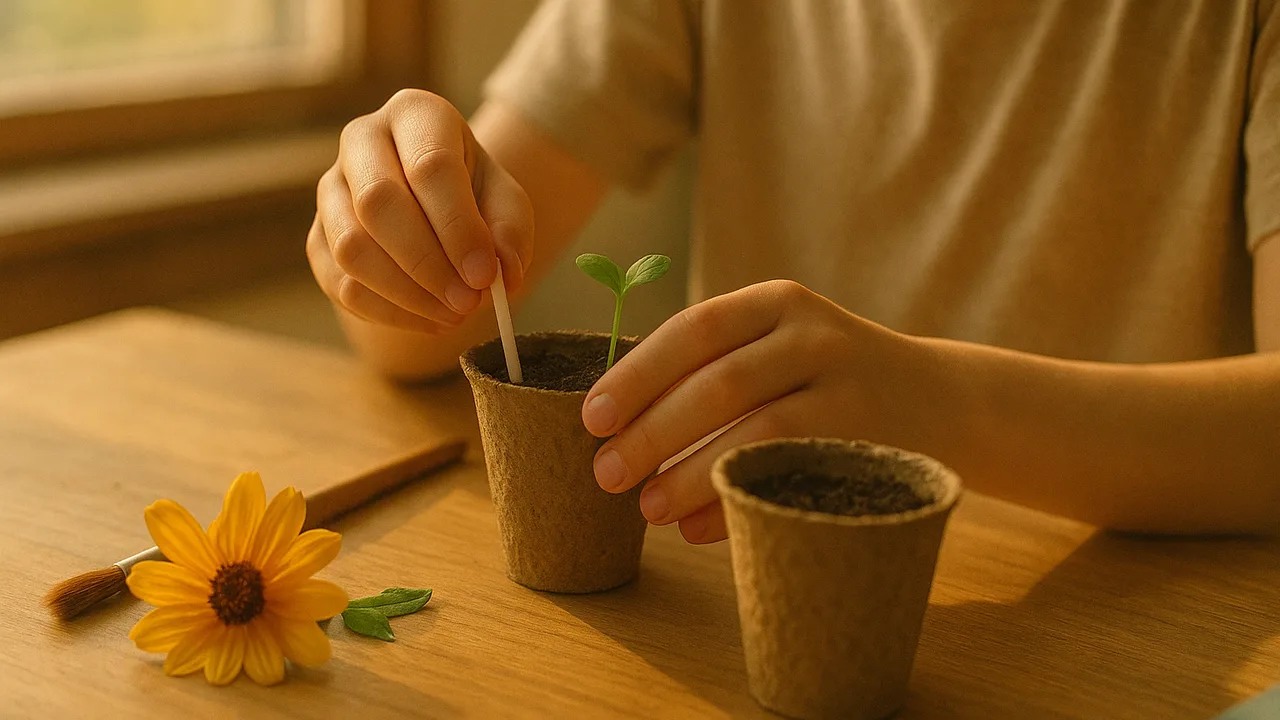
practice the growth, reproduction and design ideas I found hardest, and stretch my thinking with a new design challenge.
- I can use reasoning to connect evidence and explain how both environmental and genetic factors influence organism growth, and describe how these factors work together.
- I can explain that the effects of environmental and genetic factors on growth can be described using probability, since not every organism grows the same way.
- I can use evidence and reasoning to argue that many animal behaviors and plant structures affect how likely it is for animals and plants to reproduce successfully.
- I can explain that animal behaviors can sometimes help plants reproduce, like when animals spread pollen or seeds.
- I can describe how different factors work together to affect reproduction, and explain that these relationships are about increasing or decreasing the probability, not guaranteeing success.
- I can use data to identify the best features from each design that could be combined to create a better solution.
Phase 5: Prove It
Warm-Up ~5 min
Do Now. Find one checkpoint question about growth, flowers or design data that you want to fix. Write what you now think the answer is.
How confident are you that you can I can use data to explain growth and to improve a design.
Instruction ~10 min
Grow-lab engineers, last choice board of the unit.
Re-teach: two kinds of factors. Genetic factors are inherited, like variety or breed. Environmental factors are around the organism, like light, water, space and nutrients. Genes set a range; the environment decides where in the range an organism lands. Because individuals vary, we talk about what is more likely, not certain.
Worked example 1: crowding. Sample data: lettuce spaced 10 cm apart averaged 12 cm tall; spaced 3 cm apart, 7 cm tall. Same seeds, same light. Crowded plants compete for light and water, so space is an environmental factor.
Worked example 2: improving with a model. A team’s model predicts that doubling plants per tray doubles the harvest. Their sample test: harvest rose from 140 g to only 170 g, because crowding slowed growth. The model needed a crowding limit. Data shows where a model breaks.
Choice board. Catch-up A: sort factor cards into genetic and environmental. Catch-up B: match flowers to pollinators and explain each match. Stretch A: design a grow lab that fits half a counter but harvests the same mass, using data from three teams. Stretch B: research a bird or insect courtship behavior and argue how it raises the chance of reproduction.
| Station | What I did | Evidence I used | Question I still have |
|---|---|---|---|
Guided Exercises ~15 min
Everyone does these first, then moves to a station.
Independent Practice ~10 min
Work at your station.
Complete your station task and fill in the station table. Then write one claim, with evidence, using the word “likely.”
Use the crowding data to revise a grow-lab model: what limit would you add, and what would the revised model predict for three times as many plants?
Closure ~5 min
That wraps up Unit 4, grow-lab engineers. You fed plants, then people, with science and design. Next: your 3DX field trip.
Exit ticket: what is the most important thing you learned this unit about how food becomes you? Give one piece of evidence.
How confident are you that you can I can use data to explain growth and to improve a design.
Teacher notes
Materials: factor sort cards, flower and pollinator cards, calculators, the three-team data sheet.
Setup: regroup students using 4.26 results. All numbers are sample data. Keep courtship research to general, well-known behaviors like birdsong and nest building.
Listen for: dividing area the wrong way; “genes decide everything”; “more plants always means more food.”
Support / stretch: give a mass-per-area calculation frame. Stretch: graph harvest against number of plants and find where adding plants stops helping.