3.01 The Pond Water Mystery
Seeing the Invisible: A Digital Microscope Station
How can light, lenses and digital signals let us see and share things far too small for our eyes, and what do we find when we look?
The mystery: A drop of pond water looks clear. Under a microscope it is full of moving living things. A phone camera clipped to a cheap lens can send that picture across the world in a second.
Questions we will figure out together in this unit:
- What lives in a drop of pond water?
- How does a lens make things look bigger?
- Why can a phone camera take a picture through a microscope?
- Are plants made of the same stuff as animals?
- How does a picture travel through the air to another phone?
- Why do copied pictures sometimes look blurry?
- Is a single tiny creature really alive if it is just one cell?
- Why do some things let light through and others do not?
describe the health clinic’s request as a problem that engineers could solve with a new tool or system, and explain what we will investigate about living things.
- I can describe a problem that could be solved by creating an object, tool, process, or system.
- I can describe what I am investigating, including that living things are made up of cells.
Phase 1: Spark
Warm-Up ~5 min
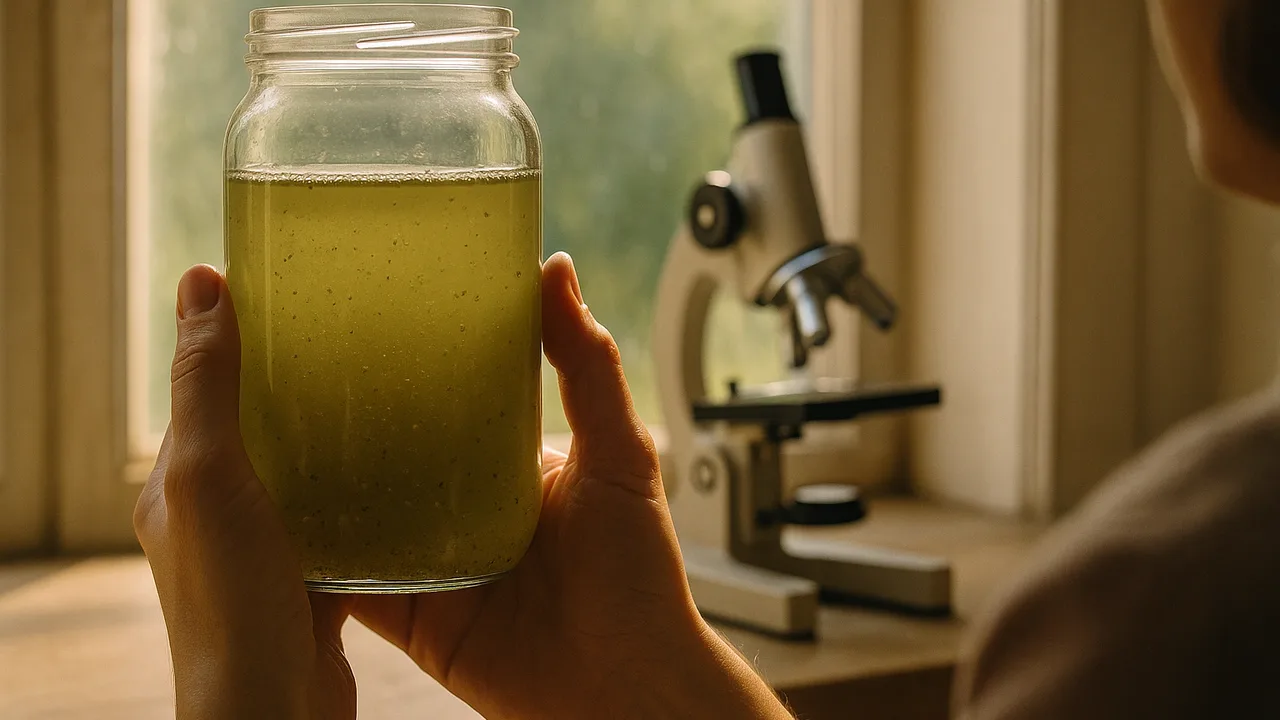
Do Now. Your teacher holds up a clear jar of water scooped from a pond. Look closely. Write down everything you can see in it. Then make a prediction.
If we put one drop of this water under a microscope, what will we see?
Instruction ~10 min
A request from our client. A community health clinic runs free family science nights. The staff want to show students and families what lives in pond water and what our own food and plants are made of. They have one old microscope, and only one person can look through it at a time. They asked our class for help.
Their need. The clinic wants a low-cost digital microscope station. It should show a clear, magnified image on a screen so a whole group can see it at once. It should also save and send images to families and to schools.
Microscope engineers, here is your mission. Design a station that lets the clinic see and share things far too small for our eyes. To do that well, you need to understand waves, light, lenses, digital images and the living things we will look at: cells.
Worked example 1: object, tool, process or system? A lens is an object. A microscope is a tool. The steps for making a slide are a process. The lens, light, phone camera, screen and people together form a system. Our final design will be a system.
Worked example 2: a clear problem statement. Diego wrote, “Microscopes are cool.” That names no person and no need. Priya wrote, “The health clinic needs a low-cost way to show magnified images of cells on a screen and send them to families, so many people can learn at once.” Priya’s statement names who, what and why.
What we will investigate. Scientists claim that every living thing is made of one or more cells. Over the next weeks, you will gather your own evidence to test that claim. You will compare living and nonliving things and look for cells in each.
Our teams. Teams of four rotate roles every lesson. The Materials Manager gets and returns supplies. The Recorder keeps the data table. The Tester runs procedures and focuses the microscope. The Reporter and Safety Lead checks safety and shares the team’s ideas.
Guided Exercises ~15 min
Work through these with your team. Use the arrows to move between cards. Talk it over before you lock in an answer.
Independent Practice ~10 min
Start our class Wonder Board on your own.
Write two questions on sticky notes: one about how a lens or camera makes tiny things visible, and one about what living things are made of.
How confident are you that you can I can describe the clinic's problem as one engineers could solve.
Closure ~5 min
Next time, we map every part of the microscope station system and the people who will use it.
Exit ticket: write a problem statement for the clinic's microscope station. Name who needs it, what they need and why it matters.
Teacher notes
Materials: a clear jar of pond water (or water from a bucket of leaves left out for a week), sticky notes, chart paper for the Wonder Board, a roles chart. If possible, invite a nurse or health educator to deliver the clinic’s request by video or letter.
Setup: post the driving question and the problem statement frame. If you have a classroom microscope with a screen, show 30 seconds of live pond water at the very end as a hook, without naming anything.
Listen for: “clear water is clean water” and “only animals are alive.” Do not correct yet. Lessons 3.06–3.07 give the evidence.
Support / stretch: give the frame “The ___ needs ___ so that ___.” Stretch: write a second problem statement for a different user, such as a school nurse or a farmer checking a pond.