4.11 CER: Where Did the Radish Get Its Mass?
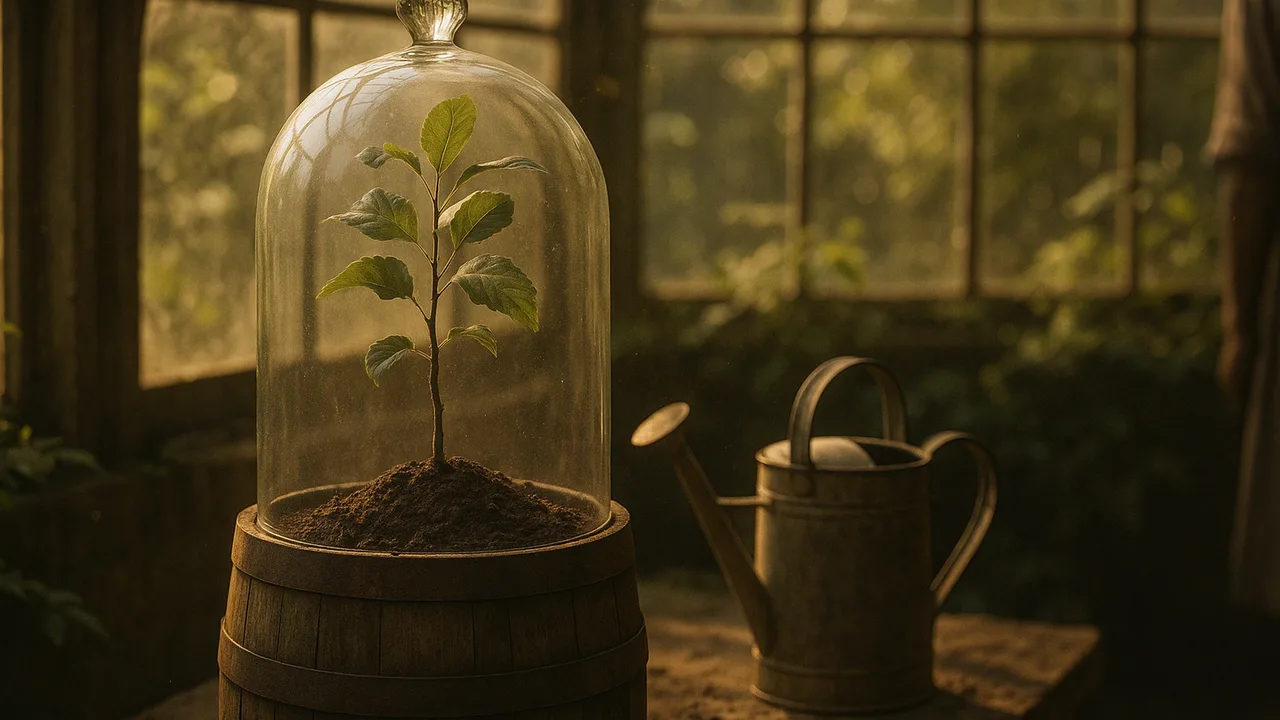
write a claim-evidence-reasoning argument, using several sources, that a plant’s matter comes mostly from carbon dioxide and water rearranged by photosynthesis.
- I can use my model to explain that the number of each type of atom stays the same before and after chemical reactions, showing that matter is conserved as it moves through an organism.
- I can describe how all the matter an organism uses for growth comes from the products of chemical reactions involving the food it takes in.
- I can explain that food molecules are broken down and rearranged to become the molecules that make up the organism, and that energy is released to support other processes.
- I can use evidence from different reliable sources to support my explanation about photosynthesis.
Phase 3: Make Sense
Warm-Up ~5 min
Do Now. A visitor to our exhibit reads, “A plant is built mostly from air and water.” They say, “That can’t be true. Air weighs nothing!” Write a one-sentence reply.
Does air have mass?
Instruction ~10 min
Read: How Scientists Found the Missing Mass.
For a long time, people believed plants ate soil. In the 1600s, Jan Baptist van Helmont tested that idea with a willow tree in a pot of weighed soil. After five years, the tree was far heavier, but the soil had lost only a tiny amount. He concluded the tree was made of water, because water was all he had added.
About a century later, other scientists noticed that plants change the air around them. One experimenter found that a mint plant in a sealed jar could “restore” air in which a candle had burned out. Later work showed that plants do this only in light, and that they take in carbon dioxide and give off oxygen. Step by step, the picture came together: light energy powers the plant, carbon dioxide and water supply the atoms, and the soil supplies only small amounts of minerals.
The same matter then moves through food chains. A rabbit that eats clover builds its body from the clover’s molecules. A hawk that eats the rabbit builds its body from those. Almost all the food animals eat, and most of the oxygen they breathe, trace back to photosynthesis powered by the sun.
Worked example 1: one source is not enough. Malik’s first draft used only the van Helmont story. Mei pointed out that van Helmont reached the wrong conclusion about water. Malik added our BTB data and our dry-mass data. Three sources that agree make a stronger argument than one.
Worked example 2: a model CER on a different question. Why did the yeast balloon inflate?
- Claim: the yeast cells broke down sugar and gave off carbon dioxide.
- Evidence: the yeast-and-sugar balloon grew 24 cm around, while the sugar-only balloon did not change (sample data).
- Reasoning: in cellular respiration, cells rearrange the atoms in sugar and oxygen into carbon dioxide and water and release energy. The gas had to come from the sugar, because without yeast nothing happened.
Sentence starters for your CER. Claim: “Most of the radish’s mass came from ___.” Evidence: “The soil lost only ___ g, while the plant gained ___ g.” “Our BTB tube ___ showed ___.” Reasoning: “In photosynthesis, the atoms in ___ and ___ are rearranged into ___. Because atoms are conserved, ___.”
Guided Exercises ~15 min
Prepare your CER piece by piece. Each card builds one part.
Independent Practice ~10 min
Write your full argument. Use at least three sources: the mass data, the BTB data and today’s reading.
Write a CER: Where did most of the radish's mass come from? Use the sentence starters, at least two numbers, and the idea that atoms are rearranged, not created.
How confident are you that you can I can argue from several sources that a plant's matter comes from carbon dioxide and water.
Closure ~5 min
Trade CERs with a partner. Underline their claim once, their evidence twice and their reasoning with a wavy line. Next time we build the body’s side of the exhibit: cells to systems.
Exit ticket: write the reasoning sentence from your CER. Make sure it names photosynthesis and explains why atoms matter.
Teacher notes
Materials: student data from 4.04 and 4.05, the reading (in the lesson), a CER organizer, highlighters.
Setup: read the passage aloud or in pairs, pausing after each paragraph to summarize. Students then draft the CER independently.
Accuracy note: the history is kept general on purpose. The willow study and the sealed-jar mint experiments are well documented, but avoid adding exact masses, years or names beyond those in the lesson unless you have checked them.
Listen for: claims with no numbers; reasoning that just repeats the evidence; “the plant makes matter from light.”
Support / stretch: give a partly completed CER with the claim filled in. Stretch: add a rebuttal paragraph answering the “air weighs nothing” visitor.