3.24 The Image-Quality Test: Does Our Station Meet the Criteria?
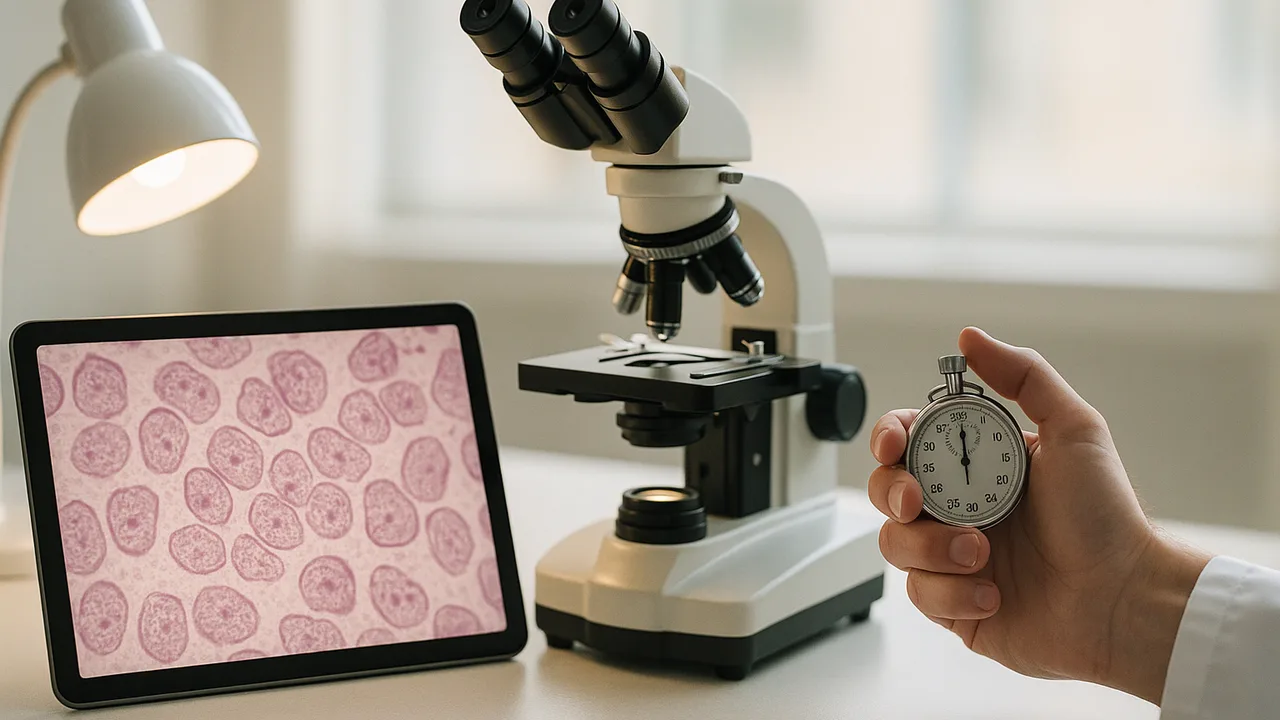
test our final station against every criterion and constraint, record the results, and judge honestly where it succeeds and falls short.
- I can use a systematic method, like a decision matrix, to find the strengths and weaknesses of each solution.
- I can evaluate each solution using the criteria and constraints we defined.
- I can compare the solutions based on how well they meet the criteria and constraints.
- I can define the criteria for a solution that meet the needs of the people or groups affected by the problem.
- I can explain who the solution is meant to help and use criteria to compare different solutions, including using numbers when needed.
- I can identify the tools I use to observe cells at different magnifications and explain why different tools are needed to see cells at different scales.
Phase 5: Prove It
Warm-Up ~5 min
Do Now. Reread the four criteria. Which one are you most nervous about today, and why?
Who should time the 10-minute setup test?
Instruction ~10 min
Test day. Each team runs one test for each criterion and constraint. Record exact results, not impressions.
| Criterion or constraint | How we check it |
|---|---|
| Criterion: magnifies at least 100×, so the nucleus and cell wall are clear | Ruler photo for magnification; can a classmate label both parts on stained onion skin? |
| Criterion: at least 8 people can see a cell’s nucleus from 2 m away | Show the image on the screen; count who can point to the nucleus from the 2 m line |
| Criterion: images are saved and sent to families as digital files | Save it, then send it to the teacher’s class account |
| Constraint: parts cost less than the $150 sample budget | Add up the class price list |
| Constraint: set up in under 10 minutes | Time a teammate who did not build it |
| Constraints: safety and privacy | No lasers, no human samples, no loose cords; images show slides, never faces |
Worked example 1: a pass and a near miss (sample data). Jamal’s team: the ruler photo showed 100×, and a visitor labeled the nucleus and cell wall on the onion photo (pass). Nine classmates pointed to the nucleus on the monitor from 2 m (pass). The image was saved and sent in 40 seconds (pass). Parts cost $64 (pass). Setup took 11 minutes 10 seconds (fail by 70 seconds). The team’s honest judgment: everything met except setup time, so the setup steps need simplifying.
Worked example 2: matching results to science. Mei’s team failed clarity on the first try. The photo was washed out by glare. They covered the shiny tape near the lens with black paper, which absorbs the stray light, and retested. The nucleus became clear. The fix came straight from the reflect-absorb-transmit model.
| Criterion | Target | Our result | Pass / fail | Evidence (photo, receipt, timer) |
|---|---|---|---|---|
| Magnification; nucleus and cell wall labeled | 100× or more; both labeled | |||
| Group viewing | 8 people see the nucleus from 2 m | |||
| Save and send | Digital file sent | |||
| Parts cost | Under $150 (sample) | |||
| Setup time | Under 10 min | |||
| Safety and privacy | No loose cords; slides only, no faces |
Guided Exercises ~15 min
Run each test, record the result, then answer the matching block.
Independent Practice ~10 min
Judge your design.
Write your test verdict: criteria met, criteria missed, and evidence for each. End with one honest limitation.
Based on today's results, is your design still the best of the three from 3.15? Use your matrix and test data to argue.
Closure ~5 min
Your verdict is in. Next class: the Clinic Open House showcase.
Exit ticket: name the criterion your station met most strongly and the evidence that proves it.
How confident are you that you can I can evaluate a solution using the criteria and constraints we defined.
Teacher notes
Materials: final stations, stained onion slides, timers, the price list, a class account or shared folder for receiving images, volunteers (another class or staff) to act as clinic users.
Setup: set four test stations around the room and rotate teams. Use school-approved accounts only; images contain no personal information. Prices are sample data unless you use real receipts.
Listen for: “close enough” on a fail; teams hiding a failed criterion.
Support / stretch: give a verdict paragraph frame. Stretch: run three setup trials and report the average time.