4.27 Catch-up and Stretch: Matter, Energy and Body Systems
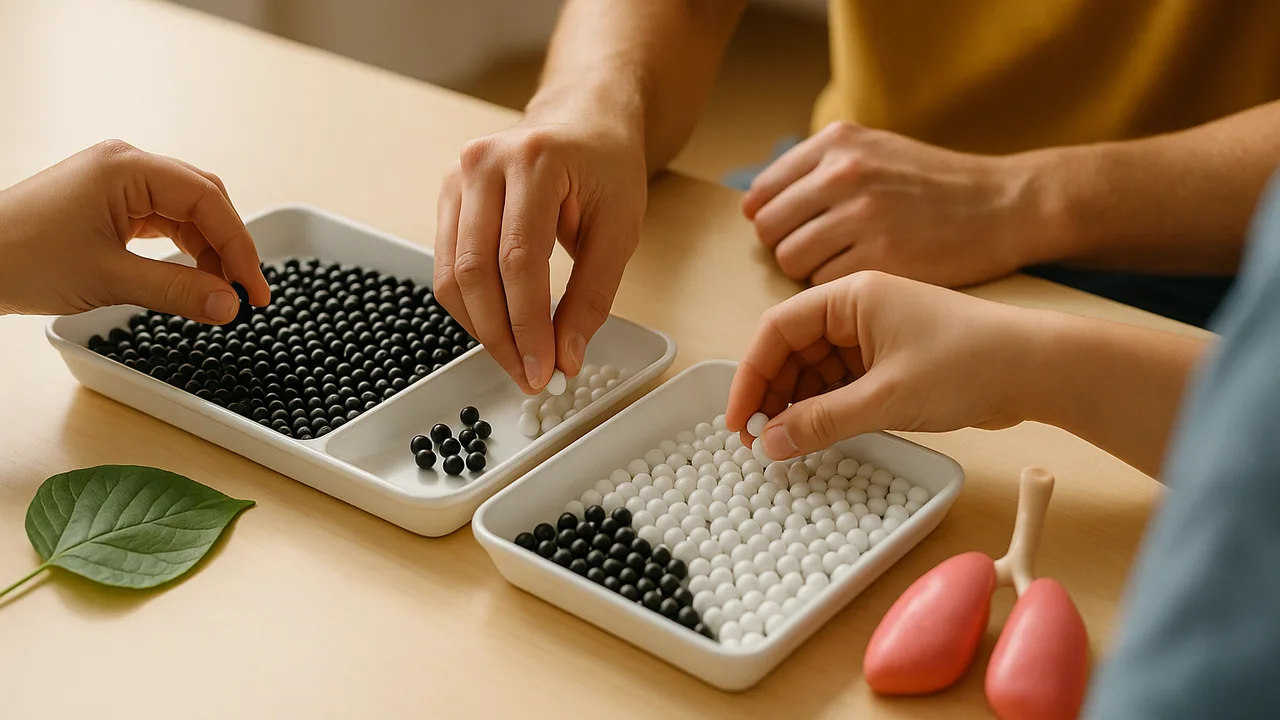
practice the photosynthesis, respiration and body-system ideas I found hardest, and stretch my thinking with a new challenge.
- I can explain how plants, algae, and photosynthetic microorganisms take in carbon dioxide and water and use sunlight to make food and release oxygen.
- I can describe how plants use the food they make for energy, growth, and other important functions.
- I can explain how animals depend on plants for food and oxygen, and how all food and most oxygen animals use come from energy from the sun moving matter through photosynthesis.
- I can describe in my model how food molecules react with oxygen during cellular respiration to release stored energy.
- I can show in my model that the atoms in food are rearranged through chemical reactions to form new molecules.
- I can describe evidence that specialized groups of cells work together to form tissues, and that different tissues make up organs with specific functions.
- I can explain how organs work together as subsystems to form organ systems that carry out complex functions in the body.
- I can use evidence to show how organ systems interact with each other to help the body survive and grow.
Phase 5: Prove It
Warm-Up ~5 min
Do Now. Look at your checkpoint. Circle one question about plants, food or the body that you missed or felt unsure about. That is your focus today.
How confident are you that you can I can trace matter and energy from a leaf into my cells.
Instruction ~10 min
Grow-lab engineers, today is a choice board. Your teacher will point you to a Catch-up station or a Stretch station.
Re-teach: two equations, one cycle. Photosynthesis, in chloroplasts: carbon dioxide + water + light energy → sugar + oxygen. Cellular respiration, in mitochondria: sugar + oxygen → carbon dioxide + water + energy. The outputs of one are the inputs of the other. Matter cycles; energy flows in as light and out as motion and heat.
Worked example 1: the sealed jar. A sealed jar holds a water plant and a snail in light. The plant makes oxygen the snail uses. The snail releases carbon dioxide the plant uses. Both do respiration. In the dark, the plant stops photosynthesis but keeps respiring, so oxygen slowly drops.
Worked example 2: systems at a sprint. Running: the nervous system signals muscles; muscle cells respire faster; the respiratory system speeds breathing; the circulatory system speeds the heart to carry more oxygen and sugar; carbon dioxide leaves through the lungs.
Choice board. Catch-up A: sort input and output cards onto a two-equation cycle mat. Catch-up B: build a levels-of-organization ladder from cell to organ system. Stretch A: explain why a log burning and a cell respiring both release carbon dioxide, and how they differ. Stretch B: design a sealed-jar ecosystem that would last longest, and justify each choice.
| Station | What I did | What I learned | Question I still have |
|---|---|---|---|
Guided Exercises ~15 min
Everyone does these first, then moves to a station.
Independent Practice ~10 min
Work at your station.
Complete your station task, then fill in the station table. Write one sentence that uses the word “conserved” correctly.
Closure ~5 min
Good work at the stations. Tomorrow: one more choice board on growth, reproduction and design.
Exit ticket: in two sentences, explain how the oxygen you just breathed connects to a plant's chloroplast.
How confident are you that you can I can model how matter and energy move through plants and my body.
Teacher notes
Materials: input/output cards and cycle mats, organization ladder cards, colored pencils, station signs.
Setup: group students using 4.26 results. Ten minutes of re-teach, then 25 minutes at stations. The sealed jar is a thought experiment; do not seal live animals in jars.
Listen for: “plants breathe in carbon dioxide instead of respiring”; “burning and respiration are the same thing” (both release energy from fuel with oxygen, but respiration happens in small, controlled steps in cells).
Support / stretch: give pre-labeled arrows for the cycle. Stretch: add a decomposer to the jar and explain its role in cycling matter.