4.01 The Seed That Outgrew Its Packet
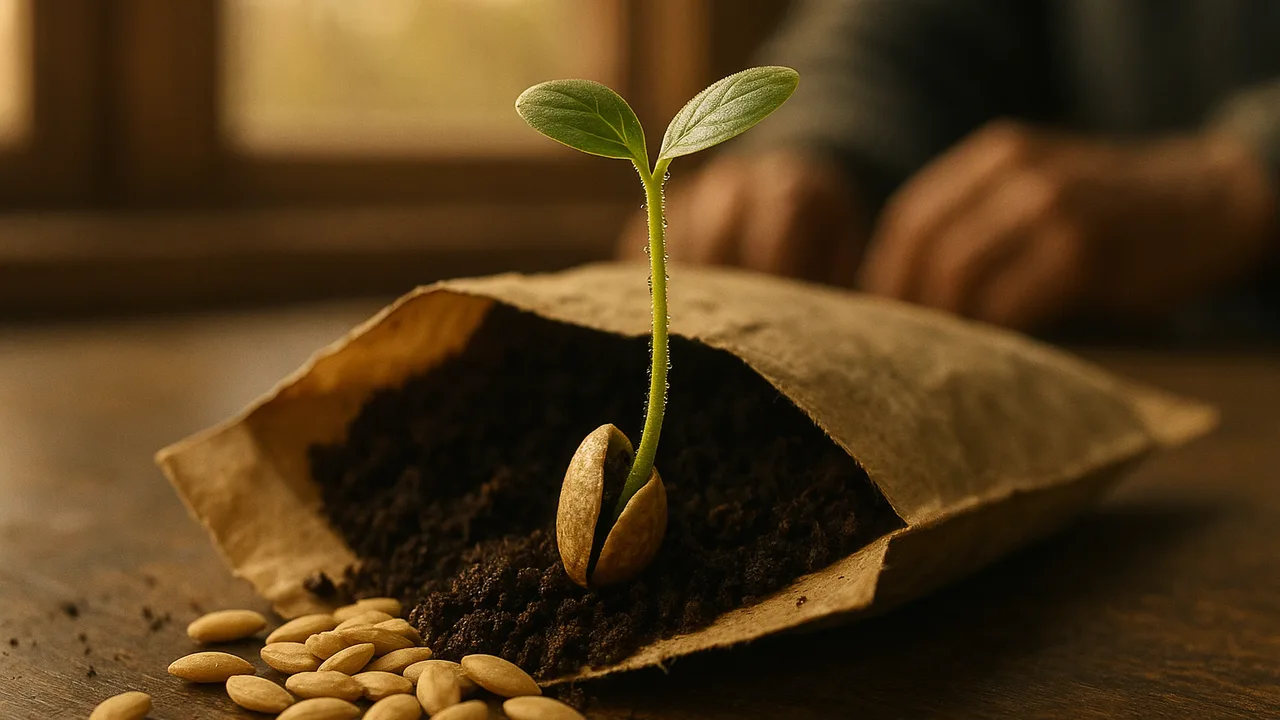
The Grow Lab: Feeding Plants and People
How do plants turn light, air and water into food, and how do our bodies turn that food into growth and energy?
The mystery: A tiny seed grows into a plant thousands of times heavier, mostly from air and water. Two seeds from the same packet, grown in different spots, end up very different sizes. A runner eats a banana and keeps going.
Questions we will figure out together in this unit:
- Where does a plant’s new mass come from, if not the soil?
- Why do seeds from the same packet grow to different sizes?
- Do plants breathe like we do?
- How much light does lettuce need indoors?
- Why do flowers have bright colors and sweet smells?
- What happens to a salad after I swallow it?
- Why does my heart beat faster when I run?
- How does food turn into energy and new cells?
describe the grow lab challenge and ask testable questions about where a growing plant gets its matter and why plants of the same kind grow differently.
- I can explain how photosynthesis helps move matter and energy into and out of organisms.
- I can explain that both environmental factors (like food, water, and space) and genetic factors (like breed or species) can affect how organisms grow.
Phase 1: Spark
Warm-Up ~5 min
Do Now. Your teacher holds up a single radish seed and a full-grown radish plant with its leaves. The seed is about the size of a peppercorn. The plant is many times heavier. Before we talk, make a prediction on your own.
The plant grew from that tiny seed. Where did MOST of its new mass come from?
Instruction ~10 min
A request from our clients. The school cafeteria staff and the garden club have written to our class. They want fresh greens, such as lettuce, spinach and pea shoots, on the salad bar in winter, when the outdoor garden is asleep. They are asking us to design a classroom grow lab: shelves, lights, trays and a care plan that produce greens indoors.
A second request. The club also wants a “garden to body” exhibit for the cafeteria wall. It should show how food from the grow lab becomes the growth and energy of the students who eat it.
Grow lab scientists, here is your mission. To design a lab that really works, you need to understand how plants turn light, air and water into food. To build the exhibit, you need to understand how our body systems turn that food into energy and new cells.
Three puzzles to explain. (1) A tiny seed becomes a plant thousands of times heavier. (2) Two seeds from the same packet, grown in different spots, end up very different sizes. (3) A runner eats a banana and keeps going. In grade 6 you traced food and energy through ecosystems. This unit zooms in to what happens inside a single plant and a single body.
Worked example 1: turning a puzzle into a testable question. Priya wrote, “Why do plants grow?” That question is too wide to test in a classroom. Diego wrote, “Do pea seedlings under a grow light grow taller in ten days than pea seedlings by a dim window?” Diego’s question names one thing to change, one thing to measure and a time span. That makes it testable.
Worked example 2: matter or energy? Malik listed what a plant takes in: water, air, sunlight and a little soil. He sorted them. Water, air and soil are matter, because they have mass and take up space. Sunlight is energy, so it cannot add mass to the plant. Keeping matter and energy separate will help us solve puzzle 1.
Our teams. Teams of four rotate roles every lesson. The Materials Manager gets and returns supplies. The Recorder keeps the data table. The Tester runs the procedure and reads the instruments. The Reporter and Safety Lead checks goggles and hand washing and shares the team’s ideas.
Guided Exercises ~15 min
Work through these with your team. Use the arrows to move between cards. Talk it over before you lock in an answer.
Independent Practice ~10 min
Start our class Wonder Board on your own.
Write three questions on sticky notes: one about how plants grow, one about how our bodies use food, and one about the grow lab design.
How confident are you that you can I can describe the grow lab challenge and ask a testable question about plant growth.
Closure ~5 min
We have two clients, two products and three puzzles. Next time, we map the whole path from the grow lab to the cafeteria to the cells of your body.
Exit ticket: rewrite puzzle 2 (two seeds, two sizes) as a testable question. Name what you would change and what you would measure.
Teacher notes
Materials: a radish seed and a grown radish plant (or a photo of one), sticky notes, chart paper for the Wonder Board, a roles chart. If you can, have a cafeteria staff member or garden club advisor deliver the request in person or by letter.
Setup: plant the seedling trays for lesson 4.03 and the radish cups for 4.05 at least 10–14 days before this lesson, so data exist when students need them. Post the driving question; it stays up all unit.
Listen for: “plants eat soil” and “plants get food from their roots.” Do not correct yet; lessons 4.04–4.05 provide the evidence. Also listen for “sunlight is food,” which mixes up matter and energy.
Support / stretch: give the frame “Does changing ___ affect ___ over ___ days?” Stretch: ask students to list every input and output of a growing plant they can think of.