4.22 Garden to Body: Modeling the Exhibit
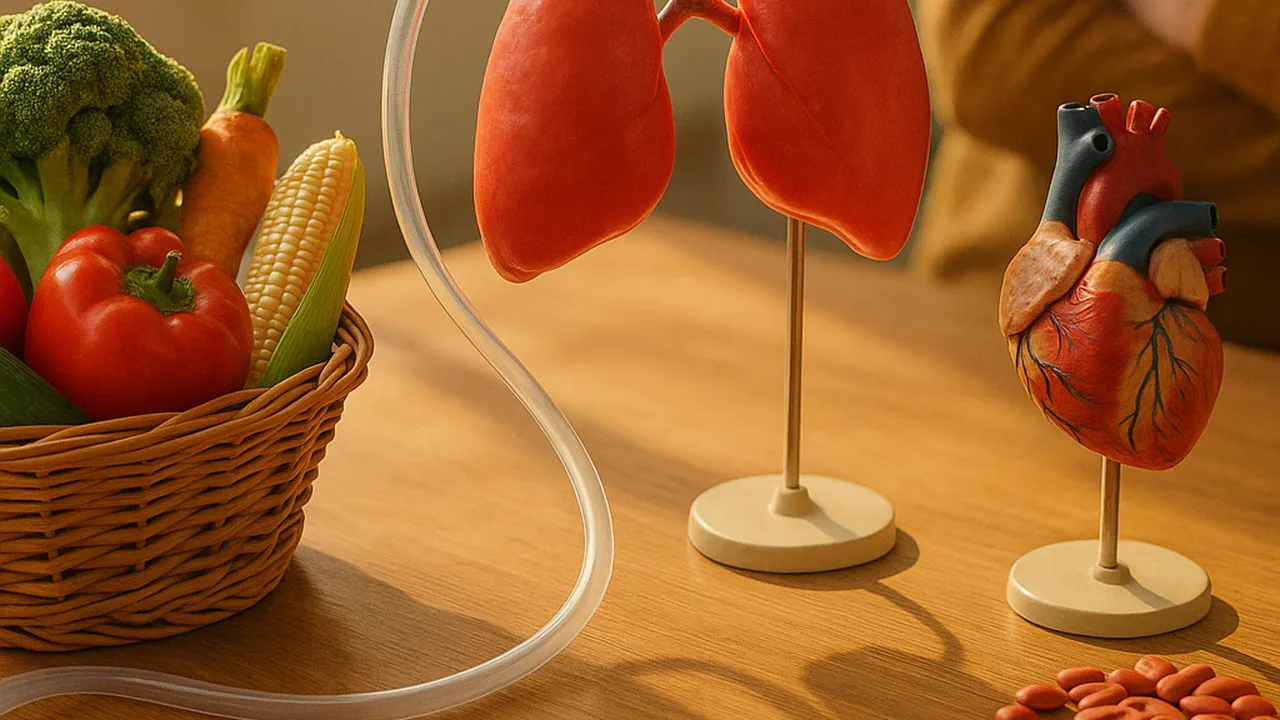
model how food from the garden is broken down and rebuilt in the body, and how body systems work together to deliver it to cells.
- I can develop a model that shows food molecules, oxygen, and energy involved as matter moves through an organism.
- I can identify and show in my model that food molecules are complex and contain carbon, and that new molecules are made during chemical reactions.
- I can use my model to show that energy is released or absorbed when food and oxygen react.
- I can describe in my model how food molecules react with oxygen during cellular respiration to release stored energy.
- I can show in my model that the atoms in food are rearranged through chemical reactions to form new molecules.
- I can describe evidence that specialized groups of cells work together to form tissues, and that different tissues make up organs with specific functions.
- I can explain how organs work together as subsystems to form organ systems that carry out complex functions in the body.
- I can use evidence to show how organ systems interact with each other to help the body survive and grow.
Phase 4: Build
Warm-Up ~5 min
Do Now. Our phenomenon: a runner eats a banana and keeps going. List every body system you think the banana has to pass through or help before the runner’s leg muscles can use it.
Which body system breaks food into small molecules the body can absorb?
Instruction ~10 min
Grow-lab engineers, our second product is an exhibit. The garden club wants a “garden to body” display in the cafeteria that shows where lettuce goes after lunch. Today we model it.
Levels of organization. Cells form tissues. Tissues form organs. Organs work together as organ systems. Systems work together as the whole body. Every system is built from groups of cells.
Systems working together. The digestive system breaks food into small molecules, like sugars. The circulatory system carries those molecules, and oxygen, in the blood to every cell. The respiratory system brings in oxygen and gets rid of carbon dioxide. The excretory system removes other wastes. The nervous system senses and controls, and the muscular system moves us, using the energy cells release.
Inside every cell: cellular respiration. In the mitochondria, food molecules react with oxygen and release stored energy. In words: sugar + oxygen → carbon dioxide + water + energy. Notice it is the reverse direction of photosynthesis. The atoms are not destroyed; they are rearranged into new molecules. Some food molecules are not used for energy at all. They are rearranged into the molecules that build new cells, which is how we grow.
Worked example 1: tracing one leaf. Mei’s exhibit panel: “Lettuce sugar → digestive system breaks it down → circulatory system carries it to a leg muscle cell → respiratory system has delivered oxygen to the same blood → in the cell, sugar and oxygen react and release energy → carbon dioxide travels back in the blood and is breathed out.”
Worked example 2: counting atoms. Kofi used colored beads: 6 black for carbon, 12 white for hydrogen and 6 red for oxygen made a “sugar”; he added red pairs for oxygen. After rearranging into carbon dioxide and water, he still had exactly the same beads. Matter is conserved; only the arrangement changed.
| Body system | Its job in the garden-to-body story | Which other system it depends on |
|---|---|---|
| Digestive | ||
| Circulatory | ||
| Respiratory | ||
| Excretory | ||
| Muscular and nervous |
Guided Exercises ~15 min
Build your exhibit model step by step. Fill in the body-system table as you go.
Independent Practice ~10 min
Draft your exhibit panel.
Draw a garden-to-body flow model on one page. Start with light, carbon dioxide and water at the grow lab. End with energy used by a muscle cell and carbon dioxide breathed out. Label at least four body systems.
Use your bead or drawing model to explain why the mass of atoms in sugar and oxygen equals the mass of atoms in the carbon dioxide and water they become.
Closure ~5 min
Your exhibit connects the garden to the body. Next class, teams trade work for peer critique.
Exit ticket: in two sentences, explain how the lettuce in a salad becomes energy for your muscles AND material for growth.
How confident are you that you can I can model how food and oxygen move through the body and react in cells.
Teacher notes
Materials: colored beads or paper dots (black, white, red), chart paper, a body-systems diagram.
Setup: keep cellular respiration as a word equation; the bead count is a physical model of atoms being conserved, not an equation to balance. Stay at the level of how systems interact, not how each organ works inside.
Listen for: “only animals do respiration” (plant cells do it too); “energy turns into matter”; “food is used up and disappears.”
Support / stretch: give a partly filled flow model with system names in a word bank. Stretch: add the plant’s own respiration to the model and explain why plants need mitochondria too.