4.21 A Bed for Bees: Planning a Pollinator-Friendly Garden
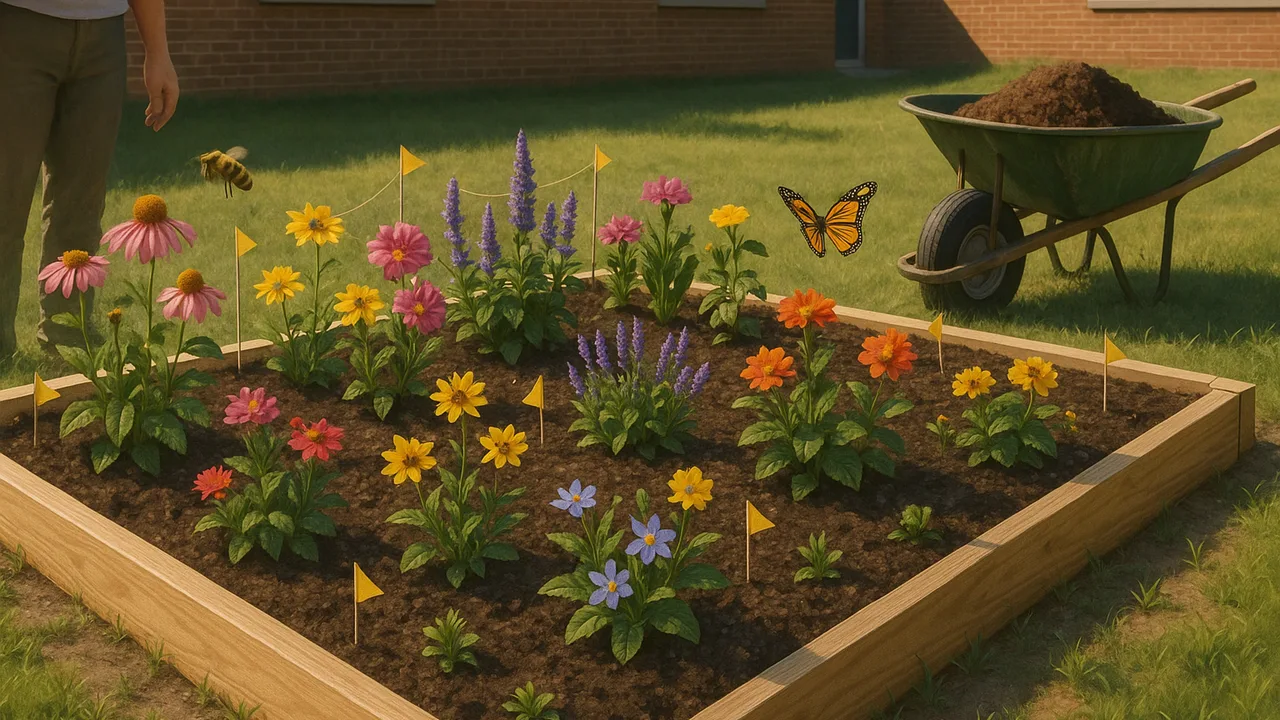
plan an outdoor garden bed and argue how flower structures and animal behaviors raise the chance that plants reproduce.
- I can make a claim that explains how certain animal behaviors and special plant structures can increase the chances of animals and plants reproducing successfully.
- I can identify examples of animal behaviors that help animals reproduce, like building nests or attracting mates.
- I can identify examples of plant or animal structures that help with reproduction, like bright flowers or hard shells on seeds.
- I can explain how these behaviors and structures cause changes in the chances of successful reproduction for animals and plants.
- I can use evidence and reasoning to argue that many animal behaviors and plant structures affect how likely it is for animals and plants to reproduce successfully.
- I can explain that animal behaviors can sometimes help plants reproduce, like when animals spread pollen or seeds.
- I can describe how different factors work together to affect reproduction, and explain that these relationships are about increasing or decreasing the probability, not guaranteeing success.
Phase 4: Build
Warm-Up ~5 min
Do Now. Our lettuce never needs a bee; we eat the leaves before it flowers. But the garden club also wants squash, beans and herbs outside. Why would a garden full of fruit and seeds need visitors with wings?
A garden bed of squash is covered with fine netting all summer, so no insects can reach the flowers. What happens?
Instruction ~10 min
Grow-lab engineers, today we design outdoors. The garden club wants a bed beside the cafeteria that grows vegetables AND helps pollinators. Pollinators are animals, such as bees, butterflies, moths and hummingbirds, that carry pollen from flower to flower.
Why it matters for plants. Many plants need pollen moved to another flower before they can make seeds and fruit. Plants cannot walk, so their structures attract animals that do the moving. Bright petals and patterns act like signs. Sweet nectar is a reward. Strong scents carry on the air. Each structure raises the chance of a visit, and each visit raises the chance of seeds.
Animal behaviors help too. Bees visit many flowers of the same kind on one trip, which carries pollen to the right partner. Some birds eat fruit and drop the seeds far away. In their own lives, animals also behave in ways that help them reproduce: birds build nests and sing to attract mates.
Worked example 1: matching structure to visitor. Zinnias have wide, flat, bright flowers: a landing pad for butterflies. Tube-shaped red flowers, like those of bee balm, fit a hummingbird’s long beak. Many bee flowers have markings, some visible only in ultraviolet light that bees can see, which point toward the nectar.
Worked example 2: an argument from evidence. Malik argued: “Our bed should bloom from spring to fall. In our sample count, a bed with flowers in every season had bees on 6 of 8 visits, and a bed that bloomed only in June had bees on 2 of 8 visits in the fall. More flowers over more weeks raises the chance our squash gets pollinated, but it does not guarantee it.”
| Plant in our bed | Bloom season | Structure that attracts | Likely visitor |
|---|---|---|---|
Guided Exercises ~15 min
Plan your bed with your team. Fill in the plant table as you go.
Independent Practice ~10 min
Draft your bed plan.
Sketch a bird's-eye plan of a 1 m by 2 m bed. Include at least two vegetables that need pollinators and three flowering plants that bloom in different seasons. Label each one.
Write an argument: how do your flowers' structures and your visitors' behaviors raise the chance that your vegetables make fruit and seeds? Use the word “probability.”
Closure ~5 min
Your bed plan feeds pollinators and people. Next class we follow the food from the garden into the body.
Exit ticket: name one plant structure and one animal behavior that make reproduction more likely, and explain each in one sentence.
How confident are you that you can I can argue how animal behaviors and plant structures affect the chance of reproduction.
Teacher notes
Materials: seed catalogs or plant cards with bloom times, graph paper, a hand lens and a few fresh flowers to examine.
Setup: if you go outside, check the student allergy list first. Use plants that suit your local climate; a local extension office or native-plant guide is a good source. The bee counts are sample data.
Listen for: “flowers are pretty so people will like them” (the colors attract pollinators); “bees pollinate on purpose” (they are gathering food; pollination is a side effect).
Support / stretch: give a matching card set of flowers and visitors. Stretch: research one plant whose seeds are spread by animals and explain how the fruit’s structure makes that more likely.