3.09 Criteria and Constraints: Defining the Station Problem
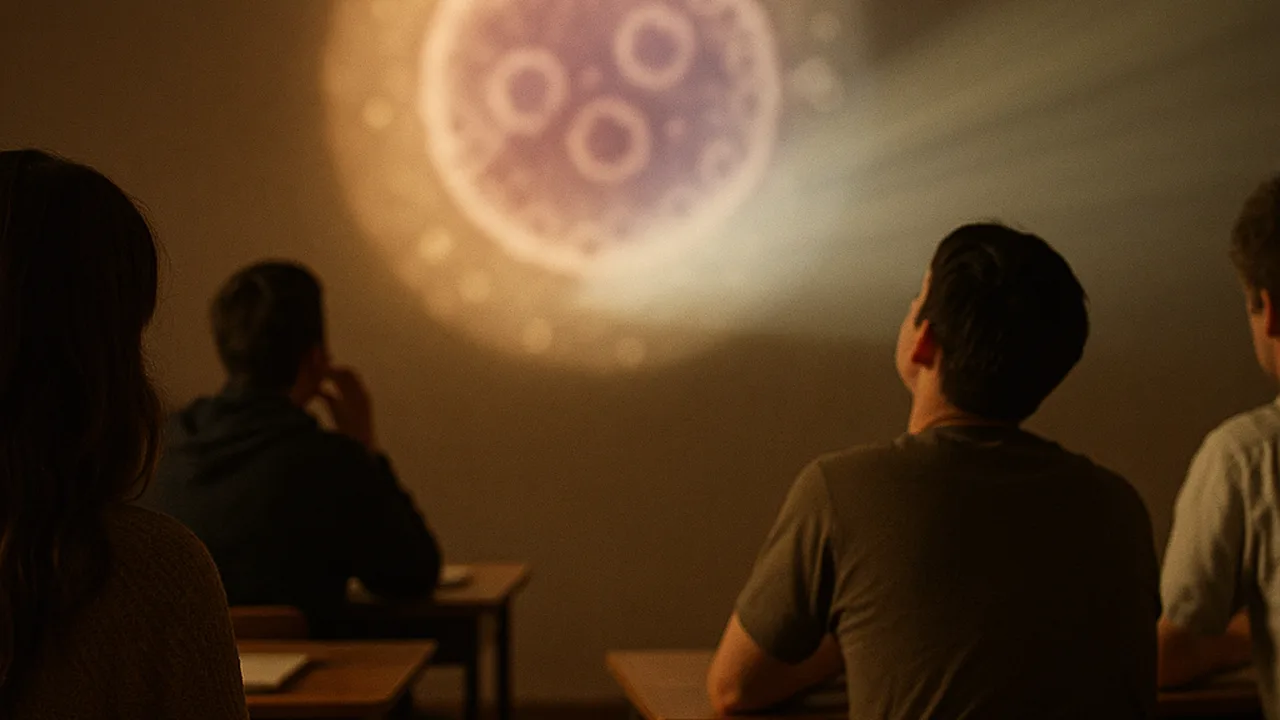
define measurable criteria and realistic constraints for the clinic’s microscope station, including effects on people and the environment.
- I can define the criteria for a solution that meet the needs of the people or groups affected by the problem.
- I can explain who the solution is meant to help and use criteria to compare different solutions, including using numbers when needed.
- I can define the constraints for a solution, including time, materials, costs, and scientific or other important issues.
- I can explain how the needs and wants of people involved, safety, and effects on others limit possible solutions.
- I can analyze how solutions or not solving the problem could negatively affect the environment.
Phase 2: Investigate
Warm-Up ~5 min
Do Now. Your teacher shows the same onion cell image on a phone screen and on a large monitor or projector. Stand at the back of the room and look at both. Then predict.
How many people can clearly see cell parts on a phone screen at the same time?
Instruction ~10 min
Screen test. First, collect data. Show a cell image with a label of 1 cm letters. Each student steps back from the screen until they can no longer read the label or see the nucleus. Measure that distance.
| Screen | Farthest distance to see the nucleus (m) | How many people fit in that space | Setup time (min) | Notes |
|---|---|---|---|---|
| Phone | ||||
| Tablet | ||||
| Monitor or projector |
Naming the ideas. Criteria are what a design must do to succeed. Good criteria are measurable. Constraints are limits on the design, such as cost, time, materials, safety and rules. Engineers also think about trade-offs and about effects on people and the environment, including the effect of not solving the problem at all.
Worked example 1: from need to criterion. The clinic said, “Families should see the cells clearly.” Malik’s team turned it into a measurable criterion: “At least 8 people can see a cell’s nucleus from 2 meters away.” They used their screen-test data to pick the numbers. Another criterion: “Magnifies at least 100×, so onion cells and pond creatures are clear.”
Worked example 2: constraints and effects. Priya’s team listed constraints from the clinic’s letter. These numbers are a sample budget for practice: the parts must cost less than $150 and set up in under 10 minutes. Safety: no lasers, no human samples, no loose cords. Privacy: images may show slides, never people’s faces. Environment: reuse an old phone or tablet if possible, and return pond creatures to the pond. They noted that if the clinic does nothing, many children never see a cell at all.
Design brief. Your team writes a one-page brief: the problem statement, 4–5 criteria with numbers, 4–5 constraints, and one note about effects on people or the environment.
Guided Exercises ~15 min
Sort and sharpen the station’s criteria and constraints.
Independent Practice ~10 min
Draft your team’s design brief.
Write the design brief: problem statement, four or more criteria with numbers, four or more constraints, and one effect of the station (or of no station) on people or the environment.
How confident are you that you can I can define measurable criteria and constraints for a design.
Closure ~5 min
Investigate is done: we have data on waves, light, lenses, cells and digital images, plus a design brief. Next, the Make Sense phase pulls it together into models. First, a 3DX field trip to an optics bench.
Exit ticket: which criterion in your brief will be hardest to meet within the constraints? Explain the trade-off.
Teacher notes
Materials: a cell image with 1 cm letter labels, a phone, a tablet if available, a monitor or projector, meter sticks or a measuring tape, design brief template.
Setup: put tape marks every half meter. Share a short clinic letter that states the sample budget, the 10-minute setup limit and the privacy rule. All dollar figures are sample values for the project, not real prices.
Listen for: vague criteria (“good”, “fast”). Push for a number and a test. Keep the design brief posted; part 2 uses it to compare designs fairly (MS-ETS1-2).
Support / stretch: give a criteria and constraints sorting mat. Stretch: rank the criteria by importance and justify the order.