4.17 Modeling the Grow Lab: Light In, Food Out
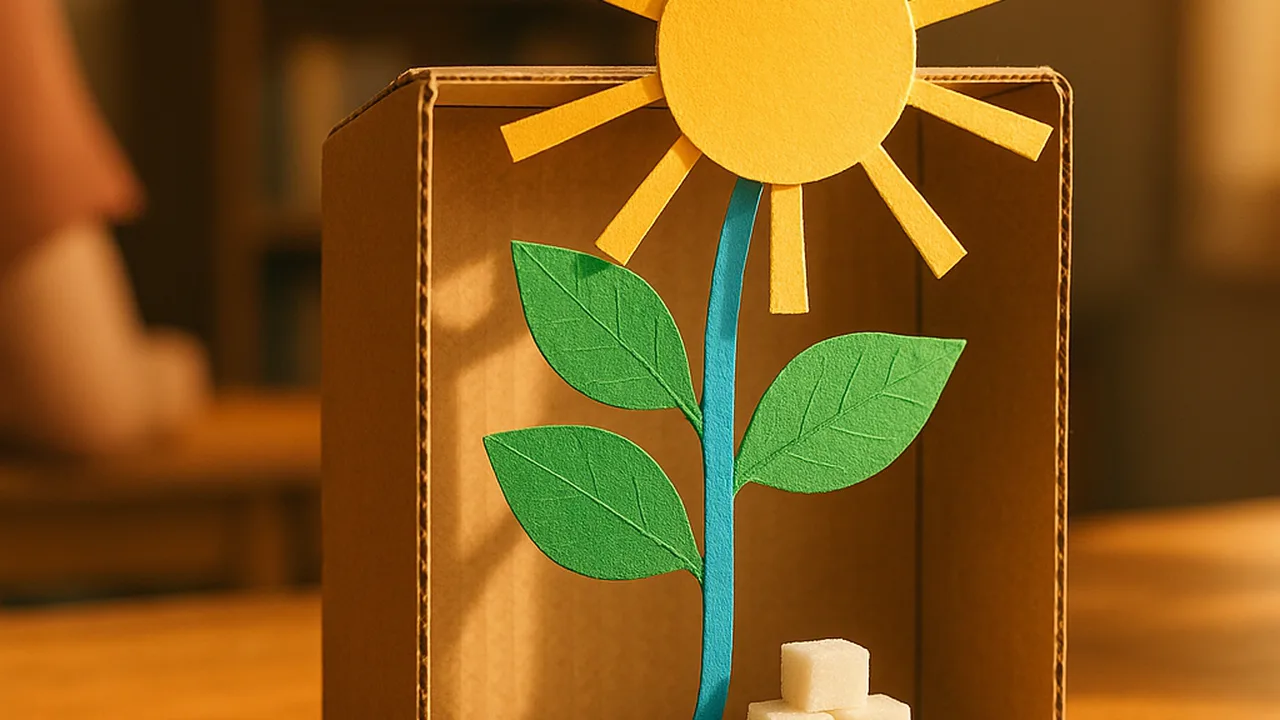
build a model of our grow lab that shows its parts, inputs and outputs, and how photosynthesis turns light, carbon dioxide and water into food.
- I can develop a model that shows the problem I am trying to solve, including its criteria and constraints.
- I can identify and show the parts of my proposed solution, including the inputs and outputs in my model.
- I can explain how each part of my proposed solution affects how it works.
- I can describe how my proposed solution connects to the problem I am trying to solve.
- I can explain how each part of my proposed solution relates to the problem and how the data from my model shows how well the solution works.
- I can describe how plants, algae, and photosynthetic microorganisms need sunlight, carbon dioxide, and water to survive.
- I can explain how energy from sunlight is used to make food molecules (like sugar) and oxygen from carbon dioxide and water.
- I can describe how animals get energy and materials for growth and survival by eating food and breathing oxygen, and how some animals eat plants or other animals that have eaten plants.
Phase 4: Build
Warm-Up ~5 min
Do Now. Our phenomenon: a tiny seed grows into a plant thousands of times heavier, mostly from air and water. Where does most of that new mass come from?
Where does most of a plant's new mass come from?
Instruction ~10 min
Grow-lab engineers, a model shows how a system works. An engineering model names the problem, its criteria and constraints, the parts of the solution, and the inputs and outputs. Our grow lab is a system inside a system: the device, and the plants growing in it.
The science inside the model: photosynthesis. In the chloroplasts of leaf cells, plants use energy from light to turn carbon dioxide and water into sugar and oxygen. In words: carbon dioxide + water + light energy → sugar + oxygen. The sugar is food. The plant uses it for energy and builds it into new leaves, stems and roots. The oxygen goes out into the air.
Worked example 1: inputs and outputs. Kofi drew a box for the grow lab. Arrows going in: electricity to the lamp, water, carbon dioxide from room air, nutrients. Arrows going out: oxygen, water vapor, and harvested greens. Inside the box, a smaller box labeled “leaf cells” shows light energy plus carbon dioxide and water becoming sugar and oxygen.
| Grow-lab part | Its job in the system | Which plant need it meets |
|---|---|---|
| Grow light | Gives light 14–16 hours a day | Energy for photosynthesis |
| Reservoir and wicks | Deliver water steadily | Water for photosynthesis |
| Open top of tray | Lets room air reach leaves | Carbon dioxide in, oxygen out |
| Nutrient mix | ||
| Timer |
Worked example 2: tracing energy and matter separately. Lena wrote: “Energy enters as light and is stored in sugar. Matter enters as carbon dioxide and water and leaves as sugar in the plant and oxygen in the air.” Keeping energy and matter on separate arrows avoids the mistake that light becomes plant mass.
Where food chains start. When we eat the lettuce, we take in matter and stored energy that started with photosynthesis. Animals that eat other animals still rely on plants at the start of the chain.
Guided Exercises ~15 min
Build your model step by step. Fill in the two blank rows of the parts table as you go.
Independent Practice ~10 min
Make your grow-lab model your own.
Draw your team's grow-lab model. Show the problem and the criteria in a header, label every part, and draw separate arrows for energy and for matter going in and out.
Explain in three sentences how one part of your design helps photosynthesis happen faster.
Closure ~5 min
Your model shows how the grow lab should work. Next class we use it to make predictions and test them against growth data.
Exit ticket: a friend says, “Plants get their food from the soil.” Use the word equation to correct them in two sentences.
How confident are you that you can I can model how photosynthesis moves matter and energy into a plant.
Teacher notes
Materials: large paper, markers in two colors (one for energy arrows, one for matter arrows), a live plant to look at.
Setup: the 14–16 hour light figure is a typical range for leafy greens under grow lights; check your seed packet. Keep photosynthesis at the word-equation level.
Listen for: “plants get food from soil”; “light turns into the plant”; “plants don’t use their own sugar” (they do, through cellular respiration).
Support / stretch: give a model template with the box and arrows drawn. Stretch: add the cafeteria and a student to the model and trace where the matter in one lettuce leaf goes next.