4.06 Flowers, Pollinators and Seeds on the Move
identify plant structures and animal behaviors that raise the chance of successful reproduction and judge how strong the evidence for each one is.
- I can identify examples of animal behaviors that help animals reproduce, like building nests or attracting mates.
- I can identify examples of plant or animal structures that help with reproduction, like bright flowers or hard shells on seeds.
- I can explain how these behaviors and structures cause changes in the chances of successful reproduction for animals and plants.
- I can make a claim that explains how certain animal behaviors and special plant structures can increase the chances of animals and plants reproducing successfully.
Phase 2: Investigate
Warm-Up ~5 min
Do Now. The garden club wants to grow cherry tomatoes in the grow lab too. Last year, indoor tomato plants flowered but made almost no fruit. Outdoor plants made plenty. Write one possible reason.
What is the most likely reason the indoor tomatoes made little fruit?
Instruction ~10 min
Explore first: three stations. Rotate every eight minutes. Station 1, Flower dissection: use tweezers to take apart a flower. Find the petals, the pollen-covered stamens and the sticky center called the pistil. Look for nectar at the base. Station 2, Seed sort: sort real seeds by how they travel: a dandelion puff, a maple “helicopter,” a hooked burr, a berry and an acorn. Station 3, Behavior cards: read short field observations of birds singing, birds building nests and bees visiting flowers.
| Structure or behavior | Plant or animal? | How it raises the chance of reproduction | Evidence we saw | How strong? (1–3) |
|---|---|---|---|---|
| Bright petals | ||||
| Nectar | ||||
| Hooked burr | ||||
| Fleshy berry | ||||
| Bird song | ||||
| Nest building |
Naming the ideas. Pollination is moving pollen from one flower to the pistil of a flower, so seeds can form. A pollinator is an animal that carries pollen, like a bee or a hummingbird. Bright petals and sweet nectar attract pollinators. Fruits and hooks help seed dispersal: moving seeds away from the parent plant, where they have more room and light.
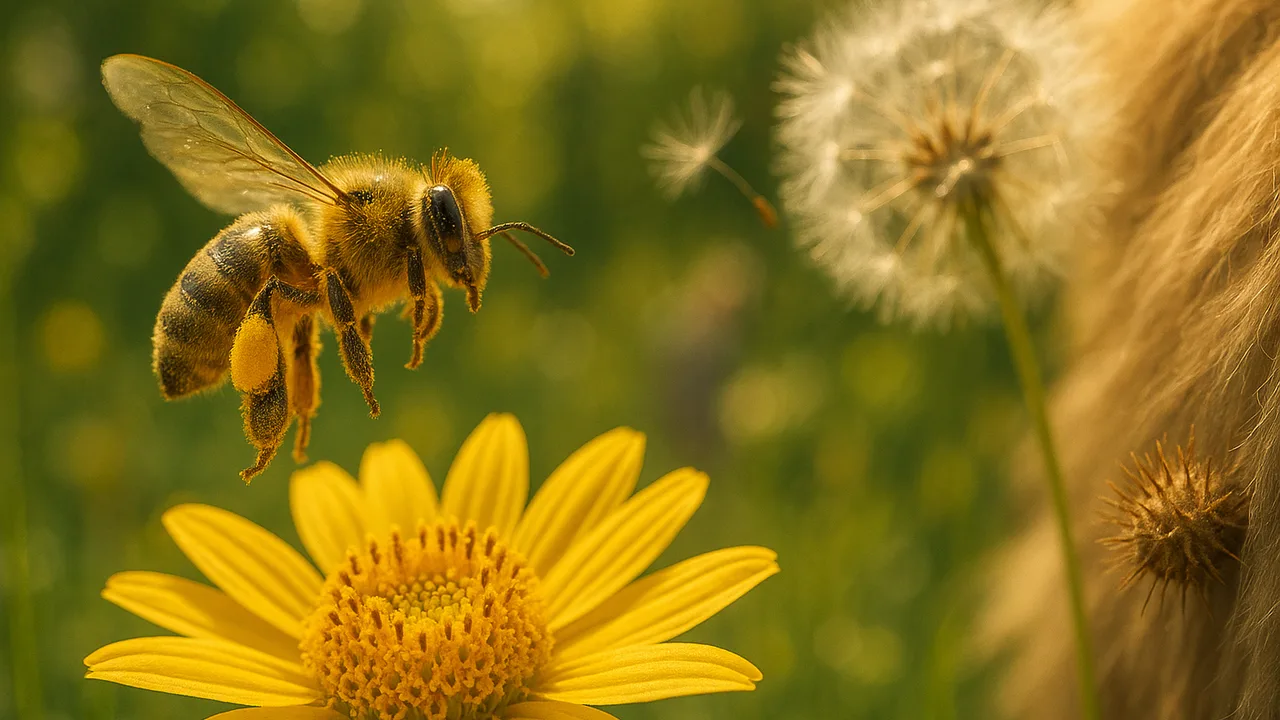
Worked example 1: an animal behavior that helps a plant. A bee visits a flower to drink nectar. Pollen sticks to its fuzzy body. At the next flower, some pollen rubs off on the pistil. The bee’s feeding behavior raises the plant’s chance of making seeds. A bird that eats a berry and drops the seed far away does the same thing for seed dispersal.
Worked example 2: rating evidence. Malik had two sources about bird song. One was a field study where scientists recorded songs and counted which males attracted mates. The other was a social media post that said “birds sing because they are happy.” Malik rated the field study a 3: it is measured, repeated and comes from a trustworthy source. He rated the post a 1: it is an opinion with no data.
Chance, not a promise. These traits raise the probability of reproduction. A bright flower is still not guaranteed a bee visit. Across many flowers and many seasons, though, the trait makes success more likely.
Guided Exercises ~15 min
Use your station table to answer. Rate your confidence on each answer.
Independent Practice ~10 min
Apply it to our grow lab.
Our lettuce is harvested before it flowers, but cherry tomatoes need pollination. Describe one way our grow lab could stand in for a pollinator. Explain how it raises the chance of fruit.
How confident are you that you can I can explain how flowers, seeds and animal behaviors raise the chance of reproduction.
Closure ~5 min
Plants and animals have structures and behaviors that make reproduction more likely, and animals often help plants. Next time we turn from plants to our own bodies: what happens when we sprint?
Exit ticket: name one plant structure and one animal behavior from today. For each, explain how it changes the chance of successful reproduction.
Teacher notes
Materials: inexpensive grocery-store flowers with easy-to-see parts (alstroemeria or tulips work well; avoid lilies, whose pollen stains and is toxic to cats if taken home), tweezers, hand lenses, a seed collection (dandelion puffs, maple samaras, burrs, berries in a sealed bag, acorns, or photos), printed behavior cards with short, generic field observations.
Setup: three stations, eight minutes each, then a whole-class debrief of the table. Keep a fan nearby to show wind dispersal of dandelion seeds.
Listen for: “bees pollinate on purpose to help flowers” (they are feeding) and “the plant wants to be eaten.” Model the language of probability: “raises the chance.” Keep to the boundary: bright flowers, nectar, seeds, nests and songs.
Support / stretch: pre-label one flower part on a diagram. Stretch: research a plant that attracts a pollinator with smell instead of color.