4.15 Three Grow Labs: Soil Trays, Bottle Hydroponics and Wicks
organize and analyze test data from three grow-lab designs to see how each one meets the criteria and constraints.
- I can organize data from tests of three or more design solutions using tables, charts, or graphs.
- I can analyze data using methods like comparing numbers or looking for patterns.
- I can identify how each design solution meets the criteria and fits the constraints by examining the data.
- I can use data to explain similarities and differences between the features of different design solutions.
Phase 4: Build
Warm-Up ~5 min
Do Now. Lettuce grows in fields of soil. Some farms grow lettuce with no soil at all, with roots hanging in water. What does a plant actually need from soil, and what could replace it?
Three teams grow the same lettuce seeds in three different systems. Which result is most likely?
Instruction ~10 min
Grow-lab engineers, welcome to the Build phase. Our clients, the cafeteria and the garden club, want fresh greens grown right in our classroom. In Part 1 you set the criteria and constraints. Today we compare three common designs using data, not guesses.
| Criterion or constraint | Target | How we measure it |
|---|---|---|
| Harvest time | Greens ready to harvest within 4 weeks | Days from planting to first cut |
| Size | Fits on one shelf unit, using one outlet | Measure length and width in cm; count plugs |
| Water use | Under 2 liters a day | Refill log in mL each day |
| Cost | Under $40 | Class price list total |
| Weekends | Plants stay healthy with no watering Saturday and Sunday | Check leaves and water level Monday morning |
| Steady supply | After the first harvest, a tray of dark-green greens ready every week | Harvest log |
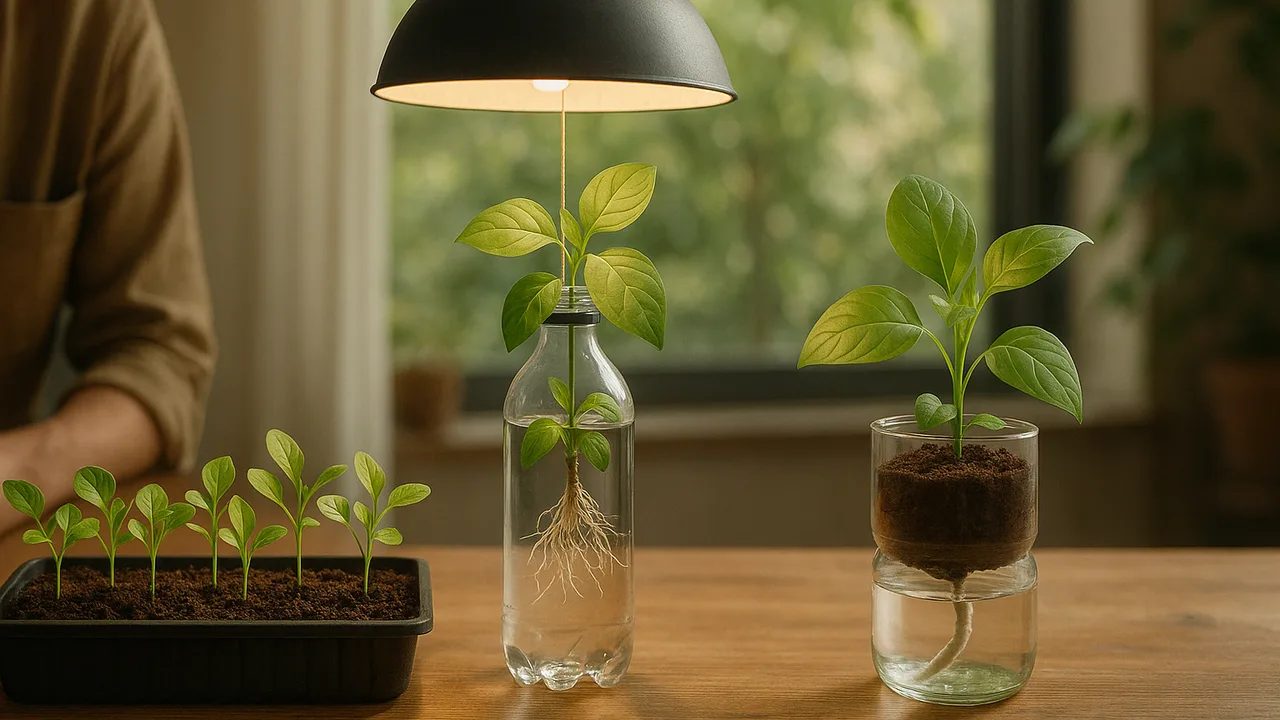
The three designs. A soil tray is a shallow tray of potting mix under a grow light; you water it from a cup. A bottle hydroponics system holds the plant in a net cup over a cut plastic bottle of water mixed with liquid plant nutrients, with no soil. A wick system uses a cotton or felt strip that pulls water up from a reservoir into a pot of growing mix, so the plant waters itself.
Worked example 1: organizing the data. A class last year tested all three designs with the same lettuce seeds and the same lamp. Here is their sample data for one tray or bottle of each design after 21 days.
| Design (sample data) | Leaf height at day 21 (cm) | Water used per day (mL) | Cost ($) | Counter space (cm) |
|---|---|---|---|---|
| Soil tray | 8 | 400 | 18 | 50 × 30 |
| Bottle hydroponics | 12 | 250 | 26 | 60 × 20 |
| Wick system | 10 | 200 | 14 | 40 × 25 |
Worked example 2: analyzing the data. Malik compared the columns one at a time. “Hydroponics grew tallest, 12 cm, which is 1.5 times the soil tray’s 8 cm. The wick system used the least water, 200 mL a day. All three are under 2 liters a day and under $40. So every design meets the constraints, but they differ on growth speed.” He looked for patterns first, then checked every row against the criteria.
Why the designs differ. Plants grow from matter they take in: water, carbon dioxide and a small amount of nutrients. When roots get water and nutrients steadily, as in hydroponics, the plant spends less time short of water. That is an environmental factor at work.
Guided Exercises ~15 min
Use the sample data table. Your team fills one row of your own comparison table after each block.
Independent Practice ~10 min
Organize the data your own way.
Draw a bar graph of leaf height for the three designs. Title it, label both axes with units, and write one sentence that describes the pattern.
Check each design against all four criteria and constraints. Which design meets the most? Is any criterion still unknown from this data?
Closure ~5 min
Strong analysis, grow-lab engineers. No single design wins every row. Next class we borrow the best feature from each.
Exit ticket: name one strength and one weakness of each design, using a number from the data for each.
How confident are you that you can I can organize and analyze test data from three or more design solutions.
Teacher notes
Materials: one example of each design if you have them (a seed tray, a cut 2 L bottle with net cup, a pot with a felt wick), the class price list, graph paper, rulers.
Setup: post the criteria table. If your class set different numbers in Part 1, use yours. The data here is sample data, so replace it with your own trial results if you ran them.
Listen for: “plants eat soil” (soil supplies water and small amounts of nutrients; most of a plant’s mass comes from carbon dioxide and water); judging a design from one column only.
Support / stretch: give a partly filled graph with axes drawn. Stretch: calculate water used per centimeter of growth for each design and decide which is most water-efficient.