4.14 Ideate: Grow Lab and Garden-to-Body Exhibit Ideas
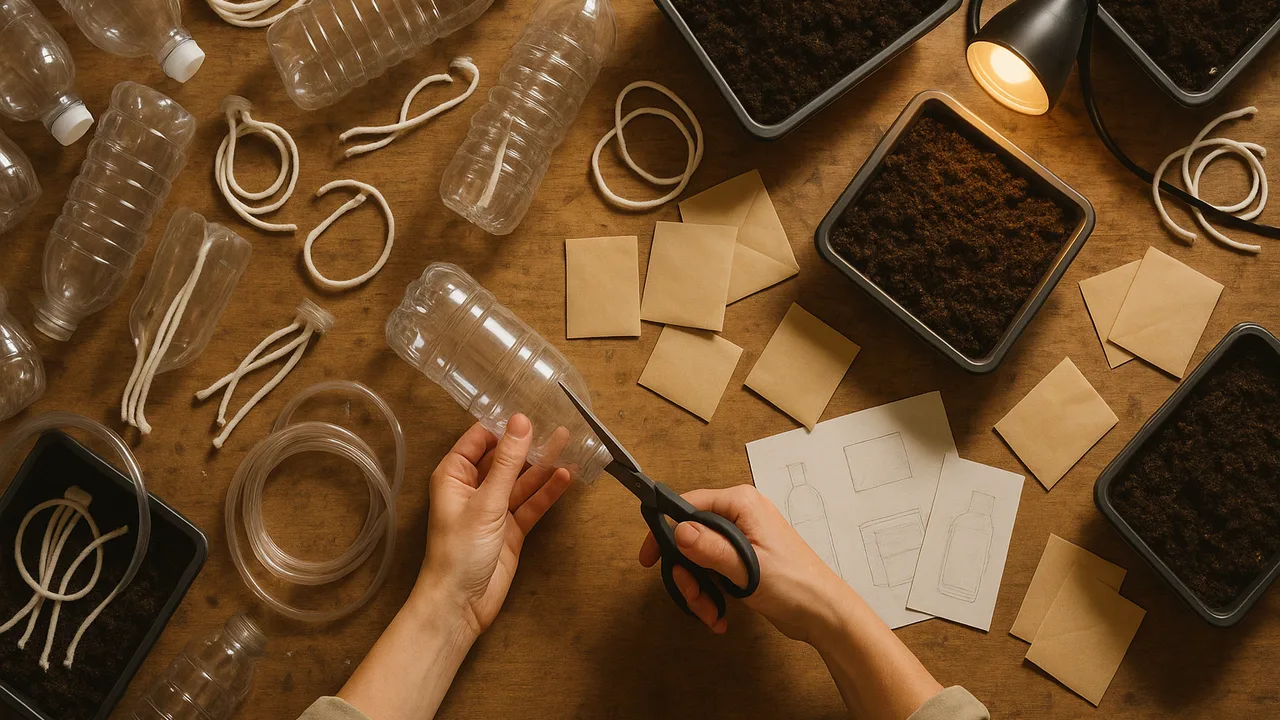
brainstorm at least three grow lab designs and an exhibit plan, each grounded in the science of plant growth, photosynthesis and body systems.
- I can identify and describe environmental factors, such as light, water, space, and habitat size, that can influence how organisms grow.
- I can identify and describe genetic factors, such as breed or species, that can influence how organisms grow.
- I can describe how changes in environmental and genetic factors can lead to changes in the growth of organisms.
- I can explain how plants, algae, and photosynthetic microorganisms take in carbon dioxide and water and use sunlight to make food and release oxygen.
- I can describe how plants use the food they make for energy, growth, and other important functions.
- I can explain how animals depend on plants for food and oxygen, and how all food and most oxygen animals use come from energy from the sun moving matter through photosynthesis.
Phase 3: Make Sense
Warm-Up ~5 min
Do Now. Reread our grow lab criteria and constraints from 4.03. Circle the one you think will be hardest to meet. Then write one science fact from this unit that could help.
Which change would most likely raise our weekly harvest of greens?
Instruction ~10 min
From science to design. Engineers do not start building with the first idea. They brainstorm many ideas, then compare them. Every idea today must name the science that makes it work.
Brainstorm rules. Quantity first. No criticism yet. Build on others’ ideas with “Yes, and.” Sketches count as much as words.
| Idea | Sketch or short description | The science behind it | Which criterion it helps | Which constraint might limit it |
|---|---|---|---|---|
| Grow lab idea 1 | ||||
| Grow lab idea 2 | ||||
| Grow lab idea 3 | ||||
| Exhibit idea |
Worked example 1: a grounded grow lab idea. Priya sketched a three-shelf rack with a grow light over each shelf on a timer, one seed per cell, and a self-watering tray. Science: light powers photosynthesis; space reduces crowding; steady water supports growth, as our 4.03 data showed. Criterion helped: a tray ready each week. Constraint: three lights may need more outlets than we have.
Worked example 2: a grounded exhibit idea. Malik proposed a “Follow the Carbon” wall: a lettuce leaf, the bead model of sugar, a body outline with the digestive, circulatory and respiratory paths, and a muscle cell releasing energy. A final arrow shows carbon dioxide breathed out and taken back in by the grow lab plants. Science: matter cycles through photosynthesis and respiration, and the body systems deliver food and oxygen to cells.
Next phase. In Build, you will choose, prototype and test the strongest ideas against the criteria. Keep every idea; a rejected one may solve a later problem.
Guided Exercises ~15 min
Warm up your idea-making with science checks. Each card connects a science idea to a design choice.
Independent Practice ~10 min
Fill in your team’s idea table.
Describe at least three different grow lab designs and one exhibit idea. For each, name the science behind it, the criterion it helps and the constraint that might limit it.
How confident are you that you can I can brainstorm designs grounded in the science of growth, photosynthesis and body systems.
Closure ~5 min
Post your best idea on the class idea wall. Next: your 3DX field trip, and then the Build phase, where we turn ideas into a working grow lab.
Exit ticket: which of your grow lab ideas has the strongest science behind it? Name the evidence from this unit that supports it.
Teacher notes
Materials: chart paper, sticky notes, markers, the criteria and constraints poster, catalog pages or photos of shelves, lights and trays for inspiration.
Setup: a 5-minute silent sketch, then a 7-minute “Yes, and” round. Teams keep all ideas; part 2 compares, builds and tests them (MS-ETS1-3, MS-ETS1-4).
Listen for: ideas with no science named, sealed boxes with no air exchange, and exhibit arrows that show light becoming mass. Redirect with the evidence from 4.04–4.05.
Support / stretch: give a menu of grow lab parts with the science each uses. Stretch: design a way to measure the weekly harvest in grams.