3.28 Catch-up and Stretch: Cells and Better Designs
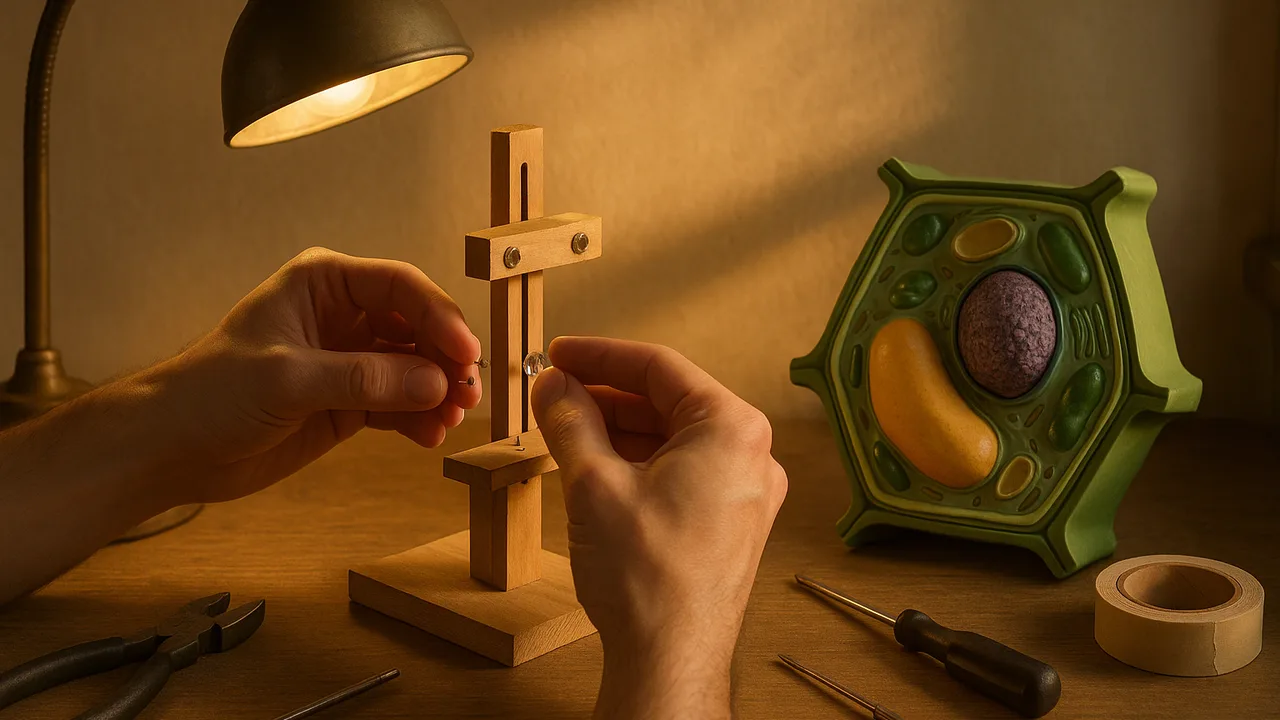
practice the cell and design ideas I found hardest, and stretch by improving a station design for a new client need.
- I can use my model to compare plant and animal cells by showing that plant cells have both a cell wall and a cell membrane, while animal cells only have a cell membrane.
- I can use my model to explain that plant cells have chloroplasts for photosynthesis, but animal cells do not.
- I can analyze my data to decide if the evidence shows that cellular composition is a feature that distinguishes living things.
- I can use evidence and reasoning to make a claim about which solution works best, based on their strengths and weaknesses.
Phase 5: Prove It
Warm-Up ~5 min
Do Now. Without looking at notes, list the five cell parts we studied. Star any you are unsure about.
How confident are you that you can I can compare plant and animal cells using a model.
Instruction ~10 min
Today is a choice board. Catch-up stations rebuild the cell model. Stretch stations redesign the station for a new need.
Re-teach: the cell as a small factory. The cell membrane is the gate that controls what enters and leaves. The nucleus is the control office holding the instructions. Mitochondria are the power plant, releasing energy from food. In plant cells, chloroplasts are the kitchen that makes food from light, and the cell wall is a strong outer fence. Every part helps the whole cell stay alive.
Worked example 1: sorting a mystery cell. A pond cell has a cell wall, a nucleus and many green chloroplasts. Claim: it is a plant-like cell, such as an alga. Evidence: the wall and the chloroplasts. Reasoning: animal cells have neither.
Worked example 2: a new client need. The clinic now wants families to watch moving pond organisms again at home. Option A: send a short video clip. Option B: send a set of five still photos. A team scores both against the old criteria plus a new one, “small enough to send over the clinic’s slow connection.” That new criterion may change which option wins, because video files hold many pictures each second.
Guided Exercises ~15 min
Catch-up = blocks 1–5. Stretch = blocks 6–7. Everyone finishes with block 7.
Independent Practice ~10 min
Show your growth.
Redo one cell or design question from the checkpoint. Explain what changed in your thinking.
Write a claim with evidence and reasoning: should the clinic send families a video clip or still photos, and why?
Closure ~5 min
That wraps up Unit 3, scientists and engineers. Next: your 3DX field trip, the Clinic Open House tour.
Exit ticket: how did light, lenses and digital signals help us answer the driving question? Use one example from the cell gallery.
How confident are you that you can I can use a cell model to explain how the parts help the whole cell.
Teacher notes
Materials: cell model kits or paper cutouts, the gallery photos, matrix sheets, one phone and a large display for a demo if available.
Setup: group students using 3.26 Part B items 1–3 and 6–7. The factory analogy is a model; ask students where it breaks down (cells are not built by workers).
Listen for: “plants have chloroplasts instead of mitochondria” (plant cells have both); weights chosen to force a favorite answer.
Support / stretch: give a labeled cell to color-code. Stretch: research how one specialized cell, such as a root hair cell, has a shape that fits its job.