2.13 Nature Selects, Farmers Select: Explaining the Bean Field
construct a scientific explanation of the drought-surviving bean field using natural selection, artificial selection and evidence from sources.
- I can use evidence and reasoning to construct an explanation for how genetic variations affect survival and reproduction in a population.
- I can identify and describe evidence showing that individuals in a species have genetic variations that can be passed to their offspring.
- I can describe how to use probability to determine the chances of an organism surviving and reproducing in a specific environment.
- I can explain the cause-and-effect relationship between specific traits, their genetic variations, and the probability of survival and reproduction in a given environment.
- I can combine information from different sources to give examples of how technologies have changed the ways humans influence inherited traits in organisms.
Phase 3: Make Sense
Warm-Up ~5 min
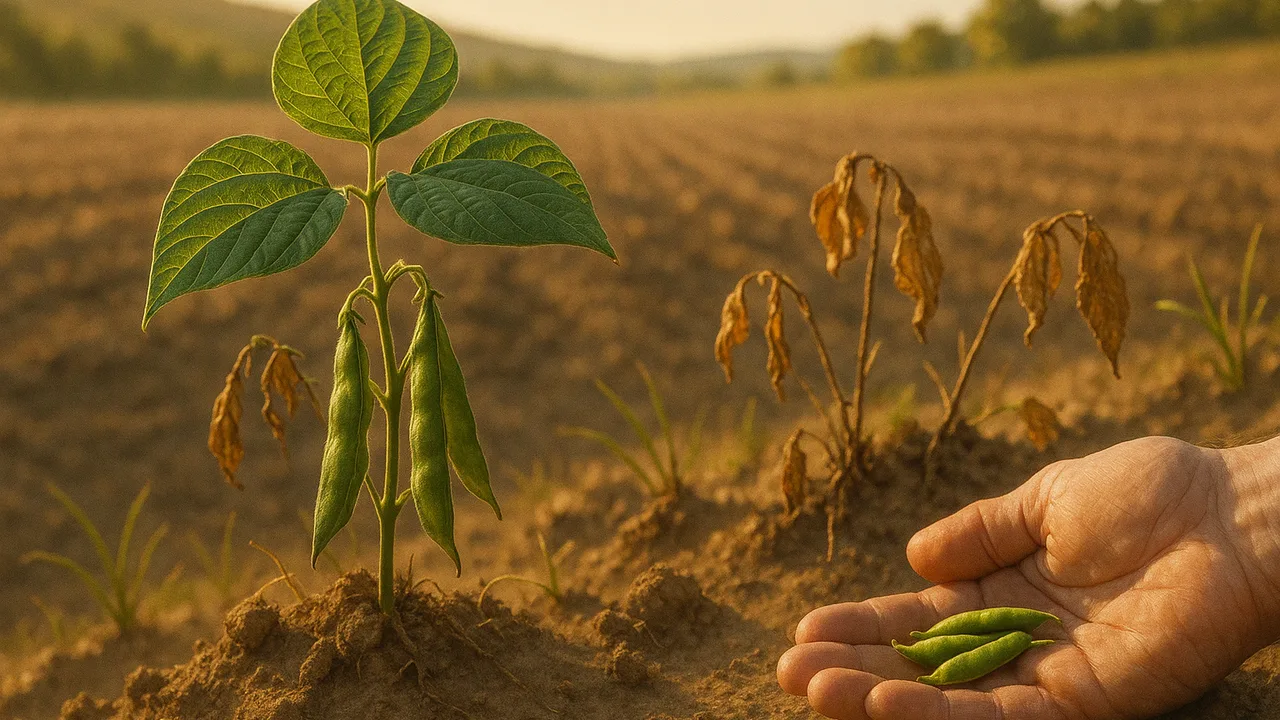
Do Now. Reread the unit phenomenon. A farmer saved seed only from bean plants that stayed green after a dry summer, and a few years later most of the field survived droughts. Circle the words that point to variation, selection and inheritance.
Was the farmer's bean field changed by natural selection, artificial selection, or both?
Instruction ~10 min
Reading: one logic, two choosers. Natural and artificial selection follow the same steps. First, individuals vary, and some of that variation is inherited. Second, some variations raise the chance of surviving and reproducing, either in the environment or because people choose them. Third, those individuals pass their alleles to more offspring. Fourth, over generations the helpful trait’s proportion grows.
| Step | Bead game evidence | Breeding game evidence | Bean field (phenomenon) |
|---|---|---|---|
| 1. Inherited variation | |||
| 2. Better odds of surviving and reproducing | |||
| 3. More offspring with the trait | |||
| 4. Trait proportion rises over generations |
Worked example 1: a strong explanation. Mei wrote: “The bean plants varied in inherited traits such as root depth. In the dry summer, plants with deeper roots had a better chance of staying green and making seed. The farmer then saved only their seed, so the next generation carried more deep-root alleles. Repeating this for several years raised the proportion of drought-handling plants.” She names every step and the cause of each.
Worked example 2: a weak explanation, repaired. Malik wrote, “The beans got used to drought.” That suggests individual plants changed and passed on the change. His repair: “Plants that already had helpful inherited traits survived and reproduced more, so those traits became more common.”
Combining sources. Your 2.09 sources add a third tool. A strong explanation for the farm can say how selective breeding works, how a GM variety would differ, and what each source says about benefits and trade-offs.
CER starters. “The field changed because…”, “Evidence from the bead game shows…”, “Evidence from the breeding game shows…”, “This happens because individuals with inherited…”
Guided Exercises ~15 min
Fill in the four-step table with your team, then answer these.
Independent Practice ~10 min
Explain the phenomenon.
Write a full CER explaining why, after a few years of seed saving, most of the bean field survived droughts. Use evidence from both the bead game and the breeding game, and include at least one probability or percent.
Using two credible sources from 2.09, compare selective breeding and genetic modification as ways to get a drought-ready bean. Say what each source claims and whether that claim is supported by evidence.
Closure ~5 min
We can now explain the phenomenon. Next time, we turn that explanation into ideas for the farm’s breeding plan.
Exit ticket: explain how genetic variation in a bean population affects which plants survive and reproduce in a drought.
Teacher notes
Materials: four-step table handouts, team data from 2.07, 2.08 and 2.12, the 2.09 source cards, CER rubric.
Setup: post one strong and one weak sample explanation for a “fix it” warm-up if students need more modeling.
Listen for: “used to,” “tried to” and “needed to” language, which signals that individuals changed on purpose. Keep discussion of GM options balanced and respectful of families’ views.
Support / stretch: offer the four-step table pre-filled for the bead game. Stretch: explain why the farm’s field might lose drought tolerance again if the next ten summers are very wet and the farmer selects only for yield.