2.02 What Makes a Crop Drought-Ready?
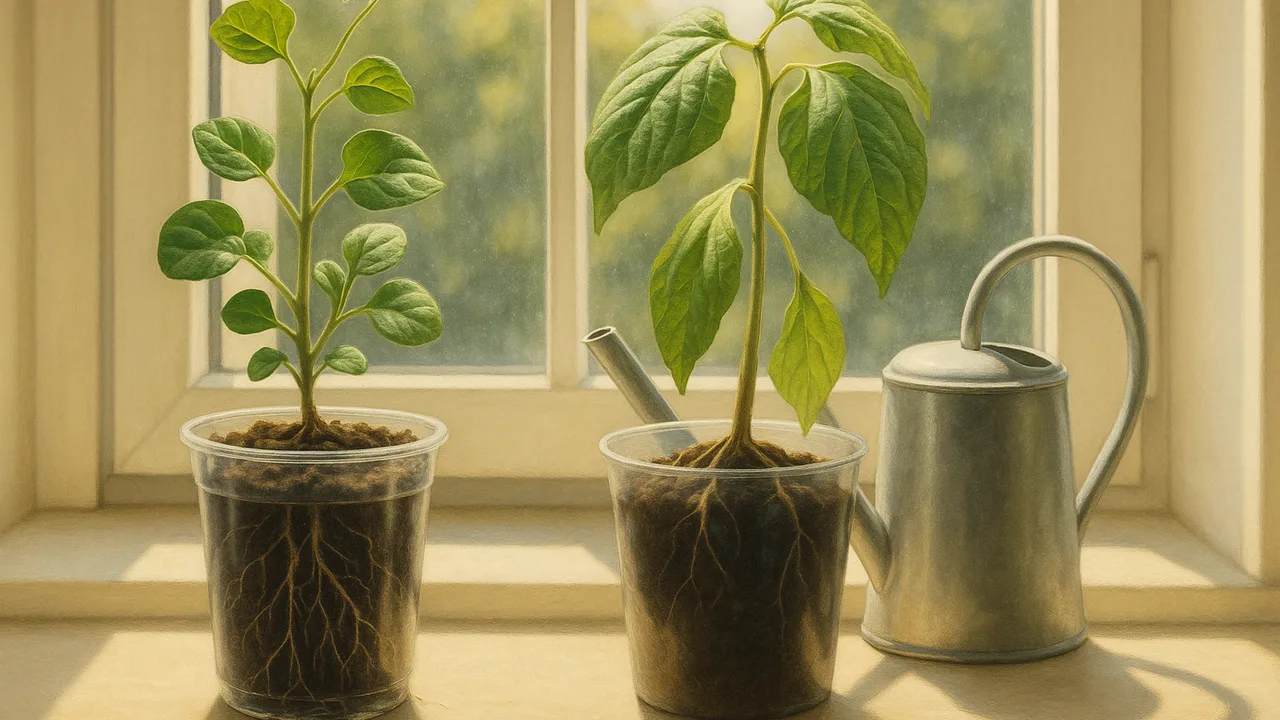
The Drought-Ready Garden: A Breeding Plan
Why do offspring differ from their parents, and how can people and nature shape which traits become common?
The mystery: Two bean plants from the same pod grow differently. After a dry summer, a farmer saves seeds only from the plants that stayed green. A few years later, most of the field survives droughts that used to wipe it out.
identify traits that help a crop survive and reproduce in dry conditions and list what the farm’s breeding plan must achieve.
- I can explain how inheriting certain traits can increase an organism’s chances of surviving and reproducing in its environment.
- I can gather information about at least two technologies, such as gene therapy and selective breeding, that humans use to influence which traits are inherited in plants and animals.
Phase 1: Spark
Warm-Up ~5 min
Do Now. A cactus, a fern and a bean plant sit in a hot, sunny window and nobody waters them for two weeks. Rank which you expect to look healthiest at the end, and write one reason.
Which plant most likely stays healthiest after two dry weeks?
Instruction ~10 min
Structure fits function. A plant loses water mostly through tiny pores in its leaves. Plants that do well in dry places often have inherited structures that save water or find more of it. Examples include deep or wide roots, a waxy leaf coating, smaller or hairier leaves, and pores that close in the heat of the day. Some plants simply grow fast and make seeds before the driest weeks arrive.
Survive AND reproduce. For the farm, a drought-ready crop has to do two things. It must stay alive through a dry spell, and it must still make beans or seeds. A plant that survives but makes no seeds cannot pass its traits on.
Worked example 1: comparing two bean varieties. These are sample data. Variety A has roots about 40 cm deep and makes 30 pods in a normal summer. Variety B has roots about 70 cm deep and makes 24 pods. In a dry summer, deeper roots reach moister soil, so Variety B is more likely to survive and still set pods. In a wet summer, Variety A might give the bigger harvest. The best trait depends on the environment.
Worked example 2: people choosing traits. Humans have chosen which plants to breed for thousands of years. This is called artificial selection, or selective breeding, and it is a technology. Saving seed from the greenest beans is artificial selection. Later in the unit we compare it with newer gene technologies.
Need-to-knows. Before we can write the plan, we need to know how traits are passed on, why offspring vary, where new traits come from, and how fast a population can change. Each investigation answers one of these.
Early criteria for the plan. These are the class draft; we refine them in 2.08. The crop survives a dry spell, still produces a useful harvest and keeps a taste people want. Constraints: the farm saves its own seed, has a few small beds for trials and can grow about one bean generation each summer.
Guided Exercises ~15 min
Use the plant cards on your table. Work through these with your team.
Independent Practice ~10 min
Map the problem.
Draw a concept map with “Drought-ready bean” in the middle. Add at least four helpful traits, and for each one write how it helps the plant survive or reproduce.
Write one need-to-know question for each investigation ahead: inheritance, variation, new traits and change over generations.
Closure ~5 min
We know what a drought-ready crop looks like. Next phase, we investigate where its traits come from and how they spread.
Exit ticket: name one trait that would help a crop in a drought. Explain how it raises the plant's chance of surviving and reproducing.
Teacher notes
Materials: a small cactus or succulent, a leafy plant, plant trait cards (roots, leaves, flowering time), chart paper for the need-to-know list.
Setup: keep the criteria and constraints chart posted; teams revise it in 2.08 and part 2 tests against it.
Listen for: “the cactus decided to grow spines.” Reframe as “cactus populations that had these inherited traits survived and reproduced.” Real drought tolerance depends on many genes and on growing conditions; do not promise that one trait fixes everything.
Support / stretch: sort trait cards into “gets water” and “keeps water.” Stretch: explain why a trait that helps in a drought might hurt a plant in a very wet year.