2.11 Why Offspring Differ: A CER on Reproduction
use models and class data to argue that sexual reproduction produces more genetic variation than asexual reproduction.
- I can use my model to explain how parents transfer genes to their offspring during both asexual and sexual reproduction.
- I can describe in my model that offspring have the same number of chromosomes as their parents under normal conditions.
- I can show in my model that asexual reproduction uses one parent’s chromosomes as the source of genetic material, while sexual reproduction uses chromosomes from two parents.
- I can use my model to explain that asexual reproduction creates offspring with chromosomes identical to the single parent.
- I can use my model to explain that sexual reproduction creates offspring with chromosomes that are a mix of genetic material from two parents, resulting in new gene combinations and genetic variation.
- I can use my model to predict that organisms reproducing sexually have more genetic variation in their offspring than organisms reproducing asexually.
Phase 3: Make Sense
Warm-Up ~5 min
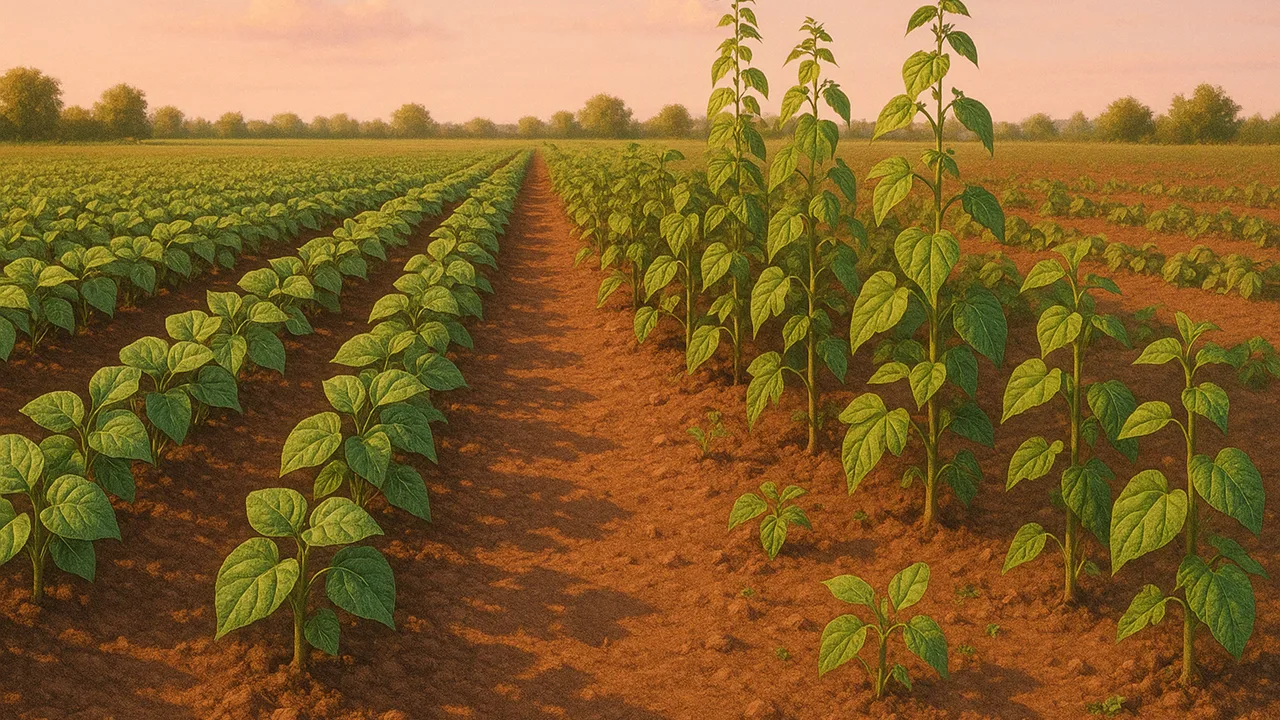
Do Now. Check your cuttings and seedlings from 2.04. Compare the cuttings with each other, then the seedlings with each other. Which group looks more alike?
A grower wants new bean plants that might survive a brand-new drought. Which method gives the best chance of a few surprising survivors?
Instruction ~10 min
Reading: two ways to pass on genes. In asexual reproduction, one parent copies its chromosomes into its offspring. Apart from rare mutations, every offspring has exactly the parent’s genes. In sexual reproduction, each parent passes one chromosome from every pair. Which one of each pair a parent passes is a matter of chance, like a coin flip. So two parents can make many different allele combinations, and offspring of the same parents usually differ from each other.
Count the combinations. Our models make the difference visible.
| Model | Parents’ gene pairs | Number of different offspring gene combinations | Evidence source |
|---|---|---|---|
| Cutting from Aa Bb | Aa Bb | 2.04 strip model | |
| Seed: Aa × Aa (one gene) | 2.05 Punnett square | ||
| Seed: Aa Bb × Aa Bb (two genes) | Today’s strip draw |
Worked example 1: one gene. A cutting from an Aa plant is always Aa: one possible combination. Seeds from Aa × Aa can be AA, Aa or aa: three combinations, as our Punnett squares showed.
Worked example 2: two genes. Sofia draws strips from two Aa Bb parents. Each parent can pass AB, Ab, aB or ab. Her offspring could be AABB, AaBb, aabb, AAbb, aaBB and more: nine different combinations in all. Real plants have thousands of genes, so the number of possible combinations is enormous. That is why sexual reproduction produces so much variation.
Write the CER. Claim, evidence, reasoning. Starters: “I claim that…”, “My evidence is… from lesson…”, “This shows… because each parent gives…”
Guided Exercises ~15 min
Use your models and the combination table.
Independent Practice ~10 min
Write the full CER.
Write a CER answering: which kind of reproduction produces more genetic variation, and why? Use at least two pieces of evidence from 2.04, 2.05 or today, and explain how parents pass chromosomes in each kind of reproduction.
Predict: a disease appears that harms most plants of one bean variety. Would a field grown from cuttings or a field grown from mixed seed more likely have survivors? Use the word variation.
Closure ~5 min
Sexual reproduction is a variation machine. Next time, we see how selection acts on that variation when the environment changes.
Exit ticket: explain why the community farm should keep breeding beans from seed rather than only cloning its best plant. Use chromosomes and variation.
Teacher notes
Materials: the jars and seedlings from 2.04, chromosome strips (two genes, two colors per parent), CER organizers, a CER rubric.
Setup: for the two-gene draw, put each parent’s four possible strip pairs (AB, Ab, aB, ab) in a cup and draw one from each cup.
Listen for: “siblings get different amounts from each parent.” Each gets half from each parent, just a different half. Be sensitive with the family-photo idea: students may be adopted, in blended families or not want to share; make it optional and allow any family they know. No cell-division stages.
Support / stretch: provide a completed one-gene table and CER starters. Stretch: explain why some organisms that usually reproduce asexually switch to sexual reproduction when conditions get harsh.