2.04 Cuttings or Seeds? Two Ways to Make New Plants
compare asexual reproduction from cuttings with sexual reproduction from seeds and explain which one produces more genetic variation.
- I can develop a model, like a Punnett square or diagram, to show the differences in chromosome pairs and genetic variants between asexual and sexual reproduction.
- I can identify and describe the chromosomes and genetic variants in both parents and offspring for asexual reproduction in my model.
- I can identify and describe the chromosomes and genetic variants in both parents and offspring for sexual reproduction in my model.
- I can use my model to explain that asexual reproduction creates offspring with chromosomes identical to the single parent.
- I can use my model to explain that sexual reproduction creates offspring with chromosomes that are a mix of genetic material from two parents, resulting in new gene combinations and genetic variation.
- I can use my model to predict that organisms reproducing sexually have more genetic variation in their offspring than organisms reproducing asexually.
Phase 2: Investigate
Warm-Up ~5 min
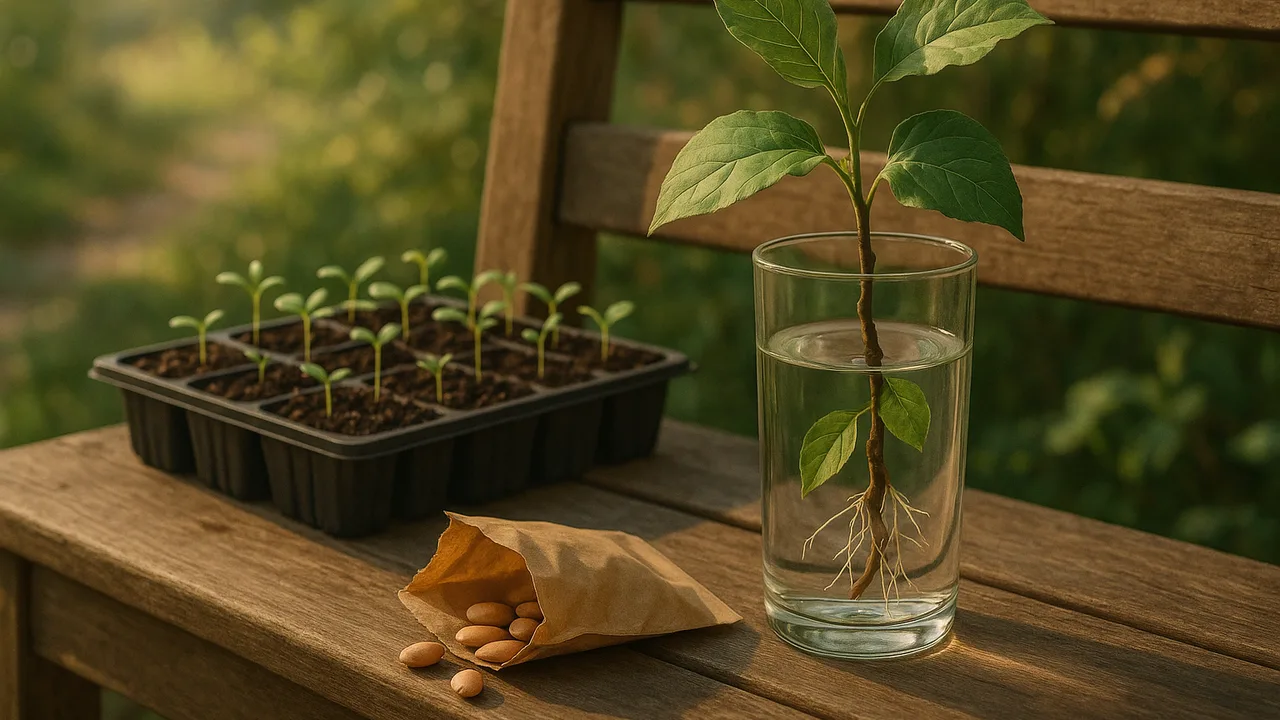
Do Now. Your teacher shows a pothos vine that has grown roots from a stem piece sitting in a jar of water, next to a tray of bean seedlings. Predict how alike each group’s offspring will be.
Ten new plants grown from cuttings of ONE parent plant will be…
Instruction ~10 min
Explore first. At your station, take a cutting from a pothos or coleus plant and set it in water. Then open a soaked bean seed and find the tiny new plant inside. Over two weeks, check both and record what you see.
| Day | Cutting: what I see | Seed: what I see | How many parents? | Notes |
|---|---|---|---|---|
| Day 1 | ||||
| Day 4 | ||||
| Day 8 | ||||
| Day 14 |
Name the ideas. Remember from grade 7 that chromosomes, which carry genes, sit in each cell’s nucleus and usually come in pairs. In asexual reproduction, one parent makes offspring whose chromosomes are copies of its own. In sexual reproduction, each parent gives one chromosome from each pair, so the offspring gets half its chromosomes from each parent. Either way, offspring normally end up with the same number of chromosomes as their parents.
Worked example 1: a chromosome-strip model. Model a parent plant with two pairs of paper strips: one pair labeled A and a, one pair labeled B and b. For a cutting, copy all four strips exactly: Aa Bb. For a seed, a second parent has pairs A, A and b, b. Each parent passes one strip from each pair. One possible seedling gets a from parent 1 and A from parent 2, plus B and b: Aa Bb. Another gets A and A, plus b and b: AA bb. Same parents, different mixes.
Worked example 2: trade-offs for the farm. Potatoes are usually grown from pieces of potato, so a field of one variety is a field of clones. That keeps a good variety the same every year. But if a new disease or a drought strikes that variety, every plant is equally at risk. Seeds from sexual reproduction give more variation, so a few plants may carry traits that help them survive.
Guided Exercises ~15 min
Use your strip models and observations for these cards.
Independent Practice ~10 min
Model and compare.
Draw a two-panel model. Panel 1: a parent plant and two cuttings, with their chromosome pairs labeled. Panel 2: two parent plants and two seedlings, with chromosome pairs labeled to show which parent each came from.
Should the community farm grow its beans from saved seed or keep cloning its best plant? Give one benefit and one risk of each.
Closure ~5 min
One parent gives copies; two parents give new mixes. Next time, we use coins and Punnett squares to predict the chances of each mix.
Exit ticket: explain why ten cuttings from one plant are identical, but ten seeds from two plants are not. Mention chromosomes.
Teacher notes
Materials: a pothos, coleus or other easy-rooting plant, jars, blunt scissors, beans soaked overnight, hand lenses, paper strips in two colors (one per parent) for the chromosome model.
Setup: start a few cuttings a week early so students can see roots today. Keep the jars for the Day 4–14 checks.
Listen for: “the seedling gets all of mom’s genes and all of dad’s,” which would double the chromosome number. Stay inside the boundary: do not teach the stages of cell division. Strawberry runners, potato pieces and many houseplants are good asexual examples.
Support / stretch: provide pre-labeled strips. Stretch: some plants can reproduce both ways. Explain when each way might help a wild plant.