1.27 Catch-up and Stretch: Rock Layers, Resources and Hazards
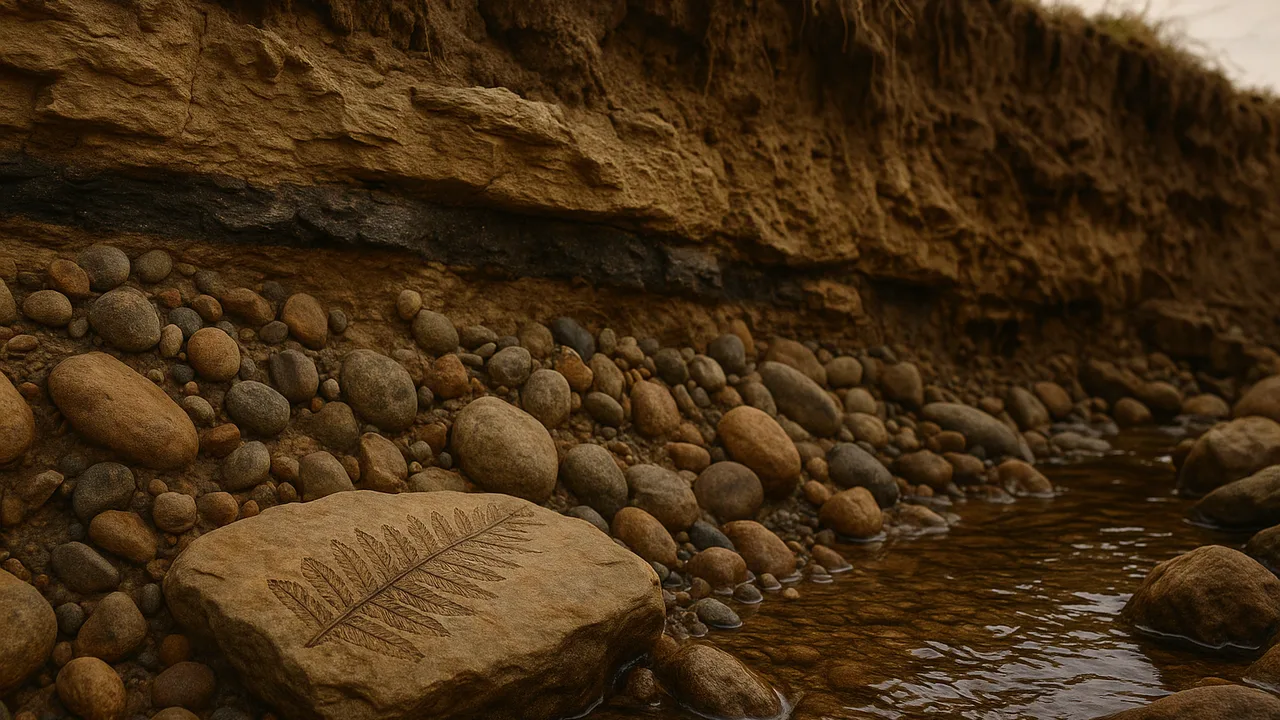
practice the Earth history, resource and hazard ideas I found hardest, and stretch my thinking with a new challenge.
- I can explain that newer rock layers are usually found on top of older layers unless something has disturbed them.
- I can describe how features like faults or igneous intrusions are younger than the rocks they cut through.
- I can use the fossil record to compare the ages of rock layers based on which organisms are found in them.
- I can use reasoning to connect evidence and explain how Earth’s resources are formed by geologic processes.
- I can describe why resources are found only in certain places or times, based on the specific environments or conditions that formed them.
- I can explain how resources are depleted as they are used and how they can be replenished, mainly through geologic processes.
- I can analyze data to find patterns in where natural hazards happen compared to geographic or geologic features.
- I can analyze data to find patterns in how often and how severe natural hazards are, and what types of damage they cause.
- I can analyze data to find patterns in the timing or location of events that happen with natural hazards, like aftershocks or flash floods.
Phase 5: Prove It
Warm-Up ~5 min
Do Now. Look at your checkpoint. Circle one question about rock layers, resources or hazards that you missed or felt unsure about. That is your focus today.
How confident are you that you can I can use rock layers and data to explain past events, resources and hazards.
Instruction ~10 min
Engineers, today is a choice board. Your teacher points you to a Catch-up or a Stretch station, based on your checkpoint.
Re-teach: three rules for reading rocks. 1. Lower layers are older, unless something flipped or moved them. 2. A fault or intrusion is younger than every layer it cuts. 3. Fossils and special layers, like ash, help match ages between places.
Worked example 1: two road cuts (sample data). Road cut X has sandstone, then an ash layer, then shale. Road cut Y, 20 km away, has coal, then the same ash layer, then limestone. Mei reasons: “The ash fell at one moment, so the coal in Y and the sandstone in X are both older than the ash, and the shale and limestone are both younger.”
Worked example 2: resource to hazard. Jamal links two ideas: “The same steep valley that exposed coal layers also has loose rock on steep slopes. Past processes explain both the resource and the hazard.”
Choice board. Catch-up A: build a paper-strip rock column, add a fault and an intrusion, and order the events. Catch-up B: match resource cards (coal, groundwater, limestone, metal ore) to the past process that formed each. Stretch A: write a hazard forecast for a new sample town using its event table. Stretch B: explain why pumping an aquifer faster than it refills changes where wells work.
| Station | What I did | What I learned | Question I still have |
|---|---|---|---|
Guided Exercises ~15 min
Try these, then go to your station.
Independent Practice ~10 min
Show your growth.
Answer the checkpoint question you circled again. Explain what you understand now that you did not before.
Complete your station task and record it in the table. Write one sentence linking a past geologic process to a resource or hazard in our river town.
Closure ~5 min
Nice work. Next class: the second catch-up and stretch day, on kinetic energy and better designs.
Exit ticket: use the words “older,” “layer” and “fault” to explain how scientists order past events.
How confident are you that you can I can explain how past geologic processes placed resources and hazards where they are.
Teacher notes
Materials: colored paper strips, scissors, glue, resource matching cards, two sample town event tables, station signs.
Setup: group students using 1.26 results (items 1–7 and 13–15). Ten minutes of re-teach and guided practice, then 25 minutes at stations. Early finishers move to a Stretch station.
Listen for: “the top layer is the oldest”; “resources are spread evenly”; memorizing era names (not needed).
Support / stretch: give a three-rule card for reading rocks. Stretch: build a rock column that includes an overturned fold and explain how to tell which way is up from fossils.