2.08 Bred by People: Artificial Selection in Crops and Dogs
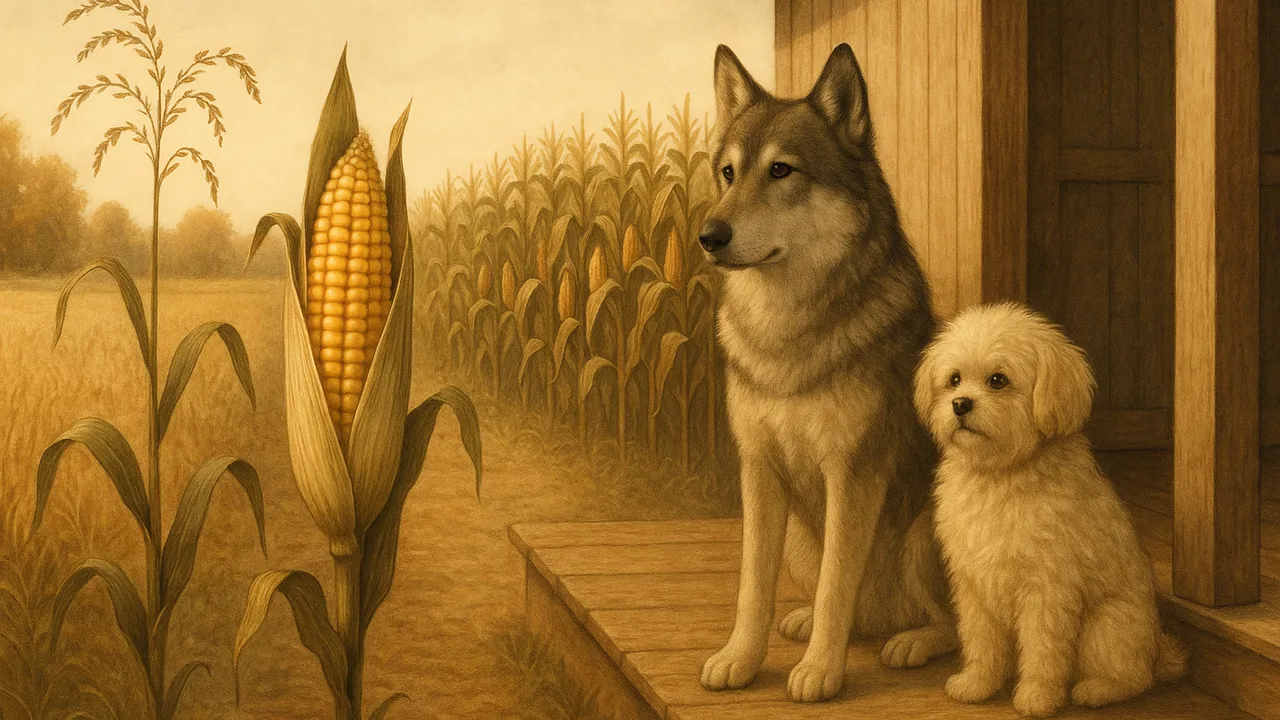
simulate selective breeding over generations and explain how people have shaped crops and dogs, with benefits and trade-offs.
- I can gather information about at least two technologies, such as gene therapy and selective breeding, that humans use to influence which traits are inherited in plants and animals.
- I can explain whether the information I gather about artificial selection is supported by evidence from my sources and my own knowledge.
Phase 2: Investigate
Warm-Up ~5 min
Do Now. Look at photos of broccoli, cabbage, kale and cauliflower beside a scraggly wild mustard plant. Write what you think connects them.
How are broccoli, cabbage, kale and cauliflower related?
Instruction ~10 min
Explore first: the breeding card game. Each team gets 12 plant cards, each listing a root depth in cm (sample data, from 30 to 60). Each generation: choose the 4 deepest-rooted cards as parents. Pair them up. Each pair makes 3 offspring: average the parents’ depths, then roll a die and add the result for 4, 5 or 6, or subtract it for 1, 2 or 3. Record the average root depth of each new generation for four generations.
| Generation | Average depth of all plants (cm) | Average depth of chosen parents (cm) | Deepest plant (cm) |
|---|---|---|---|
| 1 | |||
| 2 | |||
| 3 | |||
| 4 |
Name the ideas. In artificial selection, people choose which individuals reproduce. It works the same way as natural selection, except that people decide which traits are an advantage. It can only work with variation that already exists, and it usually takes many generations.
Worked example 1: crops. Corn was bred over thousands of years from a wild grass called teosinte, which has small ears with only a few hard seeds. Wild mustard became cabbage, kale, broccoli and cauliflower depending on which part people selected. Benefit: far more food. Trade-off: many modern fields plant a few very similar varieties. With less variation, one new disease or a severe drought can hit a whole field at once.
Worked example 2: dogs. Every dog breed, from tiny lap dogs to huge guard dogs, belongs to one species descended from ancient wolves. People bred dogs for herding, hunting, guarding and companionship. Benefit: dogs suited to many jobs. Trade-off: breeding for extreme looks has given some breeds inherited health problems, such as breathing trouble in very flat-faced breeds.
Our plan’s criteria and constraints, revised. Criteria: plants survive a two-week dry spell in trials, still make a useful harvest, and keep the taste the farm stand’s customers like. Constraints: about one bean generation per summer, a few small trial beds, the farm’s own saved seed, and enough different parent plants to keep variation in the population.
Guided Exercises ~15 min
Use your breeding-game data and the examples.
Independent Practice ~10 min
Evaluate the technology.
Make a two-column chart of benefits and trade-offs of artificial selection, with at least two crop examples and one dog example. Then say whether each claim is supported by evidence from today's lesson.
Using your game data, explain how understanding cause and effect (parents' traits → offspring traits) lets breeders change a crop on purpose.
Closure ~5 min
Selective breeding is old technology. Next time, we look at newer gene technologies and weigh their benefits and risks.
Exit ticket: describe how farmers used artificial selection to change a crop, and name one benefit and one trade-off.
Teacher notes
Materials: plant cards with sample root depths (30–60 cm), dice, calculators, photos of wild mustard and its crop forms, photos of teosinte and corn, and of several dog breeds.
Setup: post the revised criteria and constraints; part 2 tests the plan against them.
Listen for: “breeders make new genes.” Selection chooses among existing variation. Keep dog health examples general and respectful, since students may own these breeds. Do not quote yield increases or dates.
Support / stretch: pre-fill generation 1 averages. Stretch: run the game a second time choosing the 4 shallowest plants, and compare the two lines.