1.10 The Road Cut’s Story: A CER on Earth’s History
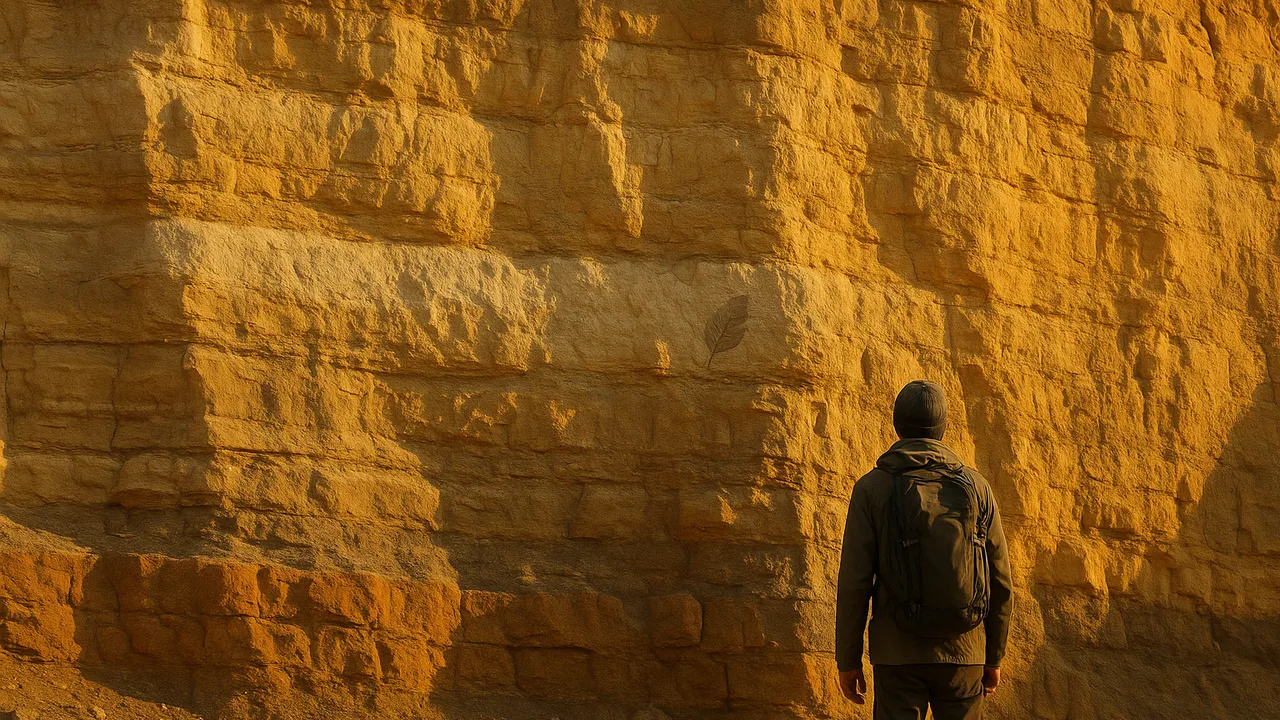
construct a scientific explanation of the order and timing of events in the road cut, using rock layers, fossils and event layers as evidence.
- I can describe how scientists use patterns in rock layers to figure out the order of events in Earth’s history.
- I can explain how changes in fossils and evidence of major events, like volcanic eruptions or extinctions, help determine when those events happened compared to others.
- I can use information from multiple reliable sources, including my own investigations, to support my explanation of Earth’s history.
- I can explain that newer rock layers are usually found on top of older layers unless something has disturbed them.
- I can describe how features like faults or igneous intrusions are younger than the rocks they cut through.
- I can use the fossil record to compare the ages of rock layers based on which organisms are found in them.
Phase 3: Make Sense
Warm-Up ~5 min
Do Now. Look at your road-cut table from 1.03 and your tape from 1.04. In one sentence, tell the road cut’s story in order, starting “First, …”.
Which evidence would make our road-cut story most convincing to the planning board?
Instruction ~10 min
Reading: how geologists build a history. A geologist reading a cliff acts like a detective at a scene. The layers record events in order, from the bottom up, unless something disturbed them. Fossils tell what lived in each environment: shells mean sea, leaf prints and coal mean swamp forest. Event layers act like timestamps. An ash band records one eruption; an iridium-rich clay records an impact. Anything that cuts through layers, such as a dike or a fault, happened after those layers formed. Finally, dated layers, often ash, turn the order into approximate ages. No single clue tells the whole story, but together they do.
Model first. Draw the road cut as a labeled column. Beside it, draw a timeline arrow from oldest to youngest, with each event placed and linked to its evidence.
| CER part | Sentence starter | Your writing |
|---|---|---|
| Claim | The events in the road cut happened in this order: … | |
| Evidence 1 (layers) | The … layer lies below the … layer, so … | |
| Evidence 2 (fossils or event layers) | The … fossils / ash show … | |
| Evidence 3 (cross-cutting or date) | Because the dike/fault cuts …; the ash was dated at about … | |
| Reasoning | This evidence supports my claim because the principle of … says … |
Worked example 1: a strong evidence sentence. Weak: “The coal is old.” Strong: “The coal lies below the ash, and the layers are flat and unbroken there, so the coal formed before the eruption.” The strong version names the observation and connects it to a principle.
Worked example 2: reasoning that ties sources together. Ava wrote: “Superposition puts the limestone first. Its shell fossils show a shallow sea. The coal above records a swamp, so the sea retreated. The sample date of about 300 million years for the ash tells us these changes happened long before the asteroid impact 66 million years ago.” She combined layer order, fossils and a date, three sources that agree.
Guided Exercises ~15 min
Use your column model and timeline. Check each other’s reasoning.
Independent Practice ~10 min
Write your CER for the planning board.
Write a full CER: In what order did the events in the road cut happen, and how do we know? Use at least three lines of evidence, including one from your own investigation in 1.03.
Name one piece of evidence that would change your story if it were found, such as a fossil in the wrong layer. Explain what it would change.
Closure ~5 min
Our rock story is clear. Next time, we use that history to explain why the valley has its resources.
Exit ticket: which line of evidence was strongest in your CER, and why?
Teacher notes
Materials: 1.03 road-cut tables, 1.04 timelines, CER organizers, colored pencils.
Listen for: evidence with no principle, and claims that use era names instead of events. Keep the focus on order and evidence. The ash date is sample data.
Assessment: score the CER on claim, evidence (three lines) and reasoning (names superposition or cross-cutting). This is formative; the unit checkpoint in part 2 assesses MS-ESS1-4 again.
Support / stretch: provide evidence cards to sort into the organizer. Stretch: explain how a mass extinction could appear in a column.