2.10 From Gene to Protein to Trait: Modeling Mutations
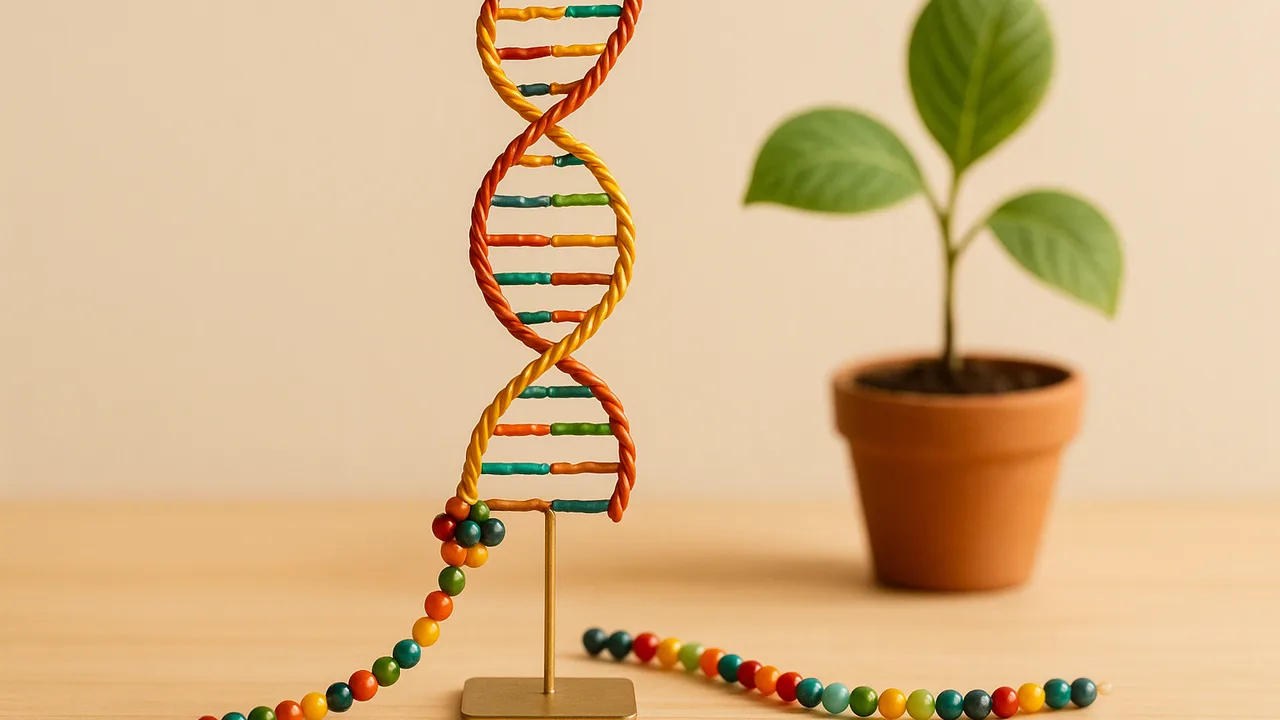
build a model linking genes on chromosomes to proteins and traits and use it to explain how a mutation can be helpful, harmful or neutral.
- I can create a model that shows genes on chromosomes, proteins, and traits of organisms to help explain how mutations can affect an organism.
- I can use my model to explain that the structure of a gene determines the structure of certain proteins.
- I can explain how the structure of a protein affects how it works in the body.
- I can show how the traits we see in organisms are the result of what proteins do.
- I can use my model to explain how changes in how proteins work can lead to helpful, harmful, or neutral changes in an organism’s structure or function.
Phase 3: Make Sense
Warm-Up ~5 min
Do Now. A key has one tooth filed down slightly. Will it still open the lock? Write two possible answers and what each would depend on.
A protein's job depends mostly on…
Instruction ~10 min
Reading: the gene-to-trait chain. Inside the nucleus of each cell are chromosomes, and along each chromosome sit many genes. Each gene is an instruction for building a protein. Proteins have specific shapes, and their shapes let them do specific jobs. One protein might help build the waxy coat on a bean leaf; another might help a root grow longer. Put together, what proteins do produces the traits we observe: leaf coat, root depth, flower color.
A mutation changes a gene’s instructions. If the change alters the protein’s shape, the protein may work differently. That can change a trait. Whether the new trait helps, harms or does nothing depends on what changed and on the environment.
Build the model. Your team makes a four-level poster model: a chromosome strip with a labeled gene, a protein made from a pipe cleaner folded into a shape, a cardboard “job slot” that the protein must fit, and a drawing of the trait. Then make three mutant pipe-cleaner proteins: one that still fits, one that no longer fits and one that fits even better.
| Protein version | Shape change | Fits the job slot? | Effect on the trait | Helpful, harmful or neutral? |
|---|---|---|---|---|
| Original | none | |||
| Mutant A | ||||
| Mutant B | ||||
| Mutant C |
Worked example 1: a harmful change. Imagine a bean gene for a leaf-wax protein. A mutation bends the protein so it no longer fits its job. The leaf makes little wax and loses water fast. In a drought, that plant is more likely to wilt before setting seed: harmful.
Worked example 2: helpful or neutral? A different mutation changes the protein so it works a little faster, and the leaf makes more wax. In a drought that helps; in a cool, wet year it might make no difference: neutral there. A third mutation changes the instructions but not the protein’s shape, so nothing about the plant changes.
Model limits. Real traits like drought tolerance involve many genes and proteins working together, plus the environment. Our model tracks one gene to make the chain clear.
Guided Exercises ~15 min
Use your poster model to answer these.
Independent Practice ~10 min
Explain with your model.
Draw your four-level model in your notebook and label each level. Under it, write a CER. Claim: a mutation can change a trait. Use these starters: “My model shows that…”, “The evidence is that Mutant ___…”, “This happens because a protein's shape…”
Use your model to explain why one mutation could be helpful to a bean plant on the community farm in a drought, and harmful or neutral in another setting.
Closure ~5 min
Genes shape proteins, and proteins shape traits. Next time, we explain why offspring get different combinations of those genes.
Exit ticket: in three linked sentences, explain how a change in a gene can lead to a change in a trait. Use the words gene, protein and shape.
Teacher notes
Materials: pipe cleaners, cardboard, scissors, chart paper, colored strips for chromosomes, CER organizers.
Setup: cut a few “job slots” in advance so teams can focus on the protein shapes.
Listen for: “genes are traits” (genes are instructions) and “mutations are always bad.” Stay inside the boundary: no steps of protein building, no DNA bases and no named kinds of mutations. The leaf-wax gene is a teaching example, not a specific named gene.
Support / stretch: provide a pre-labeled model template and CER frames. Stretch: model two genes that both affect root depth and explain why a single mutation might change the trait only a little.