2.01 Same Pod, Different Plants
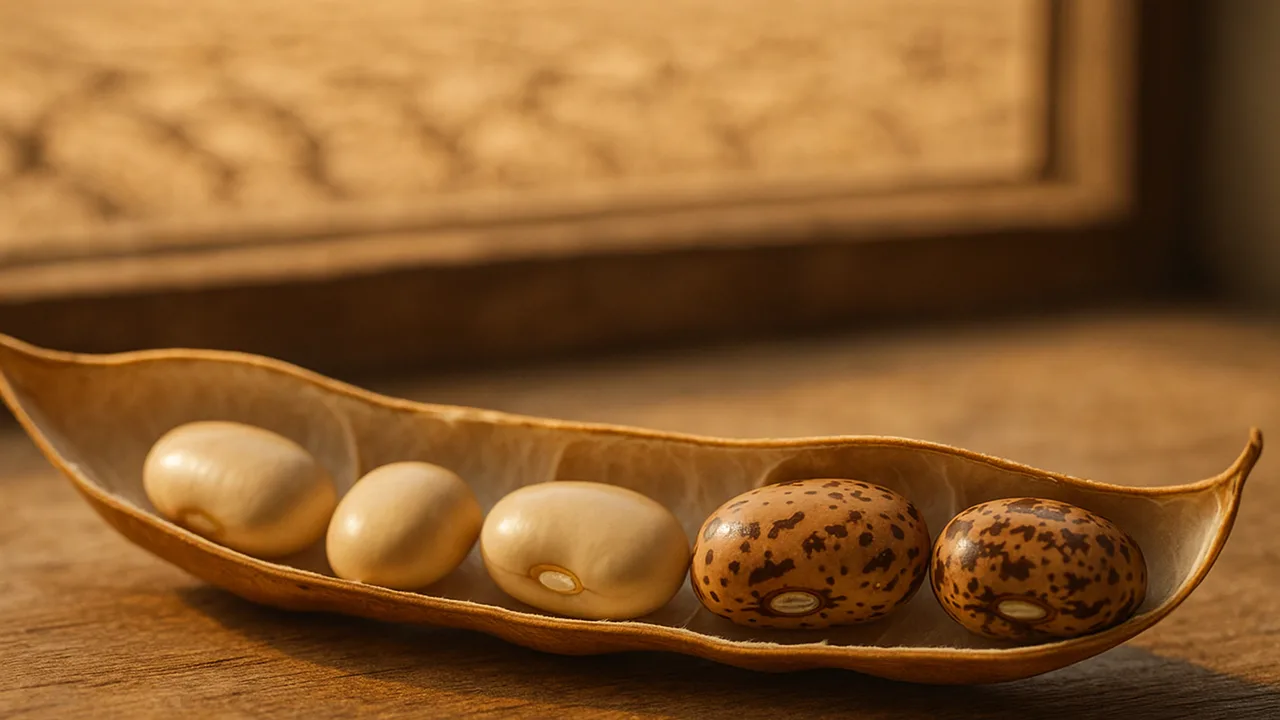
The Drought-Ready Garden: A Breeding Plan
Why do offspring differ from their parents, and how can people and nature shape which traits become common?
The mystery: Two bean plants from the same pod grow differently. After a dry summer, a farmer saves seeds only from the plants that stayed green. A few years later, most of the field survives droughts that used to wipe it out.
Questions we will figure out together in this unit:
- Why don’t seeds from the same pod grow into identical plants?
- Which traits help a plant survive a drought?
- Can a plant pass on something it went through, like a dry summer?
- Where do brand-new traits come from?
- How did farmers turn wild plants into the crops we eat today?
- Can scientists change a plant’s genes directly, and should they?
- How many generations does it take for a field to change?
- Why are cloned plants all the same?
describe the community farm’s drought problem and explain why plants from the same parents can still differ in their traits.
- I can identify and describe evidence showing that individuals in a species have genetic variations that can be passed to their offspring.
- I can describe how to use probability to determine the chances of an organism surviving and reproducing in a specific environment.
- I can explain the cause-and-effect relationship between specific traits, their genetic variations, and the probability of survival and reproduction in a given environment.
Phase 1: Spark
Warm-Up ~5 min
Do Now. Look at the photo pair on the board. Two bean plants grew from seeds that came out of the same pod. They were planted on the same day, in the same bed. One is tall and green. The other is shorter, with curled, yellow leaves. Predict the most likely reason.
Why might two bean plants from the same pod grow so differently?
Instruction ~10 min
Meet our client. A community farm grows vegetables for its neighborhood and sells extra at a weekend stand. Lately the summers have brought long dry spells. The growers water what they can, but some rows still wilt and fail. They save their own seeds each fall, and they asked our class for help: can you design a breeding plan so that, season by season, our crops get better at handling drought?
The phenomenon. One grower noticed something hopeful. After one dry summer, she saved seeds only from the bean plants that stayed green. A few years later, most of that bean field survived droughts that used to wipe it out. Nobody added a chemical or a machine. The plants themselves changed over generations. Our driving question asks how that could happen.
Plant breeders, here is your mission. To write a plan the farm can trust, you need to understand three big ideas: how traits pass from parents to offspring, where new differences come from, and how some traits become common over many generations.
Worked example 1: inherited or not? Malik grows two bean plants from one pod. He puts one in a sunny window and one in a dark closet. The closet plant is pale and spindly. That difference came from the environment, so the plant’s seeds will not inherit it. Now Malik grows two plants side by side, with equal light and water. One still has purple flowers and one has white. That difference is likely inherited, carried by genes.
Worked example 2: why it matters for the farm. Saving seed from a plant that stayed green only helps if staying green was at least partly inherited. If that plant simply grew next to a leaky hose, its seeds will do no better next year. A good breeding plan has to separate lucky spots from useful genes.
Our teams. Teams of four rotate roles every lesson. The Materials Manager collects and returns supplies. The Recorder keeps the data table. The Tester runs procedures and measures. The Reporter and Safety Lead checks hand-washing and shares the team’s thinking.
Guided Exercises ~15 min
Work through these cards with your team. Talk each one over before you lock in an answer.
Independent Practice ~10 min
Add to the class Wonder Board.
Write two questions on sticky notes: one about why offspring differ from their parents, and one about how the farm could make its crops tougher in a drought.
How confident are you that you can I can explain why plants from the same parents can differ.
Closure ~5 min
The farm’s question is really a heredity question. Next time, we map the farm’s problem and decide what a drought-ready crop needs.
Exit ticket: in two sentences, explain why saving seed from a plant that survived a drought helps only if its survival was partly inherited.
Teacher notes
Materials: a photo pair of two bean plants (or two real potted bean plants grown with different watering), sticky notes, chart paper for the Wonder Board, a roles chart. If possible, invite a grower from a local garden to deliver the request, or read it as a letter.
Setup: post the driving question; it stays up all unit. Start planting bean and radish seeds today if you want live plants for 2.03 and 2.04.
Listen for: “the plant learned to survive” or “it got used to the drought and passed that on.” Do not correct yet. Lessons 2.07 and 2.12 give evidence that populations change because individuals with helpful inherited traits leave more offspring. Remember from grade 7: chromosomes sit in the nucleus of each cell; build on that, do not reteach it.
Support / stretch: offer the frame “This difference is probably ___ because ___.” Stretch: design a fair test that would show whether a plant’s drought survival is inherited.