2.12 Arguing About Gravity: Mass, Distance and Evidence
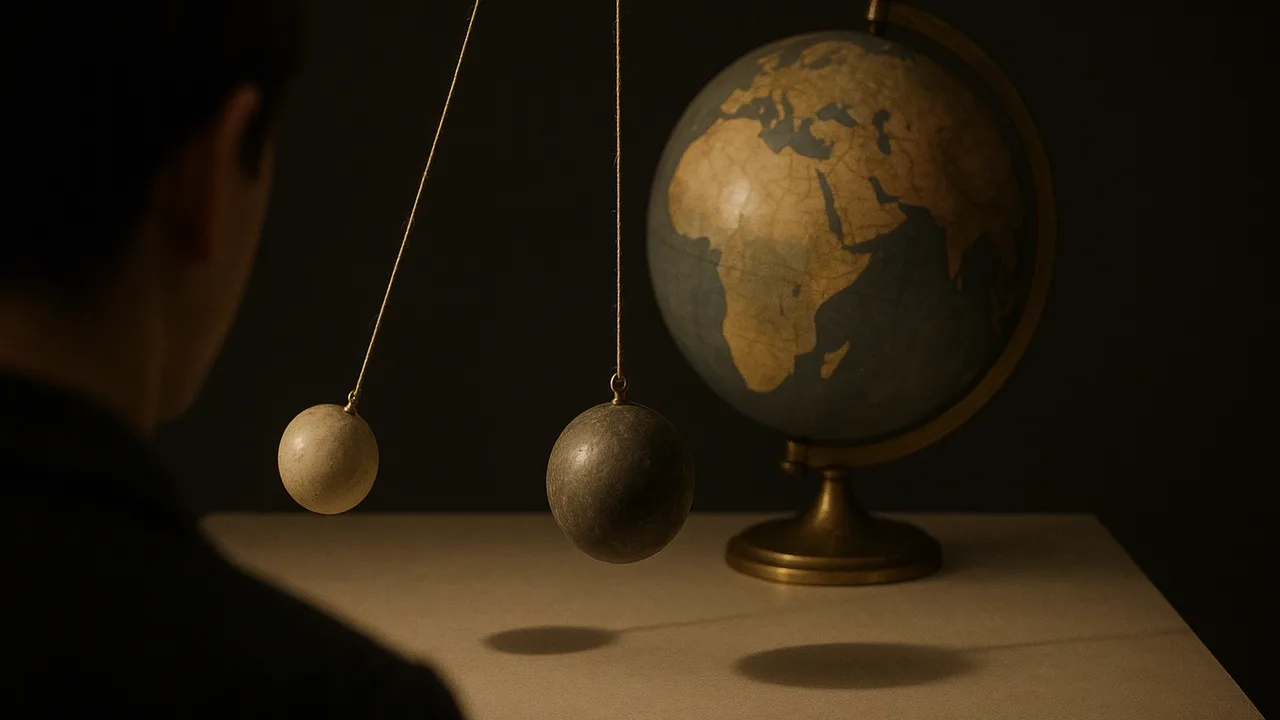
construct and present an argument, from data, that gravity is attractive and depends on the masses of the objects.
- I can evaluate the sources of evidence to decide if they are valid and reliable.
- I can judge if the evidence is strong enough to support the claim.
- I can consider other ways to interpret the evidence and explain why it best supports the claim that gravitational interactions are attractive and depend on mass.
- I can use reasoning to show that objects in a system interact through gravitational forces based on their masses.
- I can explain that larger masses experience and exert stronger gravitational forces.
- I can show that gravitational force is always attractive in every case where evidence exists.
- I can present an argument, using evidence, about the direction of gravitational forces and how the mass of objects affects these forces.
Phase 3: Make Sense
Warm-Up ~5 min
Do Now. A classmate claims, “Small objects don’t have gravity. Only planets do.” Use what you saw in the gravity sim to decide whether you agree.
Do two bowling balls on a table pull on each other by gravity?
Instruction ~10 min
An argument is more than an opinion. In science, an argument has a claim, evidence and reasoning. Strong arguments also weigh where the evidence came from and answer other possible explanations.
Worked example 1: judging sources. Diego found three sources about planet gravity: NASA’s planetary fact sheet, a science museum website and an anonymous video comment. NASA measures planets with spacecraft and is the most reliable. The museum likely draws on NASA. The comment gives no source, so it is the weakest.
Worked example 2: a model argument.
- Claim: gravity always pulls objects together, and larger masses pull harder.
- Evidence: Table 1 shows the pull on 1 kg rises from 1.6 N on the Moon to 9.8 N on Earth to 24.8 N on Jupiter as mass rises. Every sim arrow pointed toward the other object.
- Reasoning: the bodies differ mostly in mass, and the pull grows with mass. No case in our data shows gravity pushing.
Worked example 3: answering another explanation. Malik objected: “Saturn has 95 times Earth’s mass but almost the same pull, so mass doesn’t matter.” Priya replied that Saturn’s cloud tops are much farther from its center. Table 2 shows distance weakens gravity. Saturn’s huge mass makes up for the huge distance. Her reply makes the argument stronger, not weaker.
| Argument part | Your team’s version |
|---|---|
| Claim | |
| Evidence (2+ data points) | |
| Source and reliability | |
| Another explanation, and our reply | |
| Reasoning |
Sentence starters. “We claim that ___.” “The data show ___.” “This source is reliable because ___.” “Someone might argue ___, but ___.”
Guided Exercises ~15 min
Build your argument piece by piece. Discuss each card with your team.
Independent Practice ~10 min
Present and critique.
Present your argument to another team in two minutes. Then write one strength of their argument and one question about their evidence.
How confident are you that you can I can argue from evidence that gravity is attractive and depends on mass.
Closure ~5 min
Gravity is the one force at a distance that only attracts. Next time, we connect forces at a distance to stored and moving energy.
Exit ticket: explain why an astronaut weighs less on the Moon than on Earth, using mass as your reason and one number as evidence.
Teacher notes
Materials: Tables 1 and 2 from 2.07, argument organizer, a timer for presentations.
Setup: pair teams for the two-minute presentations. Post the sentence starters.
Listen for: “bigger objects have gravity, small ones don’t” and “the Moon doesn’t pull on Earth.” The bowling-ball reveal refers to well-known laboratory measurements of the tiny pull between heavy metal spheres; keep it general. Never introduce the gravitation formula (MS-PS2-4 boundary).
Support / stretch: give a pre-filled claim and one data point. Stretch: use Table 1 to argue why Venus and Earth have nearly the same pull.