1.17 How Others Solved It: Self-Heating Meals and Hand Warmers
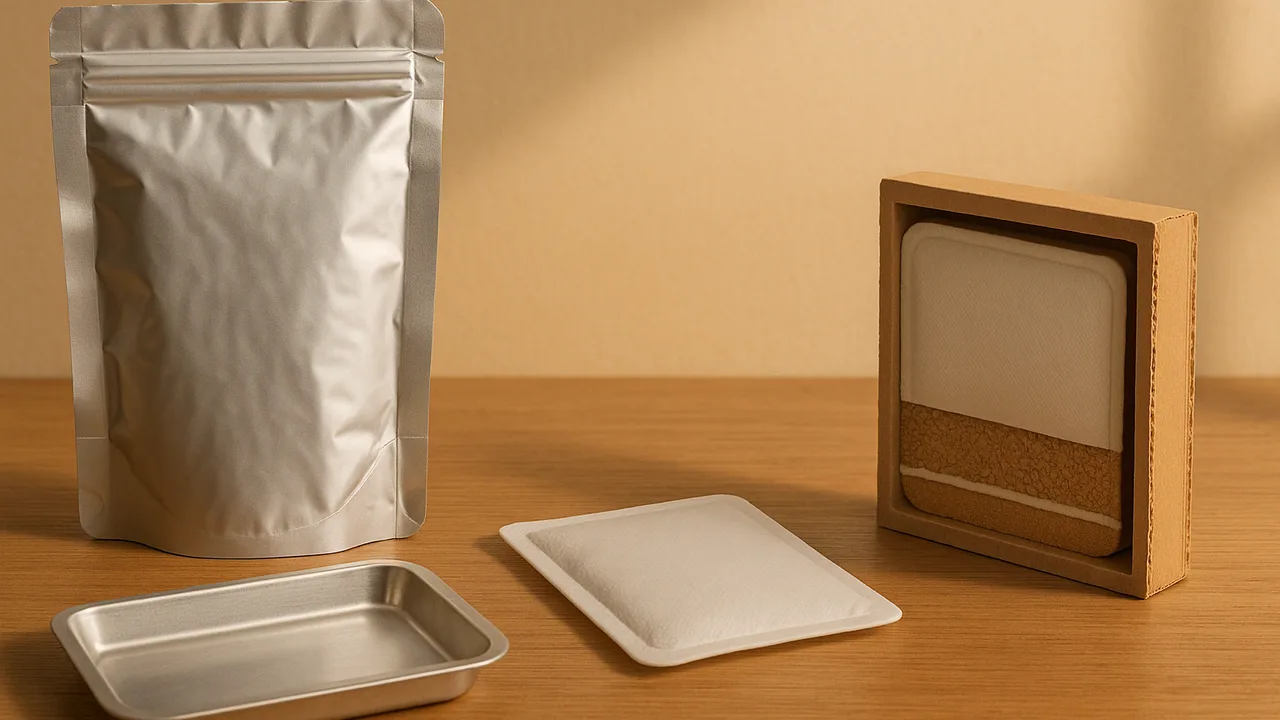
describe how commercial self-heating meals and hand warmers release thermal energy, and use property data to decide which ones involve a chemical reaction.
- I can describe what I need to know about how similar problems have been solved before.
- I can identify what evidence I need about how each solution might affect people and the environment.
- I can use data about changes in properties to decide if a chemical reaction has happened.
- I can explain how changes in the properties of substances show that atoms have been rearranged to make new substances in a chemical reaction.
Phase 4: Build
Warm-Up ~5 min
Do Now. You open a disposable hand warmer, shake it, and it gets warm in a few minutes. Hours later it is cold and stiff. What do you think changed inside the packet?
A sealed hand warmer stays cool in its outer wrapper for months. What starts it warming?
Instruction ~10 min
Engineers, before you build, study how others solved the same problem. Real products already warm food and hands with no flame. Each one teaches us something about safety, speed and mass.
Disposable hand warmers. The packet holds iron powder mixed with salt, water, carbon and a fluffy mineral that holds moisture. When air gets in, the iron reacts with oxygen and becomes iron oxide. The reaction is slow, so the packet stays warm for hours rather than getting very hot.
Worked example 1: is rusting a chemical reaction? Look at property data before and after.
| Property | Iron (before) | Iron oxide, rust (after) |
|---|---|---|
| Density | about 7.9 g/cm³ | about 5.2 g/cm³ |
| Solubility in water | does not dissolve | does not dissolve |
| Flammability | fine iron powder or steel wool can burn | does not burn |
Mei reasons: “The density changed and so did flammability. A property that identifies a substance changed, so a new substance formed. The iron and oxygen atoms rearranged into iron oxide. That is a chemical reaction.”
Worked example 2: is dissolving calcium chloride a chemical reaction? Our warmer uses calcium chloride and water. The water warms a lot. But if you let the water evaporate, white calcium chloride is left behind, with the same melting point as before. No new substance formed. Jamal concludes: “Dissolving calcium chloride releases thermal energy as its particles separate and attach to water particles. It is a chemical process that releases energy, but not a reaction that makes a new substance.” Temperature change alone is not proof of a reaction. You need property data.
Self-heating meals. Some ready-to-eat meals and drinks come with a separate heating packet or chamber. Adding water or pressing a button lets two substances mix and release thermal energy into the food. The food never touches the chemicals. Read the case study below for the military version, and why we will not copy it.
Guided Exercises ~15 min
Use the data and the case study to answer these.
Independent Practice ~10 min
Apply what others learned to your own design.
Make a two-column table: “What existing heaters do well” and “What we must do differently.” List at least three ideas in each column.
A student says, “Our calcium chloride pack is a chemical reaction because it gets hot.” Write a short reply that uses property data to correct or support the claim.
🔎 Mini case study: Mini case study: heaters that need no flame ~8 min
Flameless heaters show up in many places. Disposable hand warmers use iron powder that slowly rusts. Some self-heating cans and meal kits hide a heating chamber where water meets a chemical, such as calcium oxide (quicklime), and releases thermal energy through the wall into the food.
The military flameless ration heater is a well-known example. It is a thin pad with magnesium metal and a salt. When a soldier adds water, the magnesium reacts with the salt water and gets hot enough to heat a meal pouch in minutes. That reaction also releases hydrogen gas, which is flammable. Instructions warn users to heat meals only where air can flow, away from flames and sparks.
That is exactly why our class does not use magnesium. Hydrogen is a fire risk in a closed classroom, and the reaction can get too hot to control. Calcium chloride dissolving in water releases plenty of energy, makes no gas, and is used safely with goggles and sealed bags.
Think about it: Which criteria and constraints did the designers of each heater seem to care about most? Which of their trade-offs would the hiking club accept, and which would they reject?
Closure ~5 min
Strong research, engineers. Next class: goggles on, it is prototype day.
Exit ticket: name one feature you will copy from an existing heater and one hazard you will avoid. Explain both.
How confident are you that you can I can use property data to decide whether a chemical reaction happened.
Teacher notes
Materials: one opened and one sealed iron hand warmer (optional demo), a dish of dry calcium chloride left from evaporating a solution (prepare ahead if you can), the case study printed.
Setup: do not bring a military flameless ration heater into class; describe it only. If you evaporate a calcium chloride solution ahead of time, do it yourself and let the dish cool. The case study takes about 8 minutes.
Listen for: “hot means a reaction”; “the hand warmer burns” (it reacts slowly without flame).
Support / stretch: give a property-change checklist limited to density, melting point, boiling point, solubility, flammability and odor. Stretch: explain why the opened hand warmer may weigh slightly more after it is used up.