1.04 Fizz, Color, Solid, Heat: Signs of a Chemical Reaction
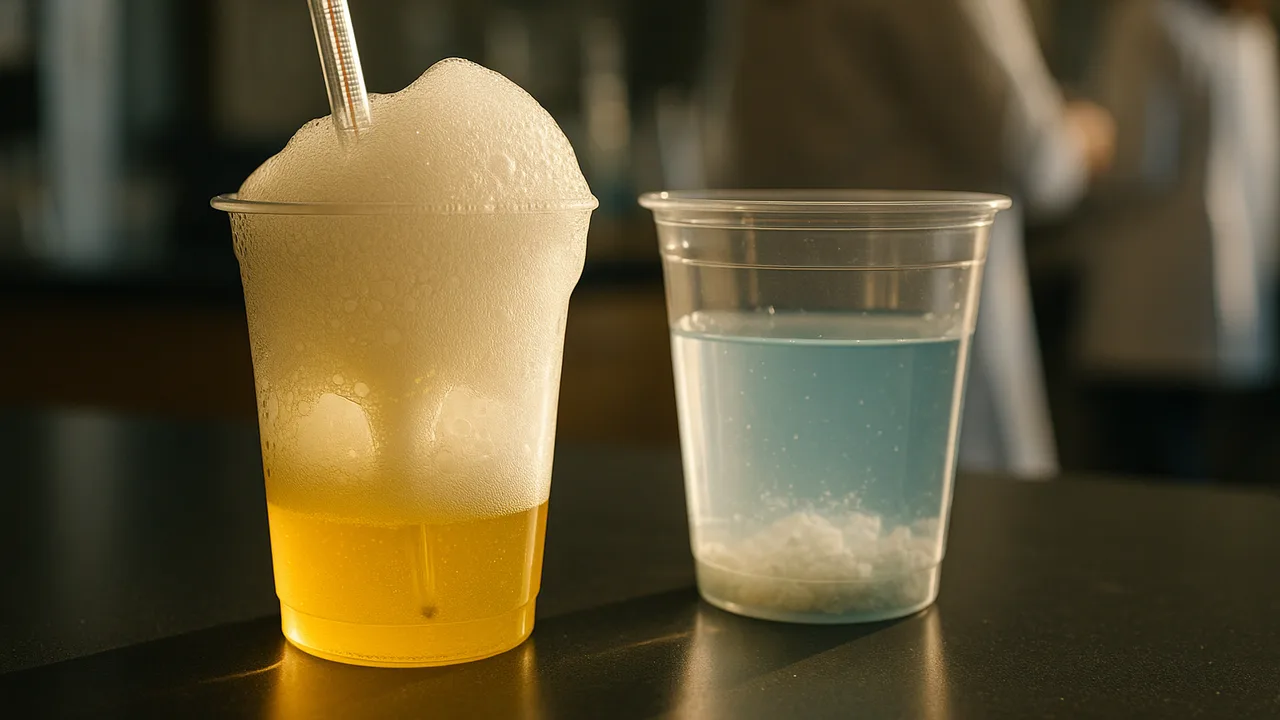
use changes in properties, such as a new gas, color, solid or temperature change, to decide whether a chemical reaction has happened.
- I can analyze data to find patterns in the physical and chemical properties of substances before and after they interact.
- I can compare the properties of substances before and after an interaction to identify similarities and differences.
- I can use data about changes in properties to decide if a chemical reaction has happened.
Phase 2: Investigate
Warm-Up ~5 min
Do Now. A nail left outside turns reddish-brown. Milk left too long smells sour. Ice in a glass turns to water. Sort these three changes: which ones made something new?
Which of the three changes did NOT make a new substance?
Instruction ~10 min
Explore first: five stations. At each station, record the starting temperature, mix the materials, then watch for two minutes. Record every change you notice in the table.
| Station | Start temp (°C) | End temp (°C) | Gas? | Color change? | New solid? | Reaction? (Y/N) |
|---|---|---|---|---|---|---|
| 1: baking soda + vinegar | ||||||
| 2: red cabbage juice + baking soda solution | ||||||
| 3: milk + vinegar | ||||||
| 4: water + calcium chloride | ||||||
| 5: sugar + warm water |
Name the ideas. In a chemical reaction, substances called reactants change into new substances called products. The products have different properties. Common signs include a gas forming, a color change, a new solid (called a precipitate) appearing in a liquid, and a temperature change. One sign alone is a clue, not proof. Several signs, plus property data, make a strong case.
Worked example 1: milk and vinegar. Malik stirred vinegar into warm milk. White clumps formed and settled. The clumps are a new solid that does not dissolve back into the liquid. That new solid, with new properties, is evidence of a chemical change.
Worked example 2: a trap. Ava saw bubbles when water boiled in a kettle. Is that a reaction? No. The bubbles are water vapor, the same substance in a gas state. When it cools, it becomes liquid water again. Ask whether the “new” thing is really a different substance.
Station 4 note. Calcium chloride dissolving gave off thermal energy. Dissolving is often called a physical change, because no gas, color or new solid appears. Still, it is a process that releases energy, and it will matter for our warmer.
Guided Exercises ~15 min
Use your station table. Discuss each card before you answer.
Independent Practice ~10 min
Decide and defend.
For each station, write Reaction or No reaction. Back each decision with at least one property change or the lack of one.
Which station would be most useful for a meal warmer? Use your temperature data.
Closure ~5 min
New properties signal new substances. But if new substances form, what happens to the matter we started with? Next time, we weigh a reaction.
Exit ticket: Jamal says, “It got warm, so it must be a reaction.” Explain why he needs more evidence, and name what evidence he should look for.
Teacher notes
Materials (per team): goggles, baking soda, vinegar, red cabbage juice (boil chopped cabbage in water ahead of time, then cool and strain), whole milk, calcium chloride (sold as a de-icer or for food use), sugar, warm tap water, plastic cups, thermometers, spoons.
Setup: pre-measure about one small scoop of calcium chloride per team in labeled cups. Warm the milk slightly; clumps form faster.
Listen for: “one sign proves it.” Push for several lines of evidence. Dissolving calcium chloride is a gray area; the NGSS lists it as an example of a chemical process for MS-PS1-6, so accept either label if students explain their reasoning with energy and property evidence.
Support / stretch: give a sign checklist card. Stretch: design a test that would show whether the gas from Station 1 is just air.