1.10 Atoms Are Never Lost: A CER on Conservation
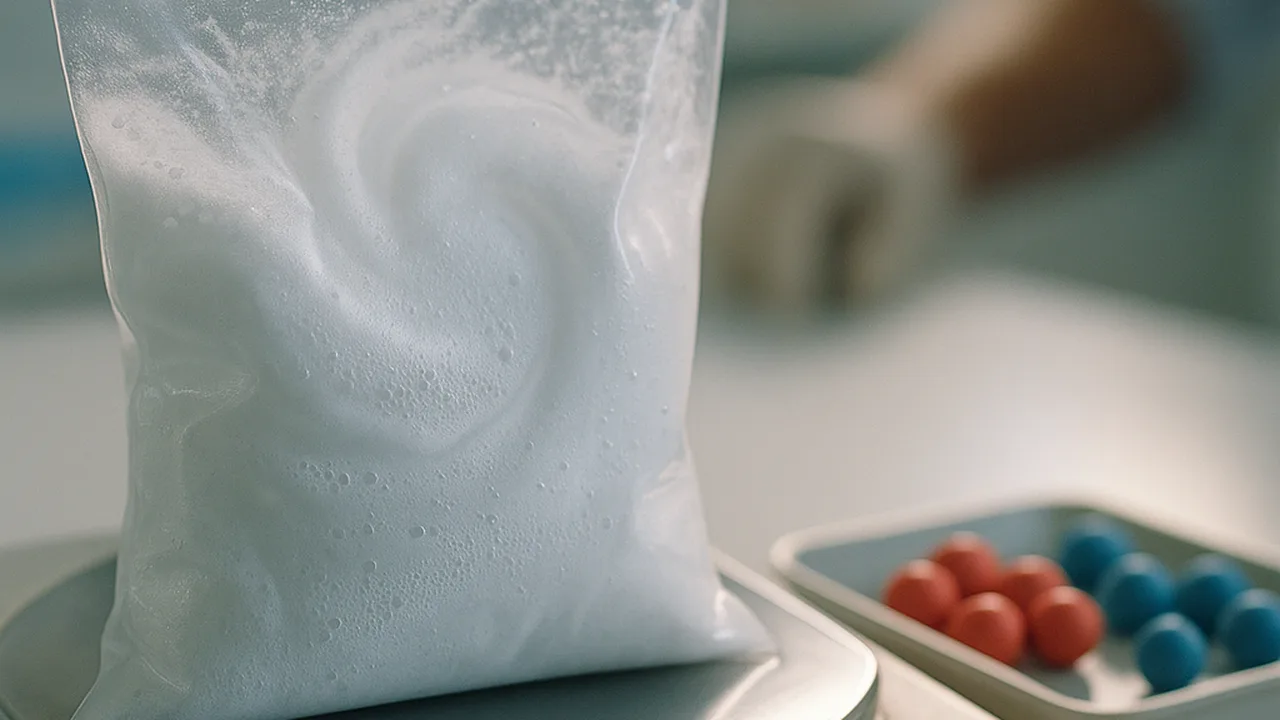
use atom models and property data to argue that a chemical reaction makes new substances while conserving atoms and mass.
- I can use my model to explain how atoms from the reactants rearrange to form different products in a chemical reaction.
- I can use my model to explain that mass is conserved in a chemical reaction because the number and types of atoms stay the same, and each type of atom always has the same mass.
- I can explain how changes in the properties of substances show that atoms have been rearranged to make new substances in a chemical reaction.
Phase 3: Make Sense
Warm-Up ~5 min
Do Now. A log burns in a campfire and leaves only a small pile of ash. Did matter disappear? Write your answer and one reason.
If you could trap every gas and the smoke from a burning log in a giant sealed container, how would the total mass compare?
Instruction ~10 min
Reading: what really happens in a reaction. When baking soda meets vinegar, the atoms in their molecules do not vanish. Links between atoms break, and the same atoms join in new arrangements. Some become carbon dioxide gas; others become water and a substance dissolved in it. Because the arrangement is new, the properties are new. The odor changes, a gas forms, and the liquid’s density shifts.
Every atom of one type has the same mass as every other atom of that type. So if the number of each type of atom stays the same, the total mass stays the same. That is exactly what our sealed bag showed. The open cup only seemed to lose mass because some atoms left as gas.
Worked example 1: a CER on the sealed bag. Claim: Mass is conserved in the baking soda and vinegar reaction. Evidence: In our sample data, the sealed bag read 182.4 g before and 182.3 g after, a change within the balance’s uncertainty. Reasoning: Atoms only rearranged into new molecules. The same number and types of atoms were present, and each type has a fixed mass, so total mass stayed the same.
Worked example 2: a CER on new substances. Claim: A new substance formed when milk met vinegar. Evidence: White clumps appeared that did not dissolve back. Reasoning: New properties mean the atoms were arranged into different molecules, which is what a chemical reaction does.
Sentence starters. Claim: “I claim that…” Evidence: “Our data show…” “Before the reaction… after the reaction…” Reasoning: “This happens because atoms…” “Since each type of atom…”
Guided Exercises ~15 min
Use your 1.04–1.06 data and models. Work with your team.
Independent Practice ~10 min
Write your own argument.
Write a full CER answering: What happens to atoms and mass when a heater packet reacts? Use data from 1.05 and your model from 1.06.
How confident are you that you can I can use a model to explain why mass is conserved in a chemical reaction.
Closure ~5 min
Atoms rearrange; mass stays the same; new substances have new properties. Next time, we model where the thermal energy goes.
Exit ticket: a heater packet has a mass of 30 g before use and is sealed. Predict its mass after it reacts, and explain with atoms.
Teacher notes
Materials: brick models from 1.06, class data from 1.04 and 1.05, CER organizers.
Setup: post the sentence starters. Score the independent CER with a simple claim, evidence, reasoning checklist; it is formative, and part 2 assesses these ideas in the unit checkpoint.
Listen for: “fire destroys matter” and “gas weighs nothing.” Keep explanations in atom counts; no atomic masses or symbolic equations. The closure question assumes a sealed packet; if students note that an air-activated warmer gains oxygen from outside, praise the thinking.
Support / stretch: offer a partly filled CER. Stretch: explain why rusting iron gains mass when it sits in open air.