1.22 Peer Critique: I Like, I Wonder, What If
give and use evidence-based critique to find the strengths and weaknesses of competing warmer designs.
- I can work with others to define and describe the criteria and constraints for evaluating a design solution.
- I can use a systematic method, like a decision matrix, to find the strengths and weaknesses of each solution.
- I can evaluate each solution using the criteria and constraints we defined.
- I can compare the solutions based on how well they meet the criteria and constraints.
- I can use evidence and reasoning to make a claim about which solution works best, based on their strengths and weaknesses.
Phase 4: Build
Warm-Up ~5 min
Do Now. Think of a time someone gave you feedback that actually helped. What made it useful?
Which comment is the most useful critique?
Instruction ~10 min
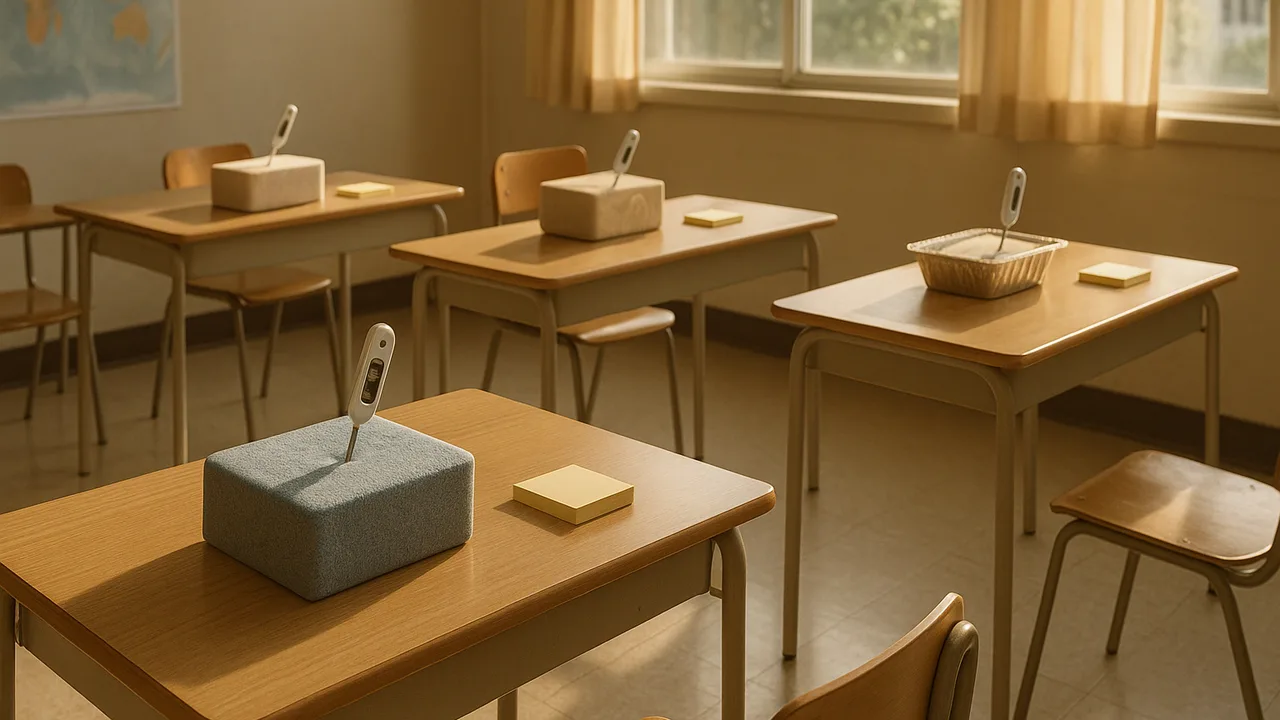
Engineers, today you are each other’s testers. We use a gallery walk. Each team posts its warmer, its decision matrix and its test graph. Visitors leave feedback in three parts.
The protocol. I like… names a strength backed by data. I wonder… asks about a weakness or a criterion. What if… suggests a change rooted in science. Before the walk, the class agrees on the criteria everyone will judge: a 15 °C rise within 10 minutes, still 10 °C above the start at 20 minutes, 20 g of heater material or less, no leaks and safe to hold.
Worked example 1: a strong critique card. Mei visits Diego’s table. “I like that your sleeve stayed only warm, so it is safe to hold. I wonder why your meal rose only 13 °C by 10 minutes when ours rose 17. What if you pressed the pack flat against the meal so more energy moves by contact?” Every part points to a criterion or to science.
Worked example 2: using critique. Diego’s team sorts the cards into a matrix of strengths and weaknesses. Three cards mention the gap between pack and meal, so that becomes the first fix. One card suggests adding a second pack, but the team notes it would break the 20 g limit and rejects it with a reason.
| Team visited | I like… | I wonder… | What if… |
|---|---|---|---|
Guided Exercises ~15 min
Practice, then walk the gallery.
Independent Practice ~10 min
Use what you heard.
Sort your team's critique cards into strengths and weaknesses. Using the criteria, claim which weakness to fix first and give your evidence.
Name one suggestion your team will NOT use. Explain which criterion or constraint it would break.
Closure ~5 min
Great critique, engineers. Next class: revise and retest version 2.
Exit ticket: write the most useful critique you gave today and explain why it was useful.
How confident are you that you can I can find the strengths and weaknesses of a design using criteria and evidence.
Teacher notes
Materials: sticky notes in three colors, posted designs, graphs and matrices, timer.
Setup: 4 minutes per station, 4 stations. One teammate stays to answer questions; others rotate. Model one critique card.
Listen for: vague praise; critique without data; “hotter is always better.”
Support / stretch: give sentence starters for each part. Stretch: write a decision-matrix row that captures a new idea from the gallery.