1.07 Heat Out, Heat In: Two Processes Compared
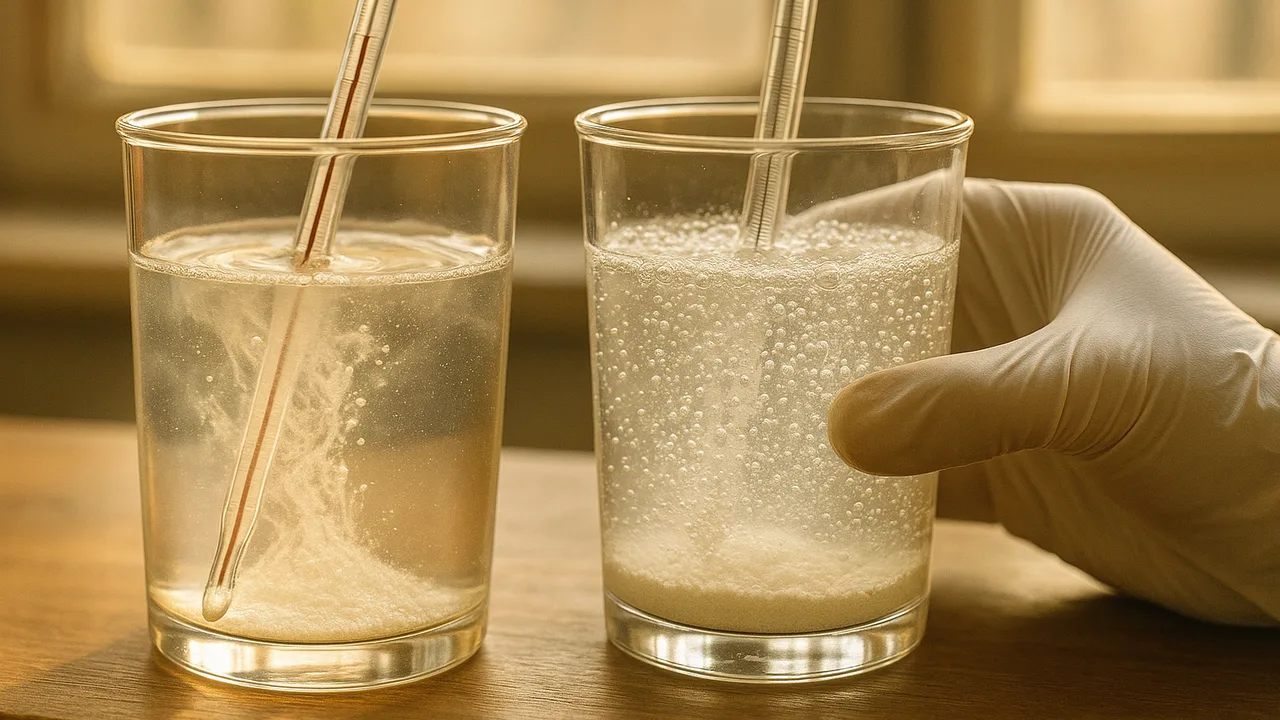
measure the temperature change of calcium chloride dissolving and of baking soda reacting with citric acid, and classify each as releasing or absorbing thermal energy.
- I can identify the parts of my device and the system that will transfer energy to solve a heating or cooling problem.
- I can choose and explain which chemical reaction and substances my device will use to release or absorb thermal energy.
- I can describe how I will track the transfer of thermal energy between my device and other parts of the system to solve the problem.
- I can describe the features of the problem my device needs to solve.
- I can explain how my device will absorb or release thermal energy using a chemical reaction.
Phase 2: Investigate
Warm-Up ~5 min
Do Now. In 1.04, one station got warm. Today you test two processes side by side. One may surprise you. Write which process you think would help a meal warmer, and why.
Baking soda and citric acid fizz when water is added. What will happen to the water's temperature?
Instruction ~10 min
Explore first. Pour 50 mL of room-temperature water into each of two cups. Record the starting temperature. Add one level scoop of calcium chloride to Cup A. Add one scoop of baking soda and one scoop of citric acid to Cup B. Stir gently and record every 30 seconds for four minutes.
| Time (s) | Cup A: calcium chloride (°C) | Cup B: baking soda + citric acid (°C) |
|---|---|---|
| 0 | ||
| 30 | ||
| 60 | ||
| 90 | ||
| 120 | ||
| 150 | ||
| 180 | ||
| 210 | ||
| 240 |
Name the ideas. A process that releases thermal energy to its surroundings warms them; scientists call it exothermic. A process that absorbs thermal energy from its surroundings cools them; it is endothermic. The thermometer measures the water, which is part of the surroundings. Energy is not created or destroyed; it moves between the reacting substances and their surroundings.
Worked example 1: reading Cup A. These are sample numbers. Mei’s Cup A started at 21°C and rose to 33°C in 90 seconds, then slowly cooled. The rise of 12°C shows energy released into the water.
Worked example 2: reading Cup B. Sample numbers again. Jamal’s Cup B fell from 21°C to 12°C while it fizzed. The 9°C drop shows energy absorbed from the water. The gas bubbles also tell us a new substance formed.
A third example. An iron-powder hand warmer works by a reaction between iron and oxygen from the air. It releases thermal energy slowly over hours, which is why it suits cold hands but may be slow for a meal.
Guided Exercises ~15 min
Use your data table and graph. Discuss each card with your team.
Independent Practice ~10 min
Graph and decide.
Graph both cups on one set of axes, time on the x-axis and temperature on the y-axis. Describe each curve in one sentence.
Which process would you choose for a meal warmer? Name the parts of the system that energy would move through, from the heater to the food.
Closure ~5 min
Some processes push energy out; others pull it in. Next time, we find out why the same energy warms some materials more than others.
Exit ticket: classify Cup A and Cup B as releasing or absorbing energy. Give one data value for each as evidence.
Teacher notes
Materials (per team): goggles, gloves for the Materials Manager, calcium chloride pellets or flakes, baking soda, citric acid powder, two foam or plastic cups, a 50 mL graduated cylinder, a thermometer probe, a timer, stirring sticks.
Setup: pre-portion powders into labeled cups. A level teaspoon of each powder in 50 mL of water gives a clear change; adjust after a trial run. Temperatures vary with the product, so trust your class data.
Listen for: “the cold pack makes cold.” Insist on energy language. The NGSS lists dissolving calcium chloride as an MS-PS1-6 example process. Keep criteria to amount, time and temperature. Commercial meal heaters using magnesium are described in 1.12 only, never done in class.
Support / stretch: give pre-labeled graph axes. Stretch: predict how doubling the calcium chloride would change the curve, then test it if time allows.