1.21 Keep the Heat Where the Meal Is: Mass, Materials and Insulation
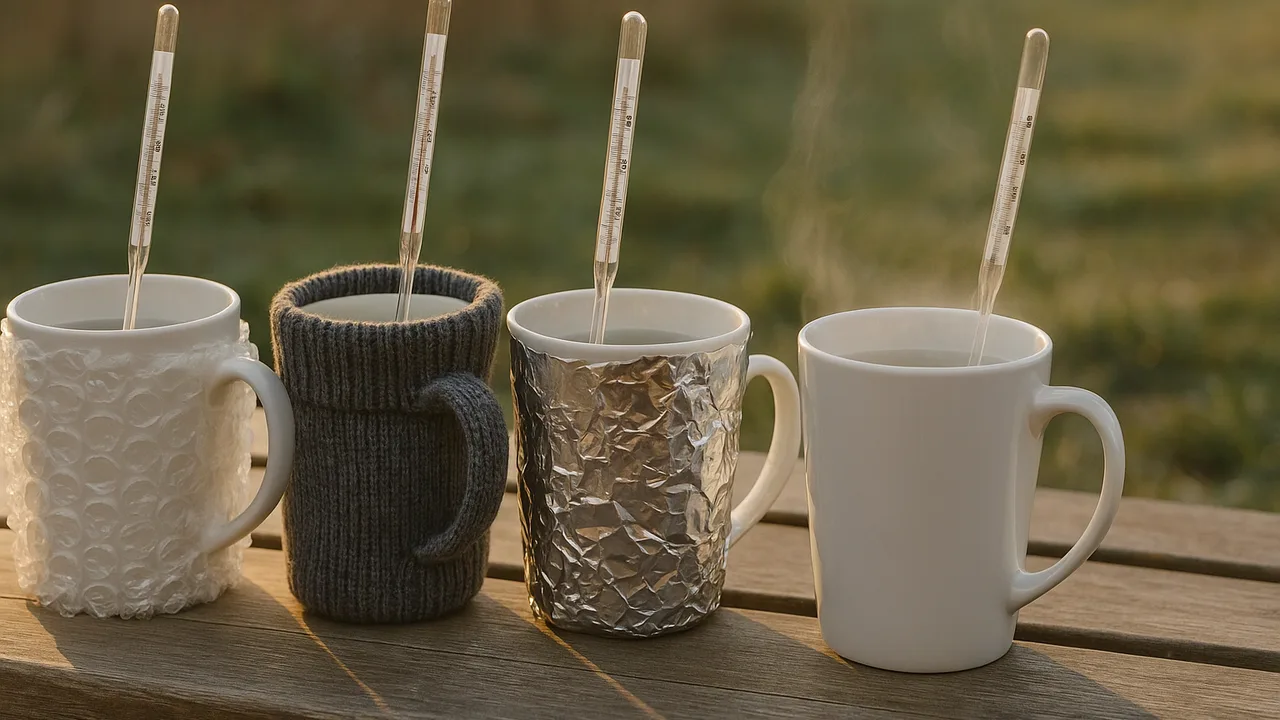
use temperature-change data about mass, type of matter and insulating materials to design a sleeve that keeps thermal energy in the meal.
- I can explain how thermal energy moves from hotter objects to colder objects.
- I can describe the materials I use in my design, including their properties like thickness, heat conductivity, and reflectivity, and explain how these help minimize or maximize thermal energy transfer.
- I can show how my device solves the problem by minimizing or maximizing thermal energy transfer.
- I can explain that the purpose of my investigation is to find out how thermal energy transfer relates to the type of matter, the mass of the matter, and the change in temperature (average kinetic energy) of the sample.
- I can plan what data to collect in my investigation, including the initial and final temperatures, the types of matter, and the mass of each sample.
- I can explain how I will use my data to show how changes in temperature relate to the mass and type of matter, and to the change in average kinetic energy of the particles.
Phase 4: Build
Warm-Up ~5 min
Do Now. In grade 6 you built a cooler that slowed thermal energy coming IN. Now you want to slow thermal energy going OUT of a hot meal. Which materials from that cooler could help, and why?
Why do many warmers lose energy before the meal gets hot?
Instruction ~10 min
Engineers, today we answer two questions with data. First: how do the mass and type of the meal change how much its temperature rises? Second: which sleeve material keeps the most energy where we want it?
Idea 1: mass matters. The same pack releases about the same amount of thermal energy. Spread over more matter, each particle gains less kinetic energy on average, so the temperature rises less.
Worked example 1: the same pack, different meals (sample data).
| Meal | Mass (g) | Start (°C) | End (°C) | Change (°C) |
|---|---|---|---|---|
| Water | 100 | 20 | 36 | 16 |
| Water | 200 | 20 | 28 | 8 |
| Dry sand | 100 | 20 | 50 | 30 |
Jamal reads it: “Doubling the water’s mass halved its temperature change. And 100 g of sand changed much more than 100 g of water, so the type of matter matters too. Water needs more energy for each degree. Real meals are mostly water, so we should test with water.” Notice that he compares temperature changes. We do not calculate the energy itself.
Idea 2: materials matter. Insulators slow thermal energy transfer. Trapped air in foam, felt and bubble wrap slows conduction. Shiny foil reflects some radiant energy back toward the meal. Thickness helps too.
Worked example 2: comparing sleeves (sample data). Same 20 g pack and 100 g meal starting at 20 °C, read at 20 minutes: no sleeve 27 °C, felt 31 °C, foam 35 °C, bubble wrap plus foil 34 °C. Only the foam and the bubble-foil sleeves keep the meal at least 10 °C above its start, and foam does it with room to spare. Priya notices that the foam sleeve also felt only warm on the outside. “Less energy escaping means more stays in the meal, and the hiker’s hands stay safe. Foam adds only 6 g to carry.”
| Sleeve | Thickness (mm) | Added mass (g) | Meal at 20 min (°C) | Outside feels |
|---|---|---|---|---|
| None | ||||
| Felt | ||||
| Foam | ||||
| Bubble wrap + foil |
Guided Exercises ~15 min
Use both sample tables, then plan your own sleeve test.
Independent Practice ~10 min
Choose your insulation.
Using the sample data or your own test, choose a sleeve material. Explain how its properties (thickness, trapped air, shine) minimize thermal energy transfer to the air, and use data to show whether it keeps the meal 10 °C above its start at 20 minutes.
A hiker wants to warm a 250 g meal instead of 100 g. Predict what happens to its temperature change with your pack, and suggest one design change.
Closure ~5 min
You now know how to keep the energy in the meal. Next class: critique day.
Exit ticket: explain why the same pack warms a small meal more than a large one.
How confident are you that you can I can explain how mass, type of matter and insulation affect temperature change.
Teacher notes
Materials: felt, craft foam, bubble wrap, foil, rulers, scales, thermometers, activated packs from teams’ remaining calcium chloride (goggles on for any new mix), clean dry sand.
Setup: if time is short, run the mass and sand comparison as a teacher demo with two identical packs while teams test sleeves. All numbers above are sample data; record your class data.
Listen for: “the bigger meal got less heat” (it got about the same energy spread over more matter); “foil makes heat.”
Support / stretch: give a fill-in test-plan frame. Stretch: test whether two thin layers beat one thick layer of the same total mass.