2.25 Moon Mission Exhibit Showcase
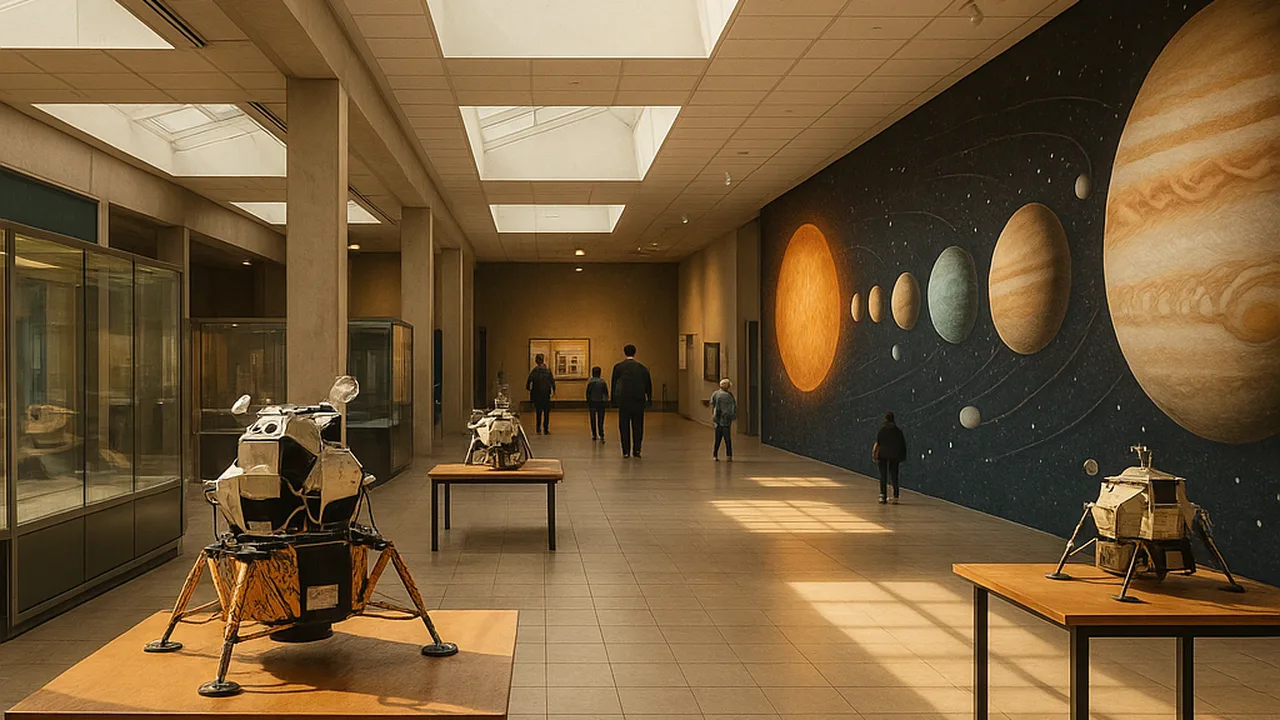
present our lander and solar system model to the science center, explaining the science, the design process and the limits of our models.
- I can explain how my device or solution could be valuable or helpful to society.
- I can explain how each part of my proposed solution affects how it works.
- I can describe how my proposed solution connects to the problem I am trying to solve.
- I can explain how each part of my proposed solution relates to the problem and how the data from my model shows how well the solution works.
- I can describe how different ways of showing data, like pictures, graphs, or models, highlight different characteristics and scales of objects in the solar system.
Phase 5: Prove It
Warm-Up ~5 min
Do Now. Practice your 30-second opening with a partner. It must answer: what problem does our lander solve, and how do we know it works?
How confident are you that you can I can explain my design and the science behind it to a visitor.
Instruction ~10 min
Mission engineers, the science center is here. Exhibit staff or guest visitors will tour your stations. Each team has a lander station and helps with the class solar system wall.
What a strong presentation includes. Show your problem model with criteria and constraints. Explain each part of the lander and its job. Show your data from Round 1 to Drop Day. Explain the collision with Newton’s third law. Name the limits of your models. Then point to the scale wall and explain sizes and distances.
Worked example 1: Malik’s lander pitch. “Our problem: land an egg from 2 meters with no parachute, under 150 grams. Our crumple base crushes on impact, so the egg stops gently. The floor pushes up as hard as our lander pushes down, but the crush keeps the push on the egg small. We went from 1.5 to 2.0 meters safe height in three versions.”
Worked example 2: Ava’s scale wall talk. “If Earth is this 1.3 cm dot, the Moon is 38 cm away and the Sun is 150 meters away. We needed a second scale for distance, because at that scale the planets are too small to see. And the Milky Way would be far too big to fit on our planet at either scale.”
Guided Exercises ~15 min
Rehearse with these checks before visitors arrive.
Independent Practice ~10 min
After the showcase, reflect.
What did visitors ask or suggest? Name one idea that would improve the exhibit.
Project task: Moon Mission Exhibit
Deliver a crash-safe lander station and a share of the class solar system scale wall for the science center’s Moon Mission exhibit. Explain how forces act during the landing, how testing data shaped your design, and how the scale model shows sizes and distances in space.
Submission workflow
- Finish your final lander and post your problem model with criteria and constraints.
- Build a data poster: Round 1, each version and Drop Day results, with one graph.
- Finish your section of the scale wall: size cards, distance strip and a caption that names the scale limits.
- Write and rehearse a 3-minute station talk; every team member speaks.
- Present to the science center visitors and collect one piece of feedback.
How it is scored
| Criterion | What proficient looks like |
|---|---|
| Design and criteria | The lander meets the mass and size constraints and passes most official drops; the problem model shows criteria, constraints, inputs and outputs. |
| Forces and collisions | The team explains the impact with Newton’s third law (equal and opposite forces) and how its design makes the stop gentler, and connects the design to a benefit for society. |
| Data and iteration | The data poster organizes results from several designs and versions, and the team explains how specific data led to specific changes and names the model’s limits. |
| Scale and communication | Size and distance models use correct scaled values, the caption explains why two scales are needed, and the talk is clear, accurate and shared by the whole team. |
Closure ~5 min
You built a real exhibit, mission engineers. Next: the unit checkpoint, then two catch-up and stretch days.
Exit ticket: which question on our Wonder Board can you now answer? Write the question and your answer.
How confident are you that you can I can explain how my design meets the client's needs, using science and data.
Teacher notes
Materials: landers, data posters, scale wall, a drop station for one live demo (teacher-run), visitor feedback cards, rubric copies.
Setup: invite staff from a local science center, museum or library; a video call works too. Other classes or families can stand in as visitors. Score the rubric during talks.
Listen for: talks that list features with no data; any statement that the force on the payload is zero; scale talk that skips the limits.
Support / stretch: give a talk frame with five headings and let students use note cards. Stretch: add a station card comparing Moon and Mars landing technology.