1.08 Natural or Synthetic? Tracing Cooler Materials
sort materials as natural or synthetic and use two or more sources to trace synthetic materials back to the natural resources they come from.
- I can gather information from at least two sources to explain what synthetic materials are and which natural resources they come from.
- I can describe the chemical processes used to turn natural resources into synthetic materials, using examples from my sources.
- I can explain why society needs certain synthetic materials, such as new medicines, foods, or fuels.
- I can evaluate each source I use to decide if it is credible, accurate, and if it might be biased.
Phase 2: Investigate
Warm-Up ~5 min
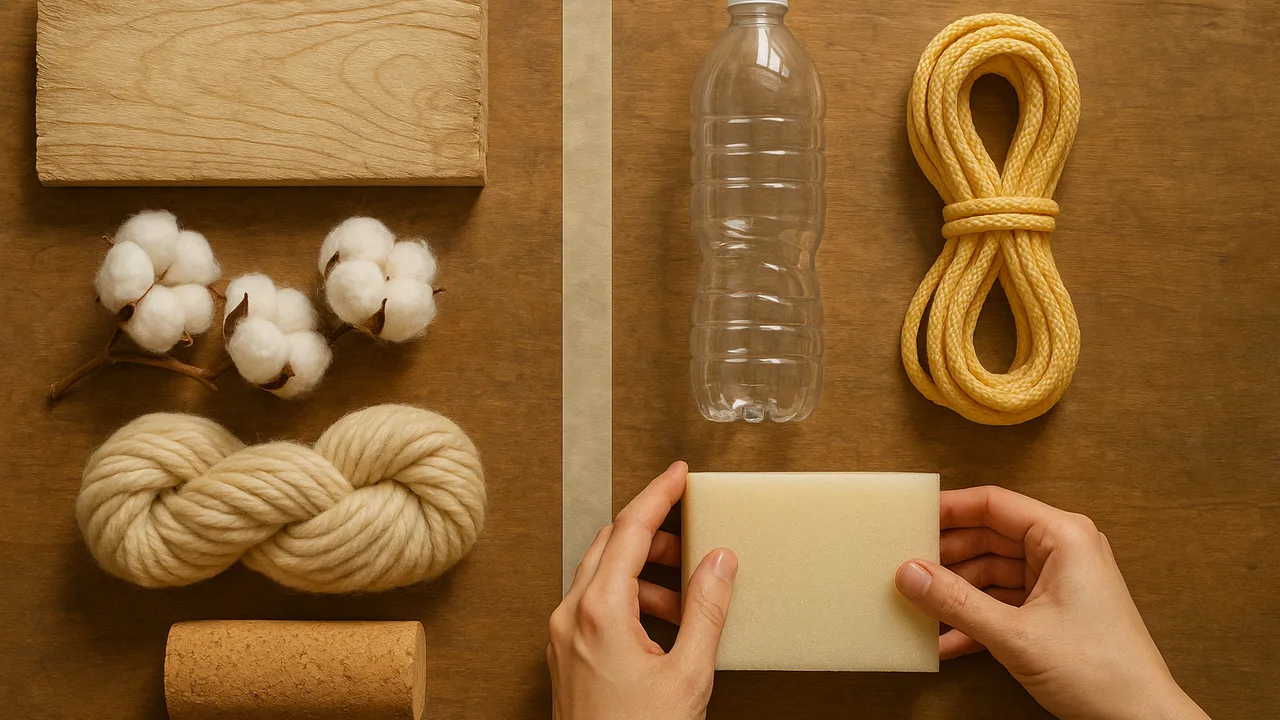
Do Now. Look at the material tray: a cotton sock, a wool scarf, a wooden block, a nylon strap, a polyester shirt tag, a plastic bottle, a piece of foam cooler and a sheet of paper. Sort them into two piles however you like.
A foam cooler and a plastic bottle are both made mainly from which natural resource?
Instruction ~10 min
Two kinds of materials. A natural material is used close to how it is found, like wood, cotton or wool. A synthetic material is made by people. It comes from natural resources that are changed by chemical processes into new substances.
Your research task. Each team gets a packet of source cards: an encyclopedia-style article, a museum diagram of a plastics factory, a company advertisement and a student blog post. Use at least two sources for each synthetic material. Record where each fact came from.
| Material | Natural or synthetic? | Natural resource it comes from | How it was changed (in your words) | Property that helps a cooler | Sources used (at least 2) |
|---|---|---|---|---|---|
| Cotton | |||||
| Wool | |||||
| Nylon | |||||
| Plastic bottle | |||||
| Foam cooler | |||||
| Paper |
Worked example 1: from oil well to foam cooler. Diego combined the article and the museum diagram. Oil and natural gas are pumped from underground. At a refinery or chemical plant, they are separated into simpler chemicals. Chemical reactions join small molecules into very long chain molecules, which form plastic. For foam, the plastic is puffed up with gas into tiny bubbles. The result is light, stiff and full of trapped air.
Worked example 2: can we trust this source? Ava’s packet included an ad that said, “Our foam coolers are the best ever made!” She asked three questions. Who wrote it? A company that sells coolers. Why? To sell them. Can the claim be checked? Not without data. She decided the ad might be biased and used the article and museum diagram instead.
Paper is a tricky one. Paper comes from wood, a natural resource, but wood fibers are processed heavily to make it. Scientists may disagree about where it belongs. Use your sources to argue your choice.
Guided Exercises ~15 min
Use your source cards and table. Name the source for any fact you use.
Independent Practice ~10 min
Evaluate one source on your own.
Pick one source card. Answer: who made it, why it was made, whether its facts can be checked, and whether you trust it. Give a reason for each answer.
How confident are you that you can I can use two sources to explain where a synthetic material comes from.
Closure ~5 min
Many cooler materials began as oil and gas deep underground. Next time, we pull everything together and write the cooler’s criteria and constraints with our client.
Exit ticket: trace a foam cooler from its natural resource to the finished product in three steps.
Teacher notes
Materials: a material tray per team (see the Do Now), printed source cards. Write the cards yourself or adapt short passages from an encyclopedia and a science museum; add one sales ad and one unsourced post so students can practice judging credibility.
Setup: jigsaw the packet: each member reads one card, then teaches the team.
Listen for: “synthetic means fake” or “natural always means better.” Keep the chemistry general (MS-PS1-3): small molecules from oil and gas are joined into long chains. Do not name specific reactions or invent production numbers. Some rubber is natural (from tree sap) and some is synthetic, which makes a good stretch case.
Support / stretch: highlight key sentences on the cards. Stretch: research one synthetic medicine and its natural resource.