2.12 Gravity Holds It All Together: From Moons to Galaxies
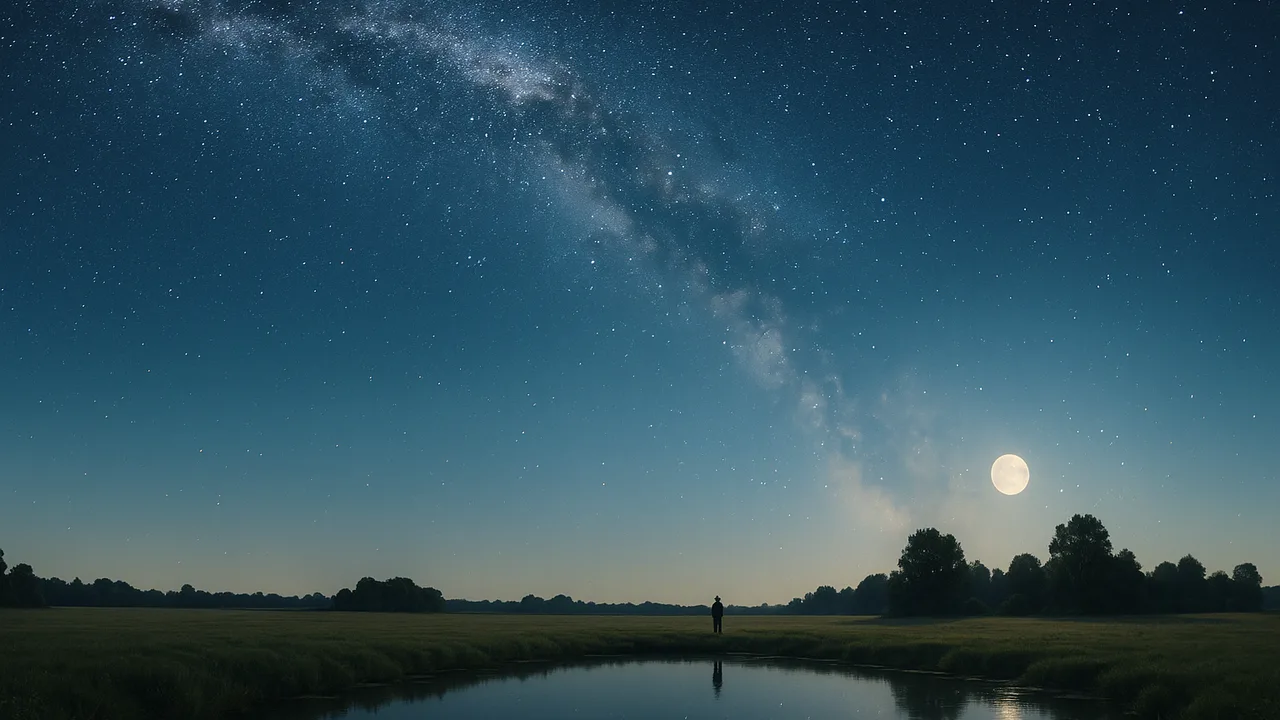
model how gravity holds moons, planets, the solar system and the Milky Way together, and compare sizes and distances at each level.
- I can create a model that shows gravity, the sun, planets, moons, and asteroids as parts of our solar system.
- I can include the Milky Way galaxy as a collection of stars and their systems in my model.
- I can show that there are many other galaxies in the universe in my model.
- I can use my model to compare the sizes and distances in the solar system and the Milky Way galaxy.
- I can use my model to show that moons orbit planets, planets orbit the sun, and stars orbit the center of the Milky Way because of gravity.
- I can explain with my model that these orbiting patterns were formed early in the solar system’s history by gravity.
Phase 3: Make Sense
Warm-Up ~5 min
Do Now. Your address has levels: house, street, town, country, Earth. Space has levels too. Write our “cosmic address” as far out as you can.
What holds the stars of the Milky Way together?
Instruction ~10 min
Mission engineers, zoom out. Each level below is a system held together by gravity:
- Earth and Moon: the Moon orbits Earth about once a month.
- Solar system: the Sun holds most of the solar system’s mass. Planets, dwarf planets, asteroids and comets orbit it.
- Milky Way galaxy: hundreds of billions of stars, including the Sun, orbit the galaxy’s center. The galaxy is about 100,000 light-years across. The Sun takes more than 200 million years to go around once.
- Universe: the Milky Way is one of billions of galaxies.
| Level | What orbits what? | Rough size or distance | Time for one orbit | Our model object |
|---|---|---|---|---|
| Earth-Moon | ||||
| Solar system | ||||
| Milky Way | ||||
| Many galaxies | — |
Worked example 1: why distances need new units. A light-year is the distance light travels in one year, about 9.5 trillion km. Light from the Sun reaches Earth in about 8 minutes. Light takes about 100,000 years to cross the Milky Way. Mei wrote, “If our hallway model were shrunk so the whole solar system fit on a coin, the galaxy would still be far wider than a country.”
Worked example 2: why things orbit the Sun and not a far star. Diego asked why a nearby star does not pull Earth away. Gravity gets weaker with distance. Even the closest stars are so far away that their pull on Earth is tiny compared with the Sun’s. Objects too far from the Sun do not orbit it at all.
A pattern from long ago. Scientists think the solar system formed from a spinning cloud of gas and dust that gravity pulled together. That is why the planets all orbit in the same direction, in nearly the same flat plane.
Guided Exercises ~15 min
Use the levels table and our orbit model.
Independent Practice ~10 min
Draw a nested model.
Draw nested circles: Earth-Moon inside the solar system inside the Milky Way among other galaxies. Add arrows for orbits and a label explaining what gravity does at each level.
How confident are you that you can I can model the role of gravity from moons to galaxies.
Closure ~5 min
Gravity builds systems inside systems. Next, we read real data to find patterns among planets, asteroids, comets and meteors.
Exit ticket: explain why gravity from a star far beyond our solar system does not pull Earth out of its orbit.
Teacher notes
Materials: nested-circle template, images of the Milky Way and a deep-field photo of many galaxies (public NASA images), the orbit models from 2.08.
Setup: numbers here are rounded estimates; scientists’ values for the Milky Way’s size and star count vary. This lesson formatively checks MS-ESS1-2 ids developed in 2.08.
Listen for: “a light-year is a time.” It is a distance. Also “the galaxy is the solar system.” Stay qualitative on gravity; no equations or Kepler’s laws.
Support / stretch: provide the nested model with labels to place. Stretch: research one galaxy beyond the Milky Way and its distance in light-years.