1.23 Who Designs Cold Packaging? Packaging Engineers and Honest Sources
describe a packaging engineer’s work and judge whether sources about insulating materials are credible and accurate.
- I can evaluate each source I use to decide if it is credible, accurate, and if it might be biased.
- I can decide if the information I collected shows that synthetic materials are made from natural resources through chemical reactions.
- I can explain if the information I gathered helps me understand how making and using synthetic materials affects society.
- I can combine information from different types of sources, like graphs, diagrams, and text, to describe how synthetic materials are made from natural resources using chemical processes.
- I can explain how the properties of a synthetic material are different from the properties of the natural resource it was made from, and how these properties help the synthetic material do its job.
- I can describe how making and using synthetic materials affects natural resources and society, and how their structure and function meet a societal need or desire.
Phase 4: Build
Warm-Up ~5 min
Do Now. A cooler ad says, “Keeps ice for 10 days! Best cooler ever made!” What questions would you ask before believing it?
What is the biggest reason to be careful with this ad?
Instruction ~10 min
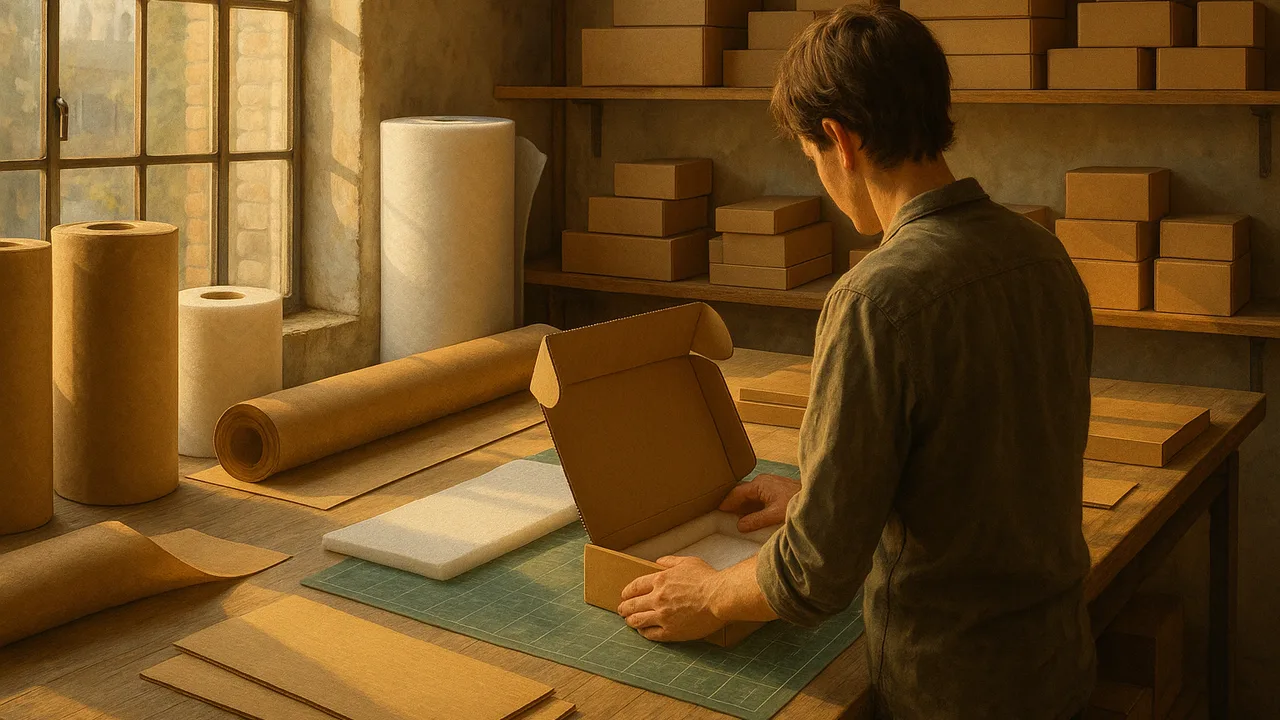
Design engineers, today you meet a career and sharpen a skill. Packaging engineers design boxes, bags and wraps that protect products, including cold food and medicine. They read a lot of sources about materials. They must decide which ones to trust.
Four questions for any source. Who wrote it, and what do they know? Why was it written: to inform, or to sell? Does it show evidence, such as test conditions and data? Do other trustworthy sources agree?
Worked example 1: three sources about foam. Source A is a government food safety page: use ice packs and insulated bags. Source B is a foam company’s ad: “Foam is the only insulator that works.” Source C is a science museum article with a diagram: foam is made from petroleum through chemical reactions and is mostly trapped air. Mei rated A and C as credible, and B as biased. B also overstates, since wool and vacuum layers work too.
Worked example 2: combining sources. Mei combined the diagram in C with the text in A. She wrote: “Foam is a synthetic material made from petroleum. Its trapped air pockets slow thermal energy, which meets society’s need to keep food safe. But it is hard to recycle, so it affects the environment.” She used two sources and two kinds of information.
| Source | Who wrote it, and why? | Evidence shown? | Possible bias? | Credible? (yes/no/partly) |
|---|---|---|---|---|
| A | ||||
| B | ||||
| C |
Guided Exercises ~15 min
Use the three sources from the worked example.
Independent Practice ~10 min
Write like a materials researcher.
Fill in the source table. Then explain which source you trust least and why.
Using at least two sources, explain how a synthetic insulator is made from a natural resource, how its properties differ from that resource, and one effect it has on society or the environment.
Closure ~5 min
Build phase complete, design engineers. Next comes Prove It: the field-trip-day heat test. Your Build field trip, The Cooler Design Studio, comes after this lesson.
Exit ticket: what part of a packaging engineer's job would you enjoy most? Which part did you already practice in this unit?
How confident are you that you can I can judge whether a source is credible and combine sources to explain how synthetic materials are made.
Teacher notes
Materials: printed copies of three short sources (write your own short versions in the style of each type: a government food safety page, a company ad, a museum article), source tables.
Setup: 10 minutes on the career, 25 on sources. If time allows, invite a family member who works in shipping, food service or manufacturing to talk for 5 minutes.
Listen for: “ads are always lies” or “if it’s online, it’s true.” Push for the middle: verify.
Support / stretch: give a highlighted version of each source. Stretch: find a real product claim and test it against two credible sources.