5.07 Test Day: Find the Failure Points
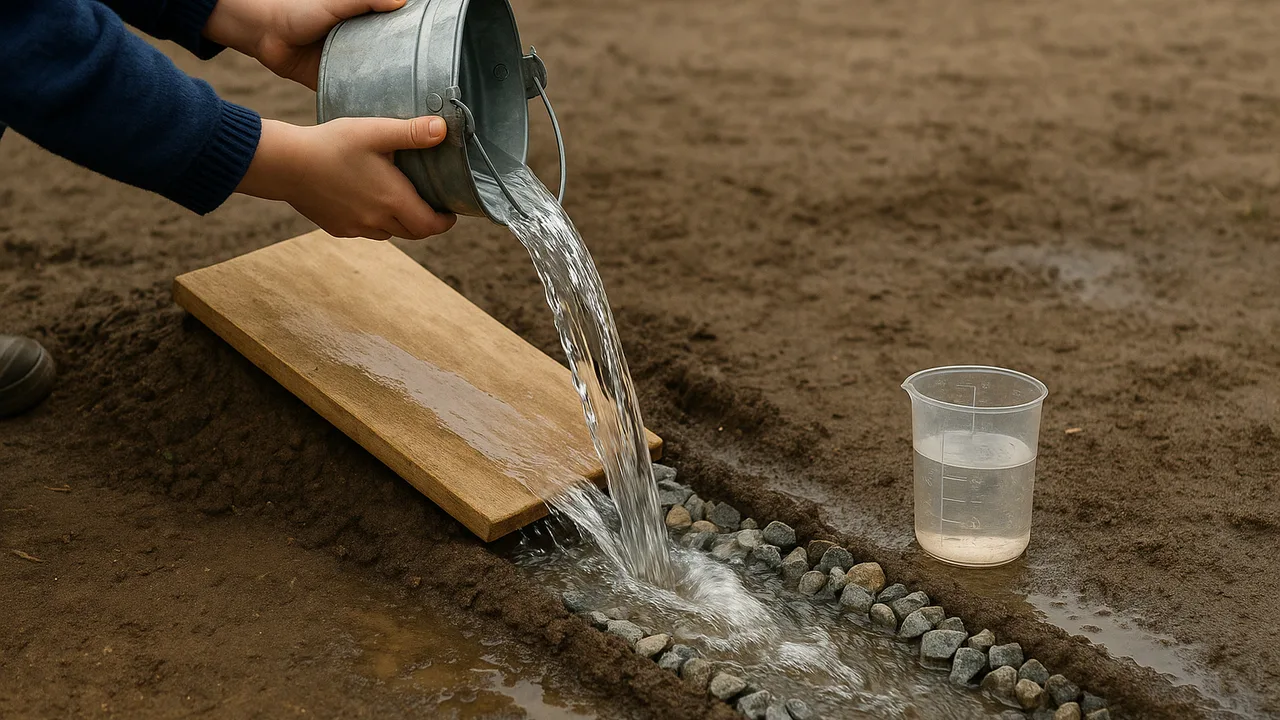
carry out our test plan, record data, compare our designs and decide on a final change.
- I can carry out my investigation and collect and record data by following my plan.
- I can test each solution in different situations and collect data to see how well it meets the criteria and constraints.
- I can use the data I collected to compare how well each solution meets the criteria and constraints of the problem.
Capstone: Prove It
Warm-Up ~5 min
Do Now. Mei’s team tested their panel once. The noise rating went from 5 to 3. Jamal says, “Great, we’re done!” Is one test enough?
Why should Mei's team run the test three times?
Instruction ~10 min
Test day. Follow your test plan step by step. Run each test three times. The Tester runs it, the Recorder writes the data, the Materials Manager resets the setup, and the Reporter watches that everything stays the same.
Test in different situations. A real solution has to work in real life. Test the bus flag board in sunshine and on a cloudy day. Test the lunchroom panel near a quiet table and a loud one.
Worked example 1: comparing two versions. Malik’s team tested two window samples. Sample A had dots far apart. 7 of 10 classmates still saw trees reflected in it. Sample B had dots close together. Only 2 of 10 saw trees. Sample B better meets the criterion. It also met the constraint: it peeled off with no damage.
Worked example 2: a design that needs work. Diego’s flag board was easy to see from 20 steps on a sunny day. On a cloudy day, the dark blue flag was hard to see. That is a failure point. The team will swap dark blue for bright orange.
Compare with data, not feelings. Look at your numbers. Which design met the most criteria? Which broke a constraint? Then choose ONE final change for the Expo.
Unit checkpoint. At the end of the guided practice, answer the checkpoint questions on your own. They check every engineering skill we practiced in the capstone.
Guided Exercises ~15 min
Record three trials for each criterion.
| Criterion | Situation | Trial 1 | Trial 2 | Trial 3 | Met it? (yes / no) |
|---|---|---|---|---|---|
Independent Practice ~10 min
On your own. Look at your team’s trial data.
Checkpoint: how did your evidence help you find a problem or weak spot in your prototype? What ONE final change will your team make before the Expo?
How confident are you that you can I can carry out a test plan and use data to compare designs.
Closure ~5 min
Your data tells your design’s story. Make your final change tonight or first thing next class. Next time is the Expo!
Exit ticket: finish this sentence with a number from your data. “Our design met the criterion ____ because ____.”
Teacher notes
Materials: prototypes; test plans; trial tables; clear cups, trays, water, step counts or tape measures; sound meter or 1–5 rating cards.
Setup: Schedule outdoor tests when buses are not moving. Have a quiet backup test inside if it rains. The checkpoint blocks (marked “Checkpoint”) assess the engineering practices; use them with the Expo rubric for grading.
Listen for: teams picking a winner by opinion. Ask, “Which number tells you that?” Also listen for teams who see a failure as the end. Point back to Louis Braille.
Support / stretch: Provide a comparison frame (“Version __ scored __, but version __ scored __”). Stretch: graph the three trials as a bar graph for the Expo poster.