4.03 Make It Rain on a Hill
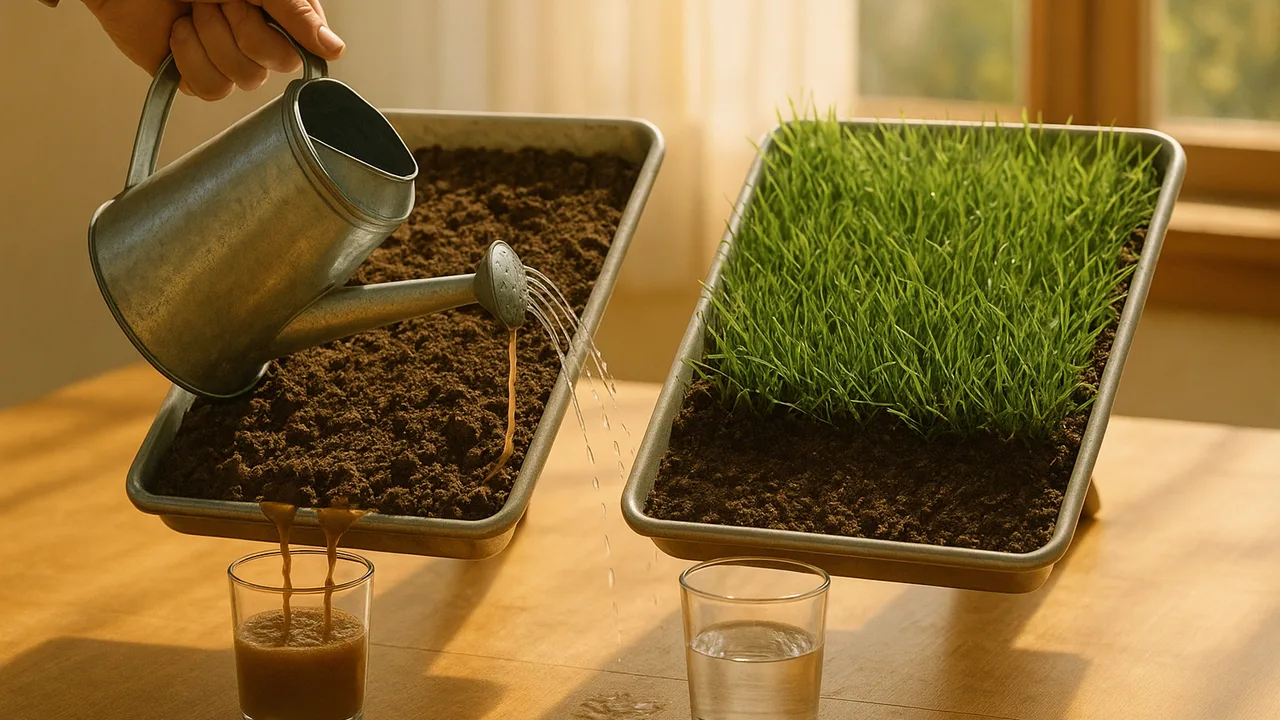
test how slope and plant cover change how much soil water carries away, and record what I observe.
- I can explain the purpose of our investigation, which is to find evidence to explain how weathering or erosion affects Earth materials.
- I can describe how we will observe or measure the steepness of the slope in our investigation.
- I can describe the type of weathering or erosion we are testing on Earth materials.
- I can describe how we will observe changes in the shape of Earth materials caused by water, ice, wind, or plants.
- I can make and record observations to show how weathering or erosion changes rocks, soil, or sediment.
Phase 2: Investigate
Warm-Up ~5 min
Do Now. Two hills get the same rain. One is steep. One is gentle. Make a prediction, then we will test it.
Which hill will lose more soil in the same rain?
Instruction ~10 min
Junior engineers, today you explore first. We will build small model hillsides in pans. Then we will make it rain with a watering can. Watch closely. We will name the science after we see it.
Why we are testing. Our purpose is to find evidence. We want to know how moving water changes soil on a hill. That evidence will help the council decide which hills need help most.
The model. Fill one end of a pan with damp soil. Pack it into a hill shape. Prop that end up on books. The low end of the pan is the “river.” Pour the same amount of water from the same height each time. Then look at what collects in the low end.
Worked example 1: testing slope. Diego’s team tests a gentle hill (1 book) and a steep hill (3 books). They count the books to measure steepness. They pour one cup of water on each. Then they look at the muddy water in the low end. They rate the mud from 1 (clear) to 5 (very muddy). They also look for gullies, which are little channels cut by water.
Worked example 2: testing plant cover. Priya’s team keeps the slope the same, at 2 books. One hill is bare soil. The other hill is covered with a piece of sod, grass clippings or a sprouted seed mat. They pour the same water on each. They compare the mud and the gullies.
What counts as an observation? An observation is what you actually see, not what you guess. “Two gullies formed” is an observation. “The hill was sad” is not!
Thinking about the council. Keep a list as you test. What must the town’s plan do? What limits will it have, like cost or space? We will use this list later.
Guided Exercises ~15 min
Run your tests as a team. The Recorder fills in this table in the science notebook. Rate the mud from 1 (clear) to 5 (very muddy).
| Test | Slope (books) | Cover | Mud rating (1–5) | Number of gullies | What we noticed |
|---|---|---|---|---|---|
| A | 1 | Bare soil | |||
| B | 3 | Bare soil | |||
| C | 2 | Bare soil | |||
| D | 2 | Plant cover |
Then answer the questions with your team.
Independent Practice ~10 min
Think about the town’s hills.
Draw your steep bare hill after the rain. Label the gullies and the mud at the bottom. Write one sentence that tells what the water did.
Start the council list: write one thing the town's plan must do and one limit it might have.
Closure ~5 min
You made it rain and gathered real data. Next lesson, we will make our test even fairer and measure the soil that washes away.
Exit ticket: finish this sentence with your data. “When the slope got steeper, the amount of soil carried away ____.”
Teacher notes
Materials (per team): a disposable aluminum pan or plastic storage-box lid, about 4 cups of damp soil or sand, 3 books or blocks, a watering can or a cup with small holes poked in the bottom, a measuring cup, a clear cup to sample runoff, paper towels. For plant cover: a square of sod, grass clippings, or radish or grass seeds sprouted on soil 5–7 days ahead.
Setup: Pre-moisten soil so it holds a shape. Cover tables with trash bags or newspaper. Start seed trays a week early; you will need them again in 4.04.
Listen for: “the water melted the dirt.” Steer toward “the water carried the dirt.” Hold off on formal vocabulary until students have described what they saw.
Support / stretch: Pre-fill the table for teams that need it. Stretch: let teams add a pile of small rocks at the base and observe.