4.22 The Big Storm Test
test my team’s best design in a big storm, improve it once, and use data to show how well it protects people.
- I can use the data I collected to compare how well each solution meets the criteria and constraints of the problem.
- I can evaluate each solution to see if it meets the criteria and constraints.
- I can describe how each solution changes the impact of the natural event on people.
Phase 5: Prove It
Warm-Up ~5 min
Do Now. Reread your team’s design brief. Put a star next to the most important criterion.
How confident are you that you can I can use data to show how well my solution meets the criteria.
Instruction ~10 min
Junior engineers, it is test day! Real engineers test, improve and test again. Today you run a final “big storm” test on your best design. Then you make one change and test again.
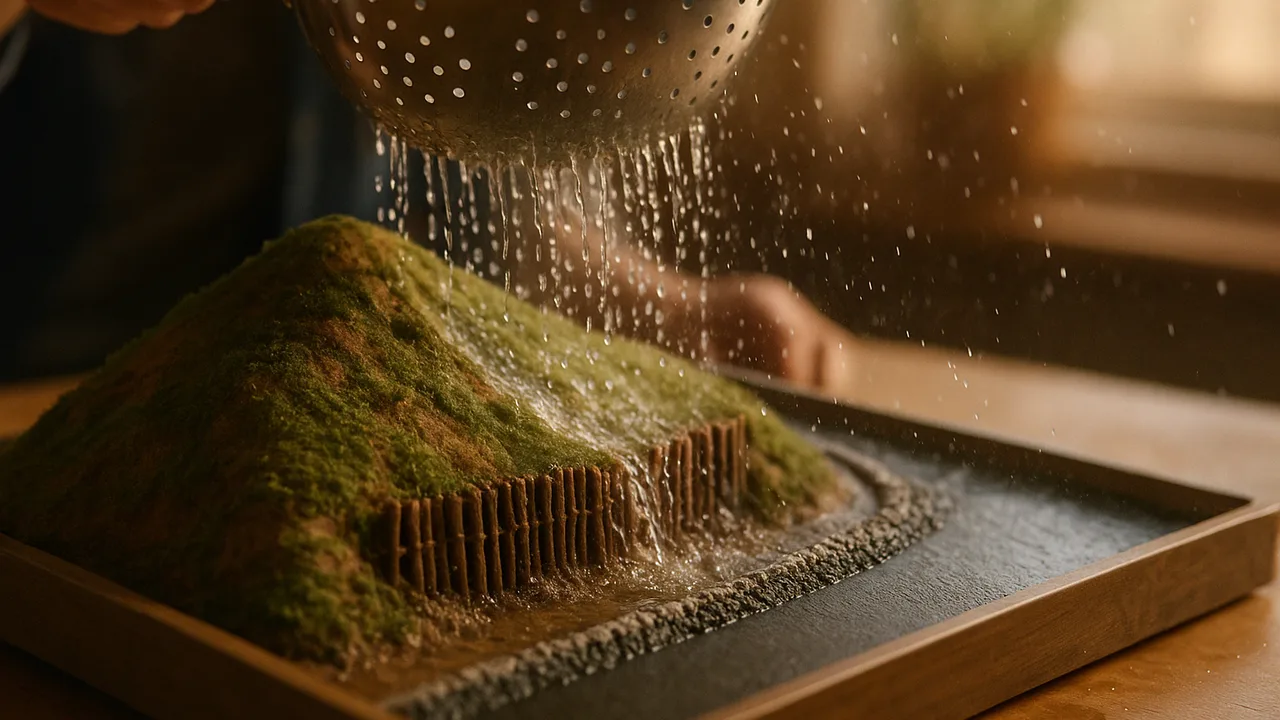
The big storm test. Use the steep slope (3 books). Pour two cups of water, one after the other. That is a harder test than before. Rate the mud, check the road and count the gullies. Run the bare-hill control too.
Worked example 1: using data to compare. Diego’s team tested plants alone and plants plus a wall. Plants alone scored a mud rating of 3. Plants plus a wall scored 2. The road stayed dry both times. So the combo met the criteria better. But it cost more. Their plan says: “Use the combo on the steepest hill, and plants everywhere else.”
Worked example 2: one revision. Priya’s rain garden overflowed in the big storm. The road got wet. Her team made the sponge garden wider and added a straw drain. In the retest, the road stayed dry. That one change made the design meet the criteria.
Explain the effect on people. For each solution, say how it lowers the harm to the town. For example: “Roots hold the soil, so less mud slides onto the road, so families can drive safely.”
Guided Exercises ~15 min
Run the big storm test, revise once, then retest. Record every test.
| Test | Mud rating (1–5) | Road dry? (yes/no) | Gullies | Met our criteria? (yes/no) |
|---|---|---|---|---|
| Control (bare hill) | — | |||
| Big storm test | ||||
| Our one change: | ||||
| Retest | ||||
Independent Practice ~10 min
Prepare your evidence for the council.
Compare your big storm test and your retest. What changed? Use numbers. Did your design meet each criterion and constraint?
Closure ~5 min
You put your design through a big storm and made it stronger. Next, you present your plan to the town council.
Exit ticket: what was your team's one revision? Did the retest show it helped? Give one number.
Teacher notes
Materials: each team’s pan model and prototype, 3 books per team, measuring cups, extra craft sticks, sponges and straws for revisions.
Setup: Run the tests in two rounds so you can watch each team. Limit revisions to one change so the retest is fair.
Listen for: claims without data (“ours was best”). Ask: what number shows that?
Support / stretch: Give a partly filled data table. Stretch: ask teams to predict their retest mud rating before they pour.