3.08 Forest Field Guide, and Defining Our Problem
research how forest animals in our region use their structures and senses to survive, and list the criteria and constraints for our nature-inspired invention.
- I can define the limits for solving a problem, making sure it is about something people need or want right now.
- I can list the features that a solution must have to solve the problem.
- I can describe the limits on my design, such as how much it costs, what materials I can use, or how much time I have.
Phase 2: Investigate
Warm-Up ~5 min
Do Now. Name as many animals as you can that live in the woods near us. You have one minute. Your Recorder keeps the team list.
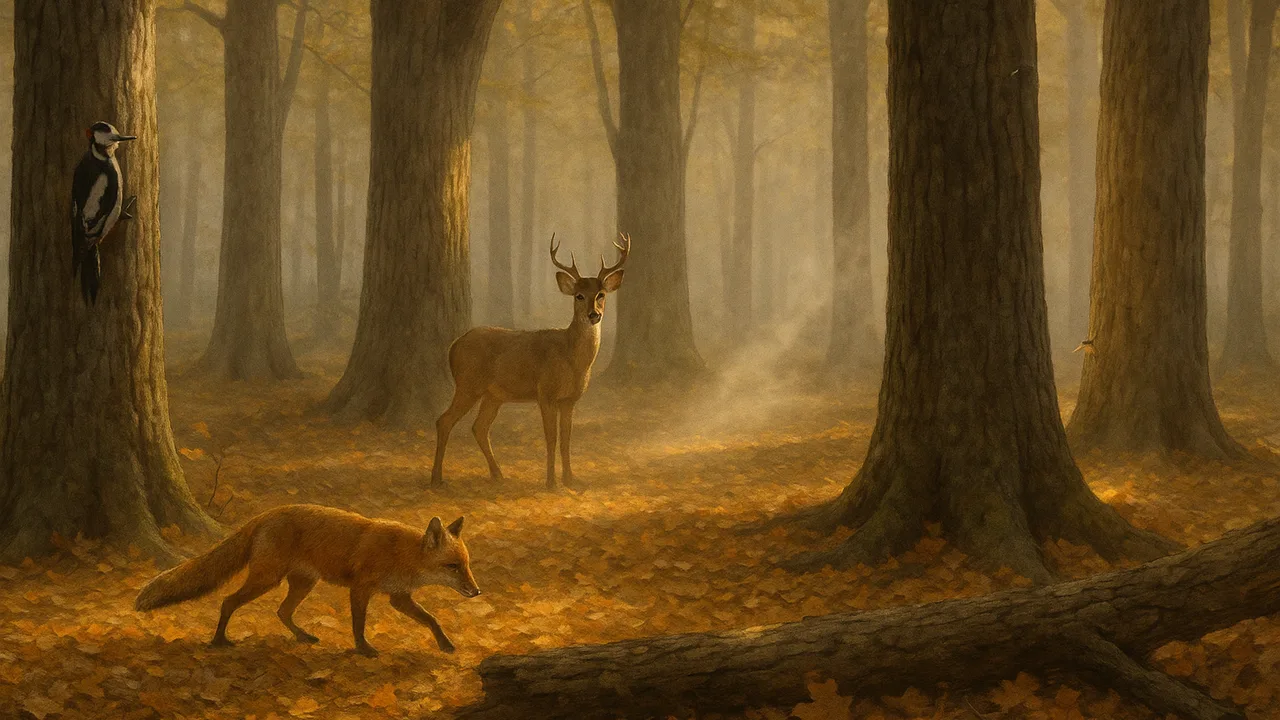
White-tailed deer can live in forests, fields, and even backyards.
Instruction ~10 min
Part 1: our field guide. Each team gets four animal cards. Read each card. Fill in one row of the table for each animal: an outside structure, an inside structure, and a sense it depends on. Look for clues first, then check with your team.
- White-tailed deer. Big ears that turn toward sounds. Eyes on the sides of the head to watch for danger all around. Strong legs for running and jumping. When alarmed, it lifts its white tail like a flag.
- Black bear. A very strong sense of smell for finding food. Thick fur. Short, curved claws for climbing trees and digging. It eats a lot in fall and stores fat, then rests in a den through much of the winter.
- Great horned owl. Huge eyes for dim light. Soft-edged feathers for quiet flight. Sharp talons. The “horns” on its head are just feather tufts, not ears.
- Eastern chipmunk. Stretchy cheek pouches to carry seeds and nuts back to its burrow. Striped fur that blends into the leaves on the forest floor. It gives a sharp chip call when it senses danger.
Worked example 1: a field guide row. Mei filled in the deer row. Outside: big ears that turn. Inside: a heart and lungs that let it run fast. Sense: hearing. She wrote: “Ears hear danger, the brain decides, the legs run.”
Part 2: define our problem. Engineers define a problem before they build. They list the criteria: what the design must do. They list the constraints: the limits they must work inside, like money, materials, and time. A good problem is about something people need or want now.
Worked example 2: Malik’s list. Malik’s team wrote:
- Criterion: it borrows one real structure from a plant or animal.
- Criterion: it solves a real human problem.
- Criterion: a visitor can understand it in one minute.
- Constraint: it fits on a desk.
- Constraint: it uses free or cheap classroom materials.
- Constraint: we have two class periods to build.
| Animal | Outside structure and its job | Inside structure and its job | Sense it depends on |
|---|---|---|---|
| White-tailed deer | |||
| Black bear | |||
| Great horned owl | |||
| Eastern chipmunk |
| Our criteria (what it must do) | Our constraints (our limits) |
|---|---|
| 1 | |
| 2 | |
| 3 |
Guided Exercises ~15 min
Finish both tables with your team. Then work through these questions. Use the arrows to move through them.
Independent Practice ~10 min
On your own, think like an engineer for our client.
Why is it important to know our constraints, like time and materials, before we start building? Give an example of what could go wrong if we did not know them.
Using only free or cheap classroom materials is a criterion, not a constraint.
Closure ~5 min
Our investigations are done! You studied seeds, celery, feathers, bones, your senses, and forest animals in our region. You also defined our problem. Next, we make sense of it all and build strong arguments.
Exit ticket: name one criterion and one constraint for our invention. Then name one forest animal structure that could inspire it.
Teacher notes
Materials: printed animal cards (deer, black bear, great horned owl, eastern chipmunk) with photos; the two tables; chart paper for the class criteria and constraints list.
Setup: About 20 minutes for the field guide (jigsaw: each team member reads one card and teaches it), then 15 minutes to agree on criteria and constraints as a class. Post the final list; part 2 of the unit builds and tests against it.
Listen for: criteria and constraints mixed up. Use the test: “Is it something the design does, or a limit on us?” Also listen for “bears sleep all winter without waking.” Accept “rest in a den.”
Support / stretch: Read cards aloud for emerging readers or pair readers. Stretch: add a fifth card of the student’s choice, such as a red fox or a little brown bat, using a trusted source with the teacher.