4.20 Ask the Experts: Gallery Critique
learn how geotechnical engineers and geologists work, and use research and feedback from others to improve my team’s design.
- I can share my ideas and findings about design solutions with others to help create more possible solutions.
- I can describe what is needed to design a solution, including doing research and talking with others to make the design better.
Phase 4: Build
Warm-Up ~5 min
Do Now. Think of a time someone gave you advice that helped you fix something. How did their idea help?
Who helps an engineer most when designing a safe hillside?
Instruction ~10 min
Junior engineers, nobody designs alone. Real teams research the problem and ask for feedback. Each new idea can lead to a better solution.
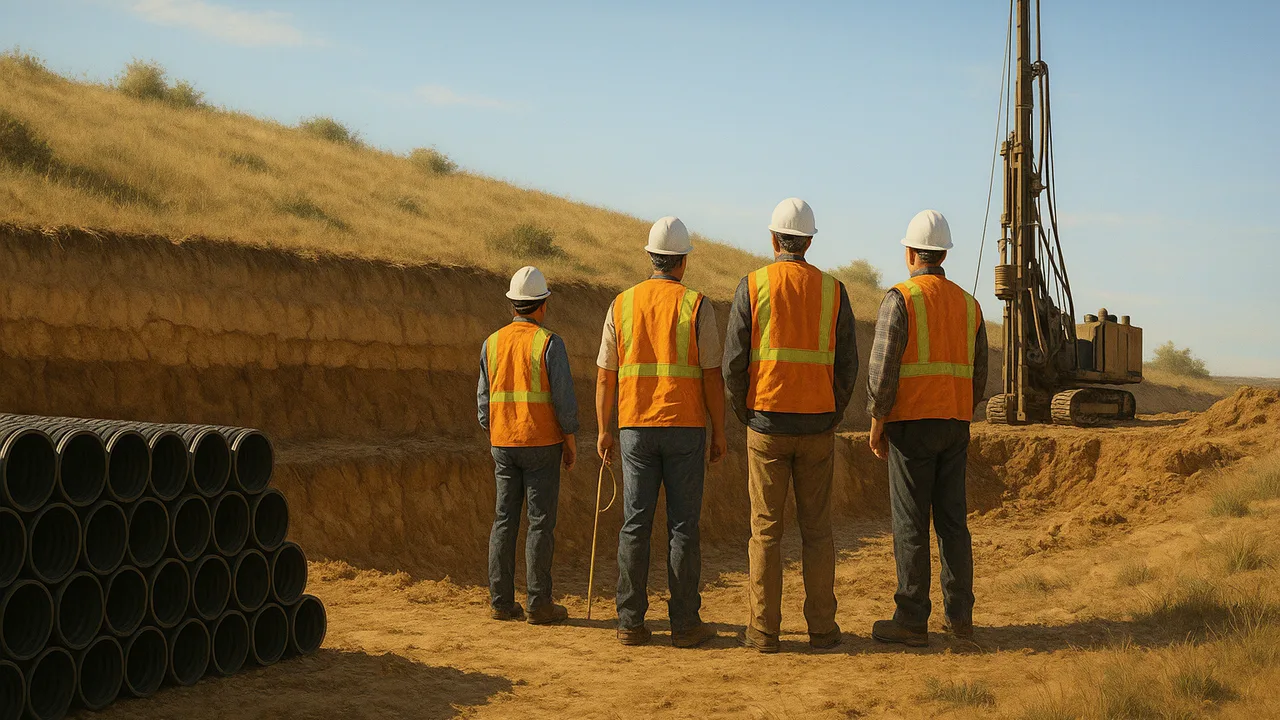
Meet two Earth experts. A geologist studies rocks, soil and how Earth changes. A geologist might read rock layers to learn which hillsides are weak. A geotechnical engineer uses that knowledge to design walls, drains and foundations. They often work side by side.
Worked example 1: research changes a design. Diego’s team reads that water soaking into a slope makes it heavier. So they add a straw drain behind their wall. The wall no longer gets pushed over by wet soil.
Worked example 2: feedback sparks a new idea. In the gallery walk, Priya writes on Malik’s team’s card: “What if you put plants on the terraces?” Malik’s team tries it. Now the terraces slow water and the roots hold soil. Two ideas became one stronger design.
Gallery critique rules. Leave one “I like,” one “I wonder” and one “What if” at each station. Talk about the design, not the person. Then your team reads its feedback and picks the best idea to try.
Guided Exercises ~15 min
Visit three stations. Leave feedback on a sticky note at each. Then return to your team and sort your feedback.
| Feedback we got | I like / I wonder / What if | Will we try it? (yes/no) | Why? |
|---|---|---|---|
Independent Practice ~10 min
Plan your revision.
Describe what your team needs to design a better solution. Include one thing you researched and one idea you got from talking with others.
Closure ~5 min
Your team now has research and feedback to work with. Next, we test our solutions in different kinds of storms and compare them fairly.
Exit ticket: what change will your team make because of today's feedback? Who gave you the idea?
Teacher notes
Materials: each team’s prototype set up as a station, sticky notes in three colors (like / wonder / what if), a timer for 4-minute rotations.
Setup: Arrange stations around the room. Leave one team member at each station to answer questions for the first rotation, then switch.
Listen for: vague praise (“good job”). Push for specifics. Also listen for teams who reject all feedback; ask them to try one idea.
Support / stretch: Post feedback stems at each station. Stretch: have students research one real geotechnical fix, such as a soil nail or drainage blanket, and explain it to the class.