3.05 Feathers, Bones, and Blue Celery
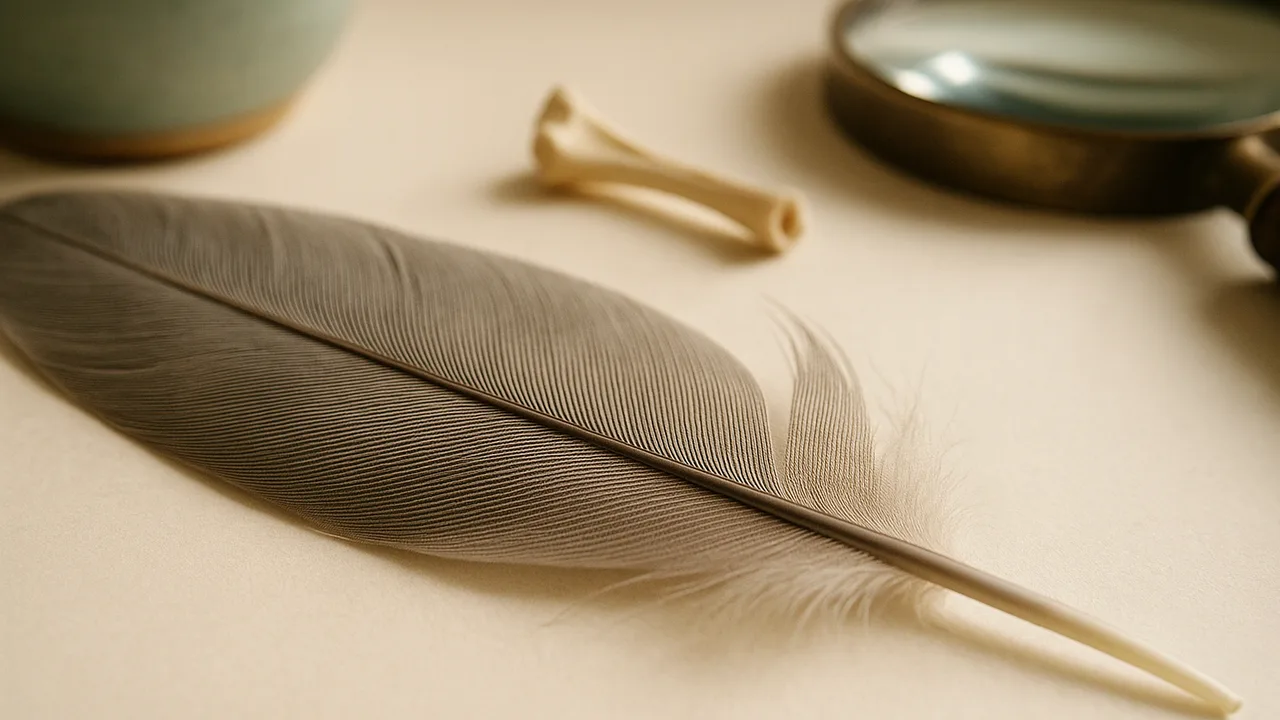
describe the structures of a feather and a bird bone, explain how each helps a bird survive, and use our celery data to explain how plant parts work together.
- I can describe the inside and outside parts of certain plants and animals.
- I can explain what those parts do for the plant or animal.
- I can use evidence to explain how inside and outside parts of plants and animals have special jobs.
- I can explain how these parts help plants and animals survive, grow, act, or make more of their kind.
- I can show how different parts work together as a system to help plants and animals live and grow.
Phase 2: Investigate
Warm-Up ~5 min
Do Now. Get your team’s celery cups. Your teacher will cut across the bottom of each stalk. Look at the cut end with a hand lens. Then look at the leaves. Record what you see in last lesson’s table.
The cut end of the colored celery shows a ring of colored dots. What are the dots?
Instruction ~10 min
Explore first. Now we switch from plants to birds. At two stations, look closely before you name anything.
Station 1: Feather lab. Use a hand lens on a craft feather. Find the stiff middle line. Look at the thin strands on each side. Gently pull two strands apart. Then stroke the feather from bottom to tip between your fingers. What happens? Next, hold a fluffy down feather in your palm. How does it feel different?
Station 2: Bone lab. Look at photos of a cut bird bone and a cut mammal bone. Then try a model. Roll one sheet of paper into a tube. Fold a second, same-size sheet into a flat strip. Lay each across two books. Hang paper clips on each, one at a time, until it bends. Which holds more?
Now let’s name it. The stiff middle line of a feather is the shaft. The flat part on each side is the vane. The vane is made of many thin strands called barbs. The barbs have even tinier hooks that hold them together, like a zipper. When you stroke a split feather, you zip it back up. A smooth, zipped vane can push on air, so it helps a bird fly. Fluffy down feathers trap warm air close to the bird’s body.
Worked example 1: the zipper feather. Priya pulled two barbs apart and saw a gap. She stroked the feather and the gap closed. She wrote: “Tiny hooks hold the barbs together. That makes the feather smooth and strong for flying.” Notice she linked a structure to a function.
Worked example 2: light but strong. Many bird bones are hollow. Inside, thin cross pieces brace them, like the supports in a bridge. Mei’s team found that the rolled tube held many more clips than the flat strip, using the same amount of paper. She wrote: “Shape matters. Hollow bones keep a bird light so it can fly, and their shape and braces keep them strong.” Light bones, zipped feathers, and strong chest muscles all work together as one flying system.
| Item | What I see or feel | Test result | How it might help a bird |
|---|---|---|---|
| Flight feather | |||
| Down feather | |||
| Rolled paper tube | |||
| Flat paper strip |
Guided Exercises ~15 min
Finish both stations with your team. Then talk through these questions. Use the arrows to move through them.
Independent Practice ~10 min
On your own, connect the parts.
A bird has light bones, zipped flight feathers, and fluffy down. Pick two of these. Explain how they work together to help the bird survive.
Closure ~5 min
Plants and birds both have outside and inside parts that work as a system. Next time, we will test how our own senses send messages to our brains.
Exit ticket: name one feather structure and one bone structure. Tell how each one helps a bird.
Teacher notes
Materials: the celery cups from 3.04; a knife for teacher use; hand lenses; craft-store flight (contour) feathers and down feathers; photos or a projected image of a cut bird bone and a cut mammal bone; paper, tape, paper clips, and two books per team.
Setup: Cut the celery first while teams record. Then run two stations of about 10 minutes. Use photos for bones rather than real bones. Possessing feathers of most wild native birds is restricted by federal law, so use craft feathers only.
Listen for: “Hollow means weak.” Use the paper model to show that shape matters. Also listen for “all bird bones are completely empty”; many have thin supports inside, and not every bird bone is hollow.
Support / stretch: Give a labeled feather diagram. Stretch: ask why a penguin’s bones might be different from a hawk’s, and how students could find out.