3.03 Seed Detectives: What Is Inside a Seed?
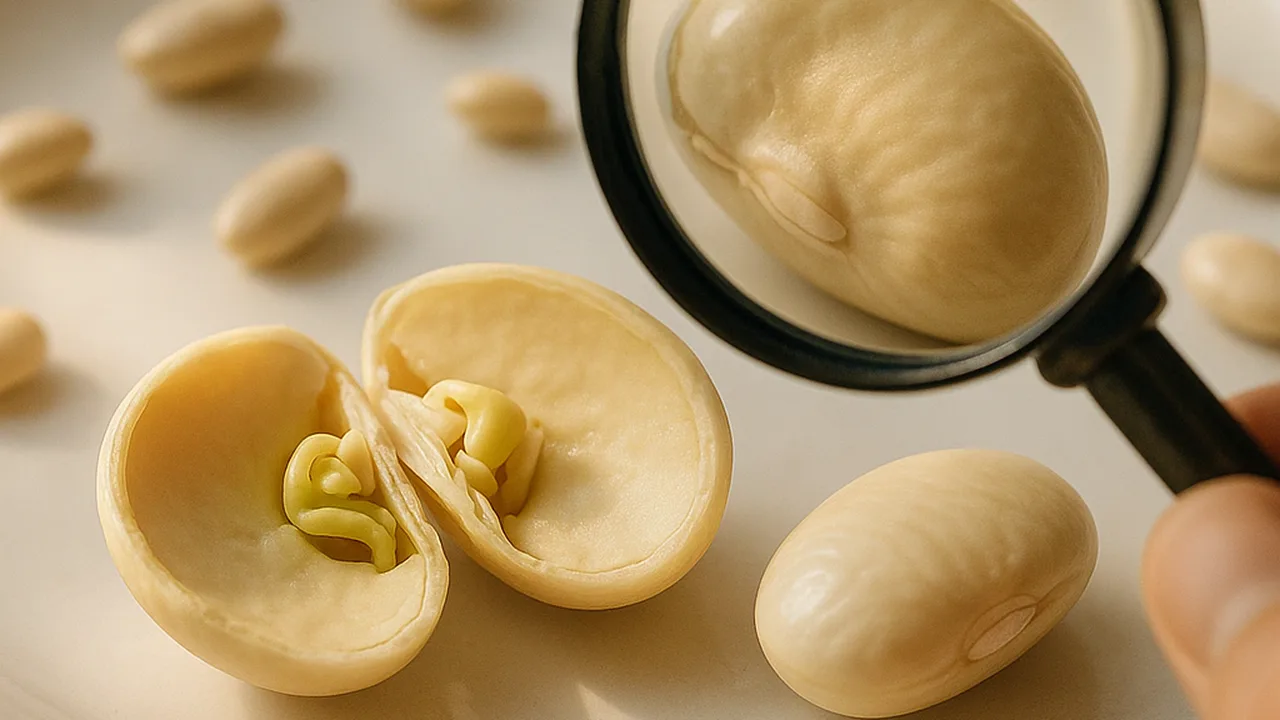
observe the outside and inside parts of seeds and describe what each part might do to help a plant grow and spread.
- I can describe the inside and outside parts of certain plants and animals.
- I can explain what those parts do for the plant or animal.
Phase 2: Investigate
Warm-Up ~5 min
Do Now. Your teacher holds up a dry bean and a bean that soaked in water overnight. How do they look different? What do you think is hiding inside?
If we gently split open a soaked lima bean, what will we find inside?
Instruction ~10 min
Explore first, name it later. Today you are seed detectives. Look closely before you use any science words. Your Recorder writes what the team notices. Your Tester does the drop tests.
Station 1: Inside a seed. Peel the skin off a soaked lima bean. Gently split it into two halves with your thumbnail. Use a hand lens. Draw what you see. Label anything that looks different.
Station 2: Seeds on the move. Look at a maple seed, a dandelion puff, an acorn, and a burr. Drop the maple seed and the dandelion puff from shoulder height. Press the burr against a piece of felt. Roll the acorn. Record what each seed does.
Worked example 1: a maple seed. Mei drops a maple seed from above her head. It spins like a helicopter and floats slowly down. Her note says: “Flat wing makes it spin and fall slowly. Maybe wind can carry it away from the tree.” That is an observation plus a guess about function. Great detective work!
Now let’s name it. After you explore, check your drawings with these words. The seed coat is the outside skin. It protects the seed. The embryo is the tiny baby plant inside. The two big halves hold stored food for the baby plant.
Worked example 2: why travel? Jamal wondered why seeds have wings, fluff, and hooks. Here is his thinking. If every seed fell right under the parent tree, the young plants would be crowded and shaded. Seeds that travel can find open space and sunlight. So a maple wing, dandelion fluff, and burr hooks all help a plant make more of its kind in new places.
| Seed | What I see outside | What I see inside (if we opened it) | What I think the part does |
|---|---|---|---|
| Lima bean (soaked) | |||
| Maple seed | |||
| Dandelion puff | |||
| Acorn | |||
| Burr |
Guided Exercises ~15 min
Finish both stations. Then talk through these questions with your team. Use the arrows to move through them.
Independent Practice ~10 min
On your own, think about one more seed.
A dandelion seed has a puff of fluff on top. Describe this outside part and explain how it could help the dandelion make more of its kind.
How confident are you that you can I can describe the inside and outside parts of a seed and what they do.
Closure ~5 min
Seeds look small and simple, but they are packed with parts. Each part has a job. Next time we will see how a plant’s stems and leaves move water.
Exit ticket: name one inside part and one outside part of a seed. What job does each one do?
Teacher notes
Materials: dry lima beans soaked overnight (2 per student, plus extras); hand lenses; paper towels; maple seeds, dandelion seed heads, acorns, burrs in a zip bag; a square of felt per team.
Setup: Start the soak the day before; large lima beans split most easily. Run two stations of about 10 minutes each. Hold back the words seed coat, embryo, and stored food until teams have drawn their beans.
Listen for: “The seed is dead” or “the seed is just food.” A seed holds a living baby plant. Also listen for “the seed wants to travel.” Reframe: parts that help seeds spread help the plant make more of its kind.
Support / stretch: Give a pre-labeled bean diagram for students who need it. Check allergy plans before handling nuts and seeds; skip acorns if needed. Stretch: ask students to sort the seeds by how they travel (wind, animals, falling and rolling).