3.01 The Silent Owl and the Sticky Burr
Borrowed from Nature: A Nature-Inspired Invention
How do living things’ body parts help them survive, and how can we borrow their tricks to solve a human problem?
The mystery: Owls hunt at night and fly almost silently. Burrs from burdock plants grab onto a dog’s fur and ride along for miles.
Questions we will figure out together in this unit:
- How can an owl fly without making noise?
- How does an owl find a mouse in the dark?
- Why do burrs stick to fur but not to smooth skin?
- What parts do plants have inside them?
- How does water get from a plant’s roots up to its leaves?
- How does an animal’s brain know what its eyes and ears picked up?
- Why do deer run away so fast when a twig snaps?
- Could we invent something that helps people the way a burr helps a plant?
describe how an owl’s body and a burdock burr help each one survive, and explain the problem our nature center client wants us to solve.
- I can make a claim that plants and animals have inside and outside parts that work together to help them survive, grow, act, and make more of their kind.
- I can use information I am given to explain a problem that comes from something people need or want.
Phase 1: Spark
Warm-Up ~5 min
Do Now. Close your eyes. Your teacher will drop a pencil, then wave a tissue in the air. Which one could you hear? Now think about this. A mouse is out in the dark woods. An owl flies over it. Will the mouse hear the owl coming? Make your guess below.
An owl flies over a mouse at night. What will the mouse most likely hear?
Instruction ~10 min
Junior engineers, we have a client! A local nature center is planning a new display. It is called “Nature Inspired Inventions.” The staff want to show visitors one big idea. Plants and animals have amazing body parts, and people can borrow those ideas to solve problems. They need inventions for the display. That is our job this unit.
Every living thing has structures. A structure is a part of a living thing. Some structures are on the outside, like feathers, fur, claws, thorns, and leaves. Some are on the inside, like the heart, lungs, stomach, bones, and brain. Each structure has a function. A function is the job a part does.
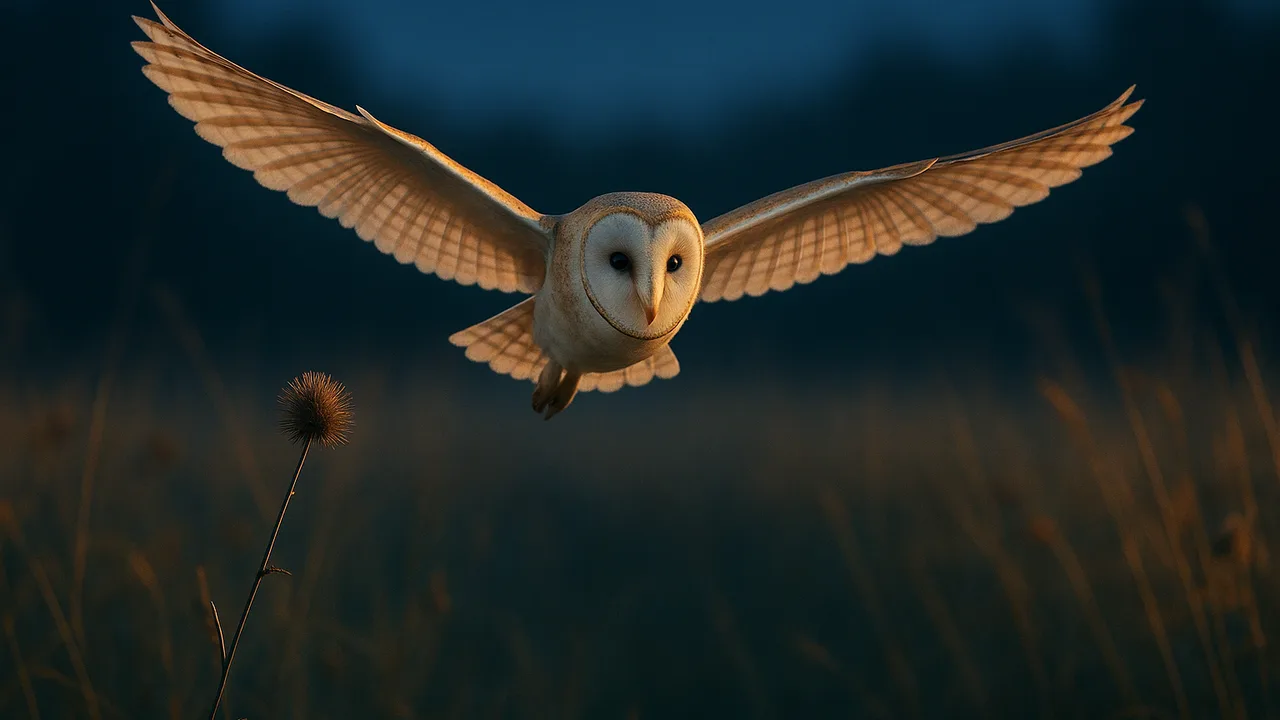
Worked example 1: the owl. Many owls live in our forests, like the great horned owl and the barred owl. An owl hunts mostly at night. Look at its parts and their jobs:
- Soft-edged feathers → fly quietly, so prey does not hear it.
- Big eyes facing forward → see well in dim light.
- A round, flat face → helps gather sound toward its ears, a bit like a satellite dish.
- Sharp, curved claws called talons → grab and hold prey.
All these parts work together. Together they make the owl a skilled night hunter.
Worked example 2: the burdock burr. Burdock is a weedy plant. It grows along trails and fields in many places around the world. Its seed heads are called burrs. Each burr is covered with tiny hooks. When an animal brushes past, the hooks catch its fur. The animal carries the burr far away. Later the burr falls off, and its seeds can grow in a new spot. So the hooks help the plant make more of its kind.
Here is the big idea. Body parts are not random. Each one helps a living thing survive, grow, behave, or reproduce. Reproduce means make more of its own kind. Engineers study these parts for ideas. Copying a smart idea from nature to solve a human problem is called biomimicry.
Our client’s problem. The nature center has a need. Visitors walk past the plant and animal displays too fast. The staff want something that makes people stop and see how clever nature is. A display of real inventions that copy nature could do that. Your team will design one of those inventions.
Guided Exercises ~15 min
Work with your team. Use the arrows to move through each question. Take turns reading them out loud. Tap “Ask SIERA for a hint” if you get stuck.
Independent Practice ~10 min
On your own. Think of an animal you have seen near home or school. A squirrel, a robin, or a deer all work.
Name the animal. Then name one outside structure it has and the job that structure does. Use this starter: “The ____ has ____, which helps it ____.”
How confident are you that you can I can explain how a body part helps a plant or animal survive.
Closure ~5 min
Today we met our client and our two mysteries: the silent owl and the sticky burr. Next time, we will learn more about what the nature center needs and set up our teams.
Exit ticket: pick the owl or the burr. Name one of its structures and tell how it helps the owl or the plant survive or reproduce.
Teacher notes
Materials: a pencil and a tissue for the warm-up; photos of an owl, an owl wing feather close-up, and burdock burrs (or real dried burrs in a zip bag); chart paper for the Wonder Board.
Setup: Post the Wonder Board where it can stay all unit. Introduce the nature center as the client; if your school has a relationship with a real local nature center, use it, otherwise keep it generic. Team roles are set up in 3.02.
Listen for: “The owl wants to be quiet,” or “the plant wants to spread.” Gently reframe. Living things do not choose their body parts. Parts that help them survive get passed on. Also listen for the idea that plants have no structures.
Support / stretch: Give emerging readers a picture sort (structure card → function card). Stretch: ask students to find a structure that does two jobs, like a bear’s claws for digging and climbing.