4.18 Mid-Build Checkpoint: Are Our Ideas Solid?
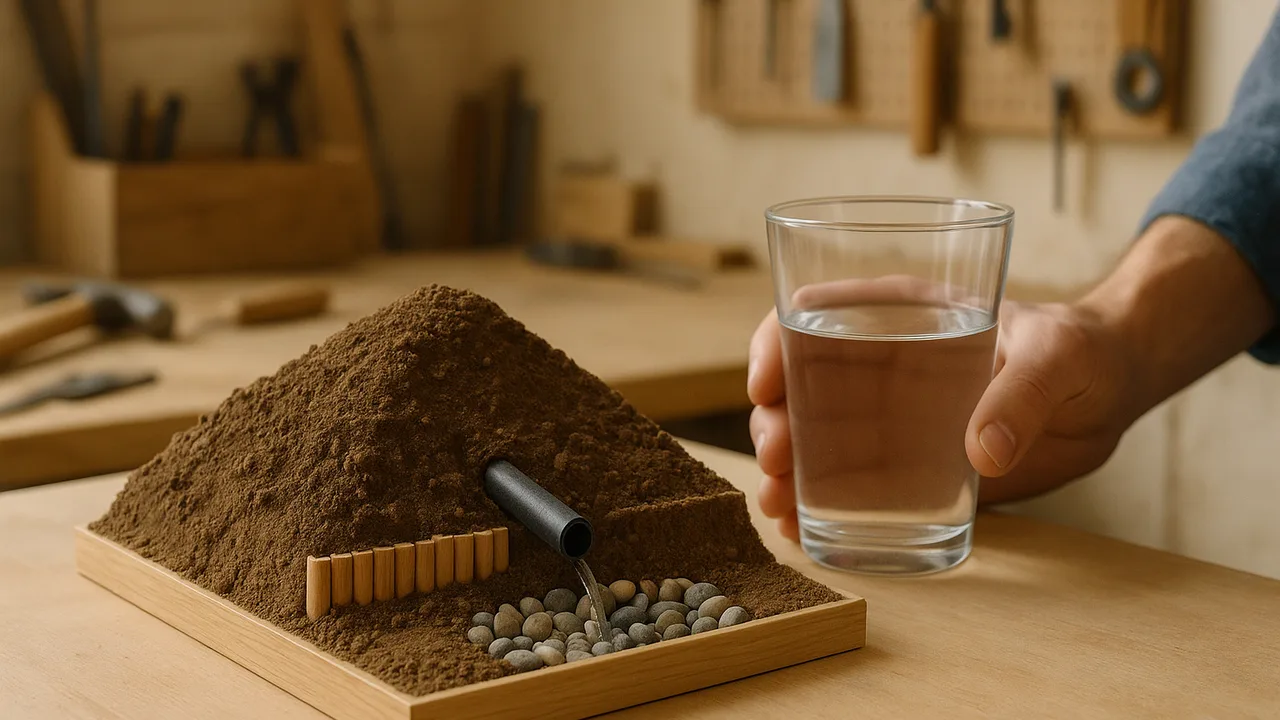
show what I know about designing solutions for erosion, landslides and floods, and use my results to plan a revision.
- I can use scientific information about earthquakes, floods, tsunamis, or volcanic eruptions to design at least two ways to help protect people from their effects.
- I can explain how each of my design solutions could solve the problem.
- I can describe the required features (criteria) and limits (constraints) for a solution, including ways to increase benefits, decrease risks or costs, and meet what people need.
- I can explain how I will use the criteria and constraints to help create and test my design solutions.
Phase 4: Build — mid-build checkpoint
Warm-Up ~5 min
Do Now. Without looking at your notes, list three solutions that protect a hillside town. Then check your list with a partner.
How confident are you that you can I can design at least two ways to protect people from floods or mud.
Instruction ~10 min
Junior engineers, halfway check! Real engineering teams stop partway through a project. They check what they know before they spend more time and money. Today’s checkpoint does the same. It is not about a grade. It shows what to fix next.
Quick review. Heavy rain soaks soil and makes it heavy. Gravity pulls it downhill. Fast water carries soil away. Hard surfaces make more runoff and more flooding. Solutions change the cause: they hold soil, slow water, soak up water or carry it away safely.
Worked example 1: reading a question. “Which solution lowers the amount of water that runs into the street?” Underline the key words: lowers, water, street. Now cross out choices that hold soil but do not change the water.
Worked example 2: a revision plan. Ava missed a question about constraints. She writes: “I mixed up goals and limits. I will check our design brief and fix our cost column.” Her mistake turns into a plan.
Research and talk. After the checkpoint, each team meets. You share one thing you learned from research or testing. Then you list what else you need to find out to make the design better.
Guided Exercises ~15 min
Answer each checkpoint question on your own. Then compare with your team and talk about any answers you disagree on.
Independent Practice ~10 min
Turn your checkpoint into a plan.
Look at the questions you missed or felt unsure about. Write one idea you will review. Then write one change your team will make to your prototype because of it.
What is one more thing your team needs to research or ask others to make your design better?
Closure ~5 min
Checkpoint done! You know what is strong and what needs work. Next, we go beyond rain and mud. We look at earthquakes, volcanoes and tsunamis, and how engineers protect people from them.
How confident are you that you can I can explain how each of my design solutions could solve the problem.
Exit ticket: write one thing you are sure about and one thing you still wonder about our hillside solutions.
Teacher notes
Materials: printed or on-screen checkpoint, team design briefs, prototype data tables.
Setup: Give about 15 minutes for the individual questions, then 10 minutes for team talk and revision plans. Keep the tone low-stakes.
Listen for: students who still mix up criteria and constraints, and students who think one solution fixes every problem.
Support / stretch: Read questions aloud for students who need it. Group students who missed the same idea for a 5-minute reteach. Stretch: ask early finishers to write a new checkpoint question with four choices.